
Xiang Sheng (相生) means mutual generation: the Five Elements supporting cycle of Wood → Fire → Earth → Metal → Water → Wood. Each phase nourishes or enables the next, carrying a beautiful idea into everyday life: what helps us grow can become something we pass on. In a gift, a color pairing, or a piece of jewelry, Xiang Sheng expresses a wish for steady encouragement, shared flourishing, and a life that keeps renewing itself.

The cycle belongs to Wu Xing (五行), the Five Phases, a traditional framework for understanding relationships and patterns of change. Wood, Fire, Earth, Metal, and Water describe qualities as well as familiar materials. Reading them as phases makes room for growth, warmth, stability, gathering, and renewal—the rhythm that gives Xiang Sheng its meaning.
The Xiang Sheng cycle at a glance
| Generating relationship | Chinese and pinyin | Image that helps you remember it | A modern wish it can carry |
|---|---|---|---|
| Wood generates Fire | 木生火 · mù shēng huǒ | Wood feeds a flame | May patient growth become bright expression. |
| Fire generates Earth | 火生土 · huǒ shēng tǔ | Ash remains after wood burns | May your enthusiasm build something lasting. |
| Earth generates Metal | 土生金 · tǔ shēng jīn | Metal-bearing ores lie within the earth | May experience become wisdom and discernment. |
| Metal generates Water | 金生水 · jīn shēng shuǐ | Metal-associated autumn leads toward Water-associated winter | May clarity make room for reflection and renewal. |
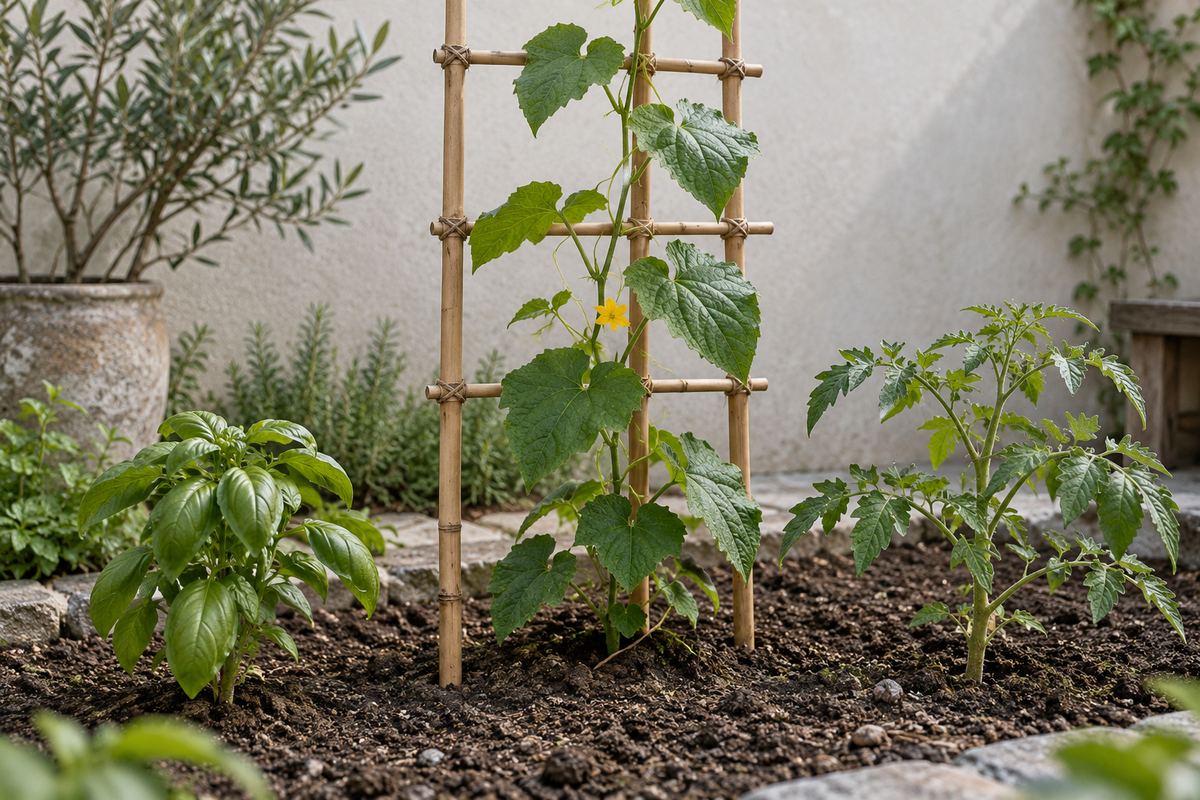
| Water generates Wood | 水生木 · shuǐ shēng mù | Water sustains growing plants | May care give your next beginning room to grow. |
The loop has five relationships and no permanent first or last phase. It is often written from Wood for easy reading, but beginning with Water gives the same order: Water → Wood → Fire → Earth → Metal → Water. What matters is the direction of support, not the point where the circle starts.
What “mutual generation” means
Xiang (相) points to relationship; sheng (生) carries senses of birth, growth, and bringing forth. Together they describe successive nourishment. “Generating cycle,” “nourishing cycle,” and “supporting cycle” are useful English expressions for the same Five Phase relationship.
Mutual support belongs to the whole circle. Within one pair, the direction is specific: Water nourishes Wood, and Wood in turn feeds Fire. Wood does not reverse the same arrow and generate Water. Every phase receives from one neighbor and gives to another, so dependence and generosity belong together.
The word “elements” is familiar in English, while “phases” brings the movement into focus. This is a traditional cultural model of change, distinct from the chemical elements and from a modern explanation of energy conversion. Its strength as a story is the attention it gives to what makes the next stage possible.

The five relationships: from nourishment to new growth
Wood generates Fire: patience becomes expression
Wood feeding a flame is the most immediate image of Xiang Sheng. A dry piece of wood can fuel fire; friction fire-making also makes the connection memorable. In the traditional pattern, Wood suggests sprouting, extension, and the freshness of spring, while Fire suggests warmth, radiance, and the outward fullness of summer.

As a modern reflection, this is the movement from preparation to expression. Practice gives a musician something to share. Reading and observation feed an original idea. A friend’s patient encouragement can help someone take a first brave step. The brightness has a source, even when that source has grown quietly for a long time.
Wood and Fire also offer an image of proportion. Fuel needs space and air for a flame to burn well; piling everything into one place can smother it. Applied to a creative life, nourishment includes room to work, pause, and find one’s own voice. A green-and-red detail can carry the wish that a person’s roots and radiance grow together.
Fire generates Earth: warmth becomes something lasting
The familiar image for Fire generating Earth is the ash left after wood burns. The flame changes what it touches, and a solid remainder settles back toward the ground. Within the phase language, Fire’s activity gives way to Earth’s steadiness and capacity to hold.
The traditional image follows flame into its quiet remainder. Earth gives the story a resting place: the moment when activity settles and something can be held, remembered, or built upon.

In life, this relationship can suggest turning enthusiasm into dependable care. An exciting idea becomes a daily practice; a joyful gathering becomes a cherished family memory; a heartfelt promise becomes the actions that sustain a relationship. The wish is for warmth to leave a good foundation behind. Red beside an earthy yellow or soft ochre makes that passage visible in a contemporary palette.
Earth generates Metal: experience becomes discernment
Metal-bearing ores occur within the earth, giving Earth-to-Metal its familiar image of something valuable emerging from a substantial foundation. In this vocabulary, jin (金) refers broadly to Metal; translating every appearance as “gold” makes the relationship unnecessarily narrow.

Earth evokes carrying, holding, and settling. Metal evokes definition, concentration, and refinement. As a modern interpretation, the pair can describe experience becoming judgment: after learning and trying, we recognize what matters, set workable boundaries, and put our efforts into a clearer form.
That is a generous meaning for a milestone gift. It honors the work already done and welcomes the confidence to make the next choice. An earth-colored bead beside a pale metal accent can suggest a grounded life with a little light at its center. Prosperity enters as a wish for a flourishing future, alongside gratitude for the roots that made growth possible.
Metal generates Water: gathering gives way to renewal
Metal-to-Water is often the relationship that makes readers pause. A useful way into it is the traditional seasonal correspondence: Metal belongs to autumn, a time of gathering and drawing inward; Water belongs to winter, associated with storage, stillness, and preparation for another cycle. The sequence expresses one phase making way for the next.
Several images have been used to explain this less obvious pairing. Droplets on a cool metal surface can illustrate gathering moisture, but the droplets come from water vapor in the surrounding air. Likewise, heated metal may become liquid while remaining metal. These images should be read alongside the phase system, rather than treated as a single proven origin of the phrase or a process that manufactures water.

For a modern wearer, the relationship can carry the wish for clarity with flexibility. A boundary may protect the quiet needed to think; finishing one undertaking may free attention for another. White metal beside black beads or a deep blue accent can express that movement from definition toward depth. The meaning comes from the relationship the design invites us to see.
Water generates Wood: care makes growth possible
Water sustaining plants closes the circle with its gentlest image. Roots take up water, new shoots unfold, and what was held in reserve becomes visible growth. In the traditional seasonal pattern, Water-associated winter leads toward Wood-associated spring.

The life lesson is especially tender: growth often begins in care that is easy to overlook. Rest, encouragement, patient teaching, and reliable companionship can create the conditions for a fresh start. A gift inspired by Water and Wood may say, “May you have what you need to become yourself.”
Enough support matters, and so does room to respond. Too little water leaves many plants struggling; waterlogging can also harm roots. As a human metaphor, the balance is between neglect and taking over. Good companionship listens to what another person actually needs, allows independence, and celebrates growth at its own pace. A dark base with green detail can make a quiet reminder of that promise.
Giving and receiving: the mother–child relationship
Traditional Five Phase explanations call the generating phase the “mother” and the phase it generates the “child.” These are relationship terms within the cycle. Fire is Earth’s mother, Earth is Metal’s mother, and Metal is Water’s mother; each also has a mother of its own. Earth, for example, is both Fire’s child and Metal’s mother.
The vocabulary helps us remember a direction of nourishment. It also makes a thoughtful point for everyday reflection: receiving care and offering care can be parts of the same life. A teacher was once a learner; a person supported through a difficult season may later become someone else’s steady presence.

Healthy giving includes renewal for the giver. Xiang Sheng can inspire a simple question: what nourishes me, and what am I helping to grow? In friendship or partnership, the answers may change over time. One person may need more support during a transition, then offer more when circumstances change. Mutual care leaves space for both lives to develop.
How Xiang Sheng and Xiang Ke belong together
Xiang Sheng describes generation and support. Xiang Ke (相克) describes restraint or regulation. In the broader Five Phase framework, these relationships work together: nourishment supports development, while limits keep one tendency from overwhelming the others.
Calling one “good” and the other “bad” loses that balance. A flourishing garden needs both nourishment and space; a shared life needs both kindness and boundaries. For a Xiang Sheng-inspired gift, the emphasis is on support that can continue—encouragement offered with attention, proportion, and care.
Five colors: making the cycle visible
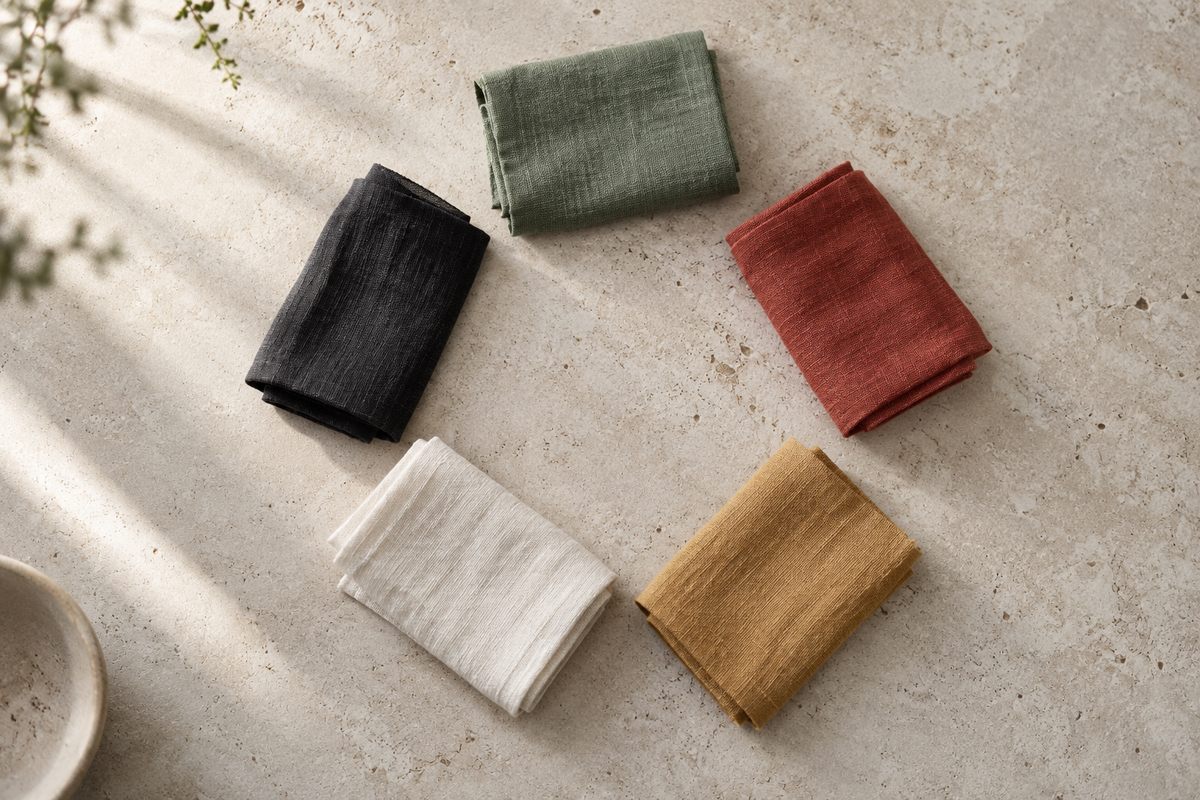
The traditional Five Colors, wu se (五色), give the cycle a memorable palette. In the common correspondence, Wood is qing, Fire red, Earth yellow, Metal white, and Water black. Qing (青) spans blue-green meanings in traditional color language; green is a familiar choice when expressing Wood through modern jewelry.
| Phase | Traditional color | Contemporary styling extension | Possible emotional reading |
|---|---|---|---|
| Wood | Qing (青), blue-green | Leaf green, soft teal | Growth and an unfolding beginning |
| Fire | Chi (赤), red | Warm red or a small vermilion accent | Warmth, courage, and expression |
| Earth | Huang (黄), yellow | Ochre, brown, camel | Steadiness and belonging |
| Metal | Bai (白), white | Pale metal, silver-gray, or a gold accent | Clarity and refinement |
| Water | Hei (黑), black | Ink tones or deep blue | Depth, reflection, and renewal |
The first color column records the traditional mapping; the next translates it into a contemporary palette. Gold, gray, brown, and navy offer useful design choices without replacing white, yellow, and black in the standard five-color sequence. The emotional readings are ways to tell a present-day story through those colors.

Following the generating order gives qing → red → yellow → white → black → qing. A full circle can express continuity, while a two-color pairing can highlight one relationship: green and red for growth becoming expression, or black and green for care nourishing a new beginning.
A little space makes a palette feel personal
Five equal color bands are one choice among many. For a room, an outfit, or a design sketch, you could try roughly 60% main color, 30% supporting color, and 10% accent. This is a modern composition choice, not an ancient Five Phase proportion. On a bracelet, it can become a gentle preference for one dominant tone, a smaller companion group, and a single bright detail rather than a rigid bead-count calculation.
Imagine camel fabric with a white shirt and a small metal brooch, or a deep blue setting with fresh green detail. Soft transitions, repeated curves, and the natural grain of a material can connect colors without making the whole piece visually busy. A stone’s quiet variation or a woven thread may do more for the story than a perfectly uniform stripe.

Related traditions give these colors other settings. The Four Symbols (四象) are the Azure Dragon (青龙) of the east, Vermilion Bird (朱雀) of the south, White Tiger (白虎) of the west, and Black Tortoise (玄武) of the north. They form a four-direction group. Earth’s central yellow belongs to the five-direction correspondence; central guardian figures vary with the particular tradition. In a personal five-color design, the circular sequence itself can beautifully express renewal.
Xiang Sheng in jewelry: materials, shapes, and companionship
A Five Elements bracelet can carry the full cycle around the wrist, or bring two neighboring phases into conversation. The most touching choice often begins with the relationship you want to honor: encouragement before a new venture, gratitude for steady friendship, or the wish to keep growing alongside someone you love.
Materials that tell a shared story
Color and material can suggest different associations. A designer may read green jade through Wood’s palette, pair pearls with metal to evoke Metal and Water, or place yellow stone beside a white metal detail to recall Earth and Metal. These are customary or contemporary interpretations of materials; a gemstone’s Five Phase assignment can vary with the color, context, and design approach.

For a warm Earth-to-Metal composition, citrine or an amber bracelet can introduce yellow and honey tones. Gold-colored accents, rutilated quartz, or a tiger eye bracelet offer other ways to repeat warmth and light. The visual relationship may carry a wish for stability ripening into a prosperous, well-rooted life.

For Water-to-Wood inspiration, deep-toned obsidian or blue aquamarine can accompany green stone or sandalwood beads. Pearls bring another water-related association through their origin. Blue, black, green, and the warmth of wood create different moods, so the wearer can choose the pairing that best expresses renewal, gentleness, or the hope of a fresh start. The Five Elements crystals guide explores these material and color associations in more detail.

Wood paired with Hetian jade offers a different kind of harmony: visible grain beside a smooth surface, an organic rhythm beside a soft luster. That is material companionship in a modern design. In the standard generating cycle, Wood’s next phase is Fire, so “Wood and Earth generate each other” would describe a different claim. The beauty of the wood-and-jade pairing can speak for itself as two textures brought into balance.

Lacquer, silk cord, metal, resin, and wood can likewise offer contrasting textures within a contemporary composition. A dark lacquer surface may set off a pale stone; a thread may soften the meeting of two harder forms. Such combinations let the idea of mutual support become visible without requiring every component to stand for a different phase.
Interlocking circles: staying connected while remaining whole
Two linked circles make companionship easy to feel. Each ring keeps its own shape, while the connection creates a shared movement. In a contemporary pendant or pair of keepsakes, that can express meeting, remaining close, and making room for each other’s life. A simple loop may carry as much tenderness as a more elaborate motif.

The related imagery of double-disc jade brings two round forms together in its own jewelry tradition. When choosing a circular design, attend to its actual structure: linked rings, joined discs, and concentric forms each make a different visual statement. What connects them emotionally is the possibility of shared wholeness—a wish to belong together without losing the self.
Flowers, leaves, and forms that grow together
A flower gains rhythm from the leaves around it; a curling vine leads the eye toward a new bud. In modern jewelry, a leaf becoming a petal or two stems meeting can give Xiang Sheng a living shape. The whole design reads through the relationships between its parts, suggesting affection that grows through everyday attention.

A pair of fish moving around one another can offer a similarly flowing composition, while a branching line can suggest one beginning opening into many possibilities. These are design readings to enjoy in the piece in front of you. Their appeal lies in the wish for shared vitality and a life that keeps unfolding, often expressed as sheng sheng bu xi (生生不息), life renewing without end.
Solid and open space: room for the other
In openwork jade carving or pierced metal, the material and the opening shape one another. A curve frames a space; the space makes the curve legible. This interplay of solid and void, xu shi xiang sheng (虚实相生), offers an artistic way to understand how one part gives presence to another. A pendant can feel light and full of movement even when its outline is simple.

There is a related phrase in chapter 2 of the Dao De Jing (道德经): you wu xiang sheng (有无相生), often understood as being and nonbeing arising in relation to one another. It appears beside pairs such as difficult and easy, long and short, and high and low. This is a reflection on interdependence, with a different structure from the Five Phase generating cycle. In a quiet piece of jewelry, it can invite attention to what is present and the breathing space around it.
A gift that says, “May we help each other grow”
Xiang Sheng gives a gift a language of companionship. For someone beginning a course of study or a new creative pursuit, Wood and Fire can express confidence in the work taking root. For a person rebuilding a routine, Water and Wood can carry a wish for care, patience, and renewal. For an anniversary or a lasting friendship, linked forms can speak of the ways two lives continue to encourage one another.
A keepsake can also hold gratitude across generations. A familiar material, a repeated color, or a shape remembered from a family object may matter more than a complex arrangement. The story travels with it: “You helped me grow,” “I am here for your next beginning,” or “May the warmth we share become something lasting.”

A personal note might read: “May we keep nourishing what is good in each other. May every new season bring room to grow.” Another gentle wish is ping an ru yi (平安如意): peace and safety, with life unfolding as you hope. These words give the object a place in a real relationship, making its colors and forms part of a remembered moment.
Explore the Eastern Story Blessing collection with that feeling in mind: a story to carry close, a hope to welcome, and a reminder of the people who help your life flourish.
Frequently asked questions
Related Posts


