
Sun Wukong remains popular because he is more than a powerful Monkey King: he is rebellious yet loyal, comic yet formidable, impulsive yet capable of growth. In the Ming-dynasty hundred-chapter novel Journey to the West, Xiyouji (《西游记》), his stone birth, magical transformations, defiance of Heaven, and long pilgrimage create a hero who can carry adventure, humor, spiritual reflection, and hope at the same time. Each generation can meet a different Wukong without losing the courageous, quick-witted figure at the heart of the story.

That is why his appeal reaches far beyond a single book. Opera, storytelling, animation, television, manga, film, and games can emphasize different parts of him: freedom, ingenuity, spectacle, companionship, discipline, or the determination to rise after defeat. The result is an Eastern hero who feels ancient and continually new.
Who is Sun Wukong in Journey to the West?
Sun Wukong (孙悟空), commonly called the Monkey King, is the most vivid protector in Journey to the West, a late-sixteenth-century novel traditionally attributed to Wu Cheng’en. The book belongs to a much longer stream of pilgrimage tales, performance traditions, religious imagery, and monkey-hero stories, but its hundred-chapter form established the version of Wukong most readers recognize today.
He is born when a stone egg, formed from a magic stone on Flower-Fruit Mountain, meets the wind and becomes a stone monkey. His first great act is not a battle: he courageously passes through a waterfall and discovers Water-Curtain Cave, earning the title Handsome Monkey King, Meihou Wang (美猴王). Fear of death later sends him across the seas in search of a teacher. The Patriarch Subhuti gives him the name Sun Wukong and teaches him methods of cultivation, the seventy-two transformations, and cloud-somersault travel.

| Name or title | Story stage | What it reveals |
|---|---|---|
| Stone Monkey (石猴) | Miraculous birth | A hero without an ordinary lineage or assigned social place |
| Handsome Monkey King (美猴王) | Water-Curtain Cave | Courage and leadership recognized by his community |
| Sun Wukong (孙悟空) | Training with Subhuti | A named seeker learning power and self-cultivation |
| Protector of the Horses, Bimawen (弼马温) | First office in Heaven | The humiliation that sharpens his conflict with hierarchy |
| Great Sage Equal to Heaven (齐天大圣) | Rebellion against Heaven | Enormous confidence, pride, and refusal to accept belittlement |
| Pilgrim, Sun Xingzhe (孙行者) | Journey with Tang Sanzang | Power redirected toward protection and shared purpose |
| Victorious Fighting Buddha (斗战胜佛) | Completion of the pilgrimage | Recognition after perseverance, service, and spiritual growth |
Seven reasons the Monkey King stays popular
1. His personality is built from memorable contradictions
Wukong is clever enough to expose a trap and proud enough to create a new one. He can terrify an enemy, tease a companion, challenge a celestial court, and remain deeply attached to the monkeys of Flower-Fruit Mountain. His strength never makes him emotionally simple. The same confidence that inspires people can become impatience; the same refusal to submit can become an inability to listen.
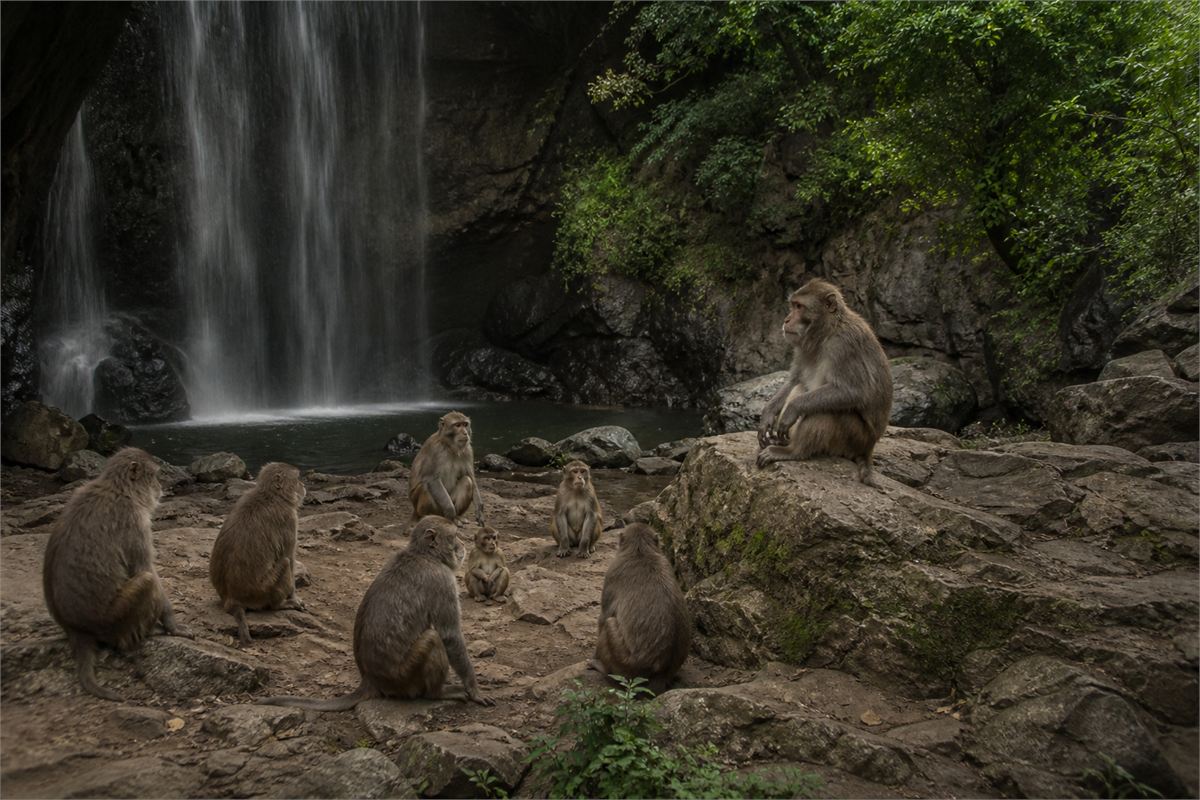
These tensions keep him alive on the page. He is not admired because every choice is correct. He is admired because his courage, wit, loyalty, and mistakes remain visible together. Readers can enjoy his sharp edge while watching him learn where strength is most worthy.
2. His origin story makes freedom feel possible
A stone-born monkey begins with no inherited rank, official teacher, or place in the celestial order. He earns leadership by going where the other monkeys hesitate to go, then leaves comfort behind to seek an answer to mortality. That beginning carries a durable wish: a person need not remain limited by the position the world first gives them.

His rebellion in Heaven makes this wish spectacular. After discovering how lowly the office of Bimawen is, he returns to Flower-Fruit Mountain and claims the title Great Sage Equal to Heaven. The later thefts of peaches, heavenly wine, and Laozi’s elixir intensify the conflict until the rebellion becomes the famous Havoc in Heaven, Danao Tiangong (大闹天宫). The episode is thrilling because it turns wounded dignity, appetite, mischief, and resistance into cosmic action.

3. His powers are precise, visual, and endlessly adaptable
| Power or object | Core detail in the novel | Why audiences remember it |
|---|---|---|
| Ruyi Jingu Bang (如意金箍棒) | An iron treasure once used to gauge the waters; it bears the name “As-You-Will Gold-Banded Cudgel” and a stated weight of 13,500 jin | It can grow or shrink, giving Wukong an unmistakable weapon and silhouette |
| Seventy-two transformations (七十二变) | Learned from Subhuti as transformations useful for evading calamity and solving dangers | Disguise, infiltration, comedy, escape, and combat can all grow from one ability |
| Cloud somersault, Jindouyun (筋斗云) | A somersault covers 108,000 li in the novel’s marvelous geography | Speed and freedom become instantly visible |
| Hair transformations, Shenwai Shen (身外身) | His hairs can become copies, creatures, or useful objects according to need | One hero can suddenly become a crowd, a trick, or a solution |
| Fiery golden eyes (火眼金睛) | Associated with his ordeal in Laozi’s furnace and often used to discern suspicious appearances, though smoke troubles his eyes | Perception becomes heroic while retaining a real limitation |
| Tight fillet (紧箍儿) | Placed on him during the pilgrimage and tightened when Tang Sanzang recites the spell | An inner struggle over discipline becomes a visible dramatic symbol |
The exact numbers help the wonder feel concrete: 13,500 jin for the staff and 108,000 li for one somersault. Yet the powers remain interesting because they do not erase difficulty. Wukong can be fooled by a convincing transformation, hindered by smoke, restrained by a magical treasure, or forced to seek help. Ingenuity and cooperation matter alongside force.

4. Journey to the West gives him a perfect story engine
The novel first gives Wukong an epic of his own: stone birth, Water-Curtain Cave, training, the Dragon Palace, the underworld, Heaven, the furnace, rebellion, and confinement beneath Five Elements Mountain. It then places that already famous troublemaker inside a team. Freed to accompany the scripture-seeking monk Tang Sanzang, he travels with Zhu Bajie, Sha Wujing, and the White Dragon Horse.
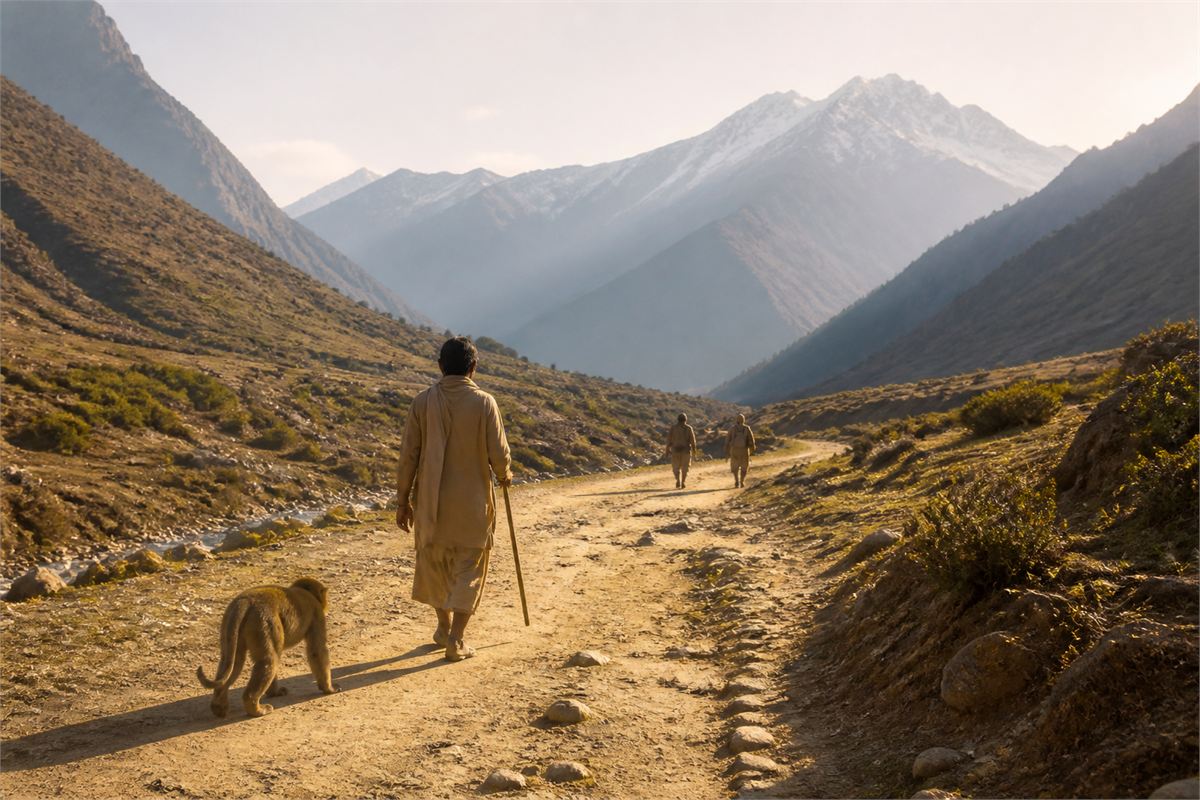
Every new encounter can test a different part of him. White Bone Demon tests perception and trust. Red Boy tests the limits of resistance to fire and smoke. The Flaming Mountains demand disguise, negotiation, persistence, and help from others. The pilgrimage’s many trials create room for action, mystery, comedy, disagreement, reconciliation, and renewed purpose without turning the book into one repeated fight.

Readers who want the wider literary context can begin with the Four Great Classical Novels guide. That page compares the four works and where to start; this page remains focused on why Wukong himself travels so effectively across cultures and media.
5. Discipline changes his purpose without erasing his spirit
After the Buddha subdues him beneath Five Elements Mountain, Wukong spends roughly five centuries waiting for the pilgrimage that will release him. The later tight fillet is painful and coercive, and the relationship between master and disciple is often difficult. The novel does not make that tension disappear. Instead, it asks what happens when extraordinary ability must serve something beyond pride and appetite.

Wukong does not become mild or passive. He remains suspicious, inventive, outspoken, and ready to act. What gradually changes is the direction of his power: the monkey who once fought for immortality, rank, and recognition repeatedly returns to protect his companions and complete a shared mission. At the journey’s end he receives the title Victorious Fighting Buddha. When he asks Tang Sanzang to remove the fillet, he discovers that it is already gone—a gentle final image of outward restraint no longer being needed.

The Sun Wukong headband guide explores that symbol’s particular tension between freedom, commitment, and self-command. Here it matters as one part of a larger reason for his popularity: audiences can see both the untamed Monkey King and the dependable protector in the same life.
6. He carries courage, loyalty, and hope—not rebellion alone
Modern readers often celebrate Wukong as a rebel, but the novel gives that quality a wider frame. His defiance can answer humiliation and unfair authority; it can also be driven by vanity and anger. His fuller appeal comes from what he adds to freedom: persistence after defeat, loyalty after conflict, resourcefulness under pressure, and the willingness to return when his companions need him.

That combination gives the character warmth. He carries a wish for courage without surrendering compassion, confidence without abandoning responsibility, and adaptability without losing identity. A Monkey King image can therefore accompany someone beginning again, facing a difficult path, protecting loved ones, or learning to guide strong energy toward a meaningful purpose.
7. Every generation can build a new doorway into the story
Stage traditions made Wukong recognizable through acrobatics, facial expression, costume, and staff work. The animated Havoc in Heaven, created in two parts in 1961 and 1964 under director Wan Laiming, translated the celestial rebellion into a landmark visual style. The television series that began airing in 1986 gave many families a shared voice and movement for the Monkey King. Later films and animation, including Monkey King: Hero Is Back (2015), reshaped his emotional journey for new audiences.
International audiences may first meet echoes rather than a direct adaptation. Akira Toriyama’s Dragon Ball, launched as a manga in 1984, drew its early premise and the name Son Goku—the Japanese reading of Sun Wukong’s name—from Journey to the West, then developed into its own world. Black Myth: Wukong (2024) used the classic as the foundation for a modern action role-playing game. These works are not substitutes for the novel, and their original plots and designs belong to their creators. They show how one old character can open a path back toward the classic.

Why does Sun Wukong appeal across cultures?
- The outsider versus a rigid hierarchy: the emotional conflict is easy to understand even when the celestial offices are unfamiliar.
- The trickster who becomes a protector: comedy and mischief can mature into loyalty without losing their spark.
- A visible language of power: staff, cloud, transformations, hairs, eyes, armor, and headband remain legible across languages.
- A team journey: Wukong’s brilliance matters, but so do disagreement, trust, rescue, and cooperation.
- A hopeful growth story: failure and restraint do not end his freedom; they help him discover a purpose worthy of it.
- Room for reinterpretation: creators can emphasize adventure, spirituality, humor, family memory, spectacle, or inner discipline while keeping a recognizable core.
This portability also requires clear boundaries. A commercial character inspired by Wukong may borrow a name, staff, cloud, tail, transformations, or quest structure while remaining a separate creation. Likewise, a film or game may invent events that never occur in the hundred-chapter novel. Distinguishing the classic from an adaptation makes both easier to appreciate.
Sun Wukong and the zodiac Monkey are related—but not the same
Sun Wukong is a literary and mythic figure. The zodiac Monkey is one of the twelve animals in the calendrical cycle and corresponds to the earthly branch Shen (申). Modern art and gifts sometimes connect them through qualities such as intelligence, agility, curiosity, and invention, but the two belong to different stories and answer different questions.

The Eastern zodiac Monkey guide covers Monkey years, traditional traits, symbolism, and gifts. Keeping that topic separate prevents the Monkey King’s pilgrimage from being mistaken for zodiac doctrine.
What Sun Wukong symbols can carry today
| Motif | Wish or meaning it may carry |
|---|---|
| Stone Monkey | New beginnings, self-discovery, and potential beyond an assigned place |
| Ruyi Jingu Bang | Decisive action, adaptability, and strength guided by intention |
| Cloud somersault | Movement, possibility, and courage to cross a great distance |
| Fiery golden eyes | Discernment, alertness, and seeing through confusion |
| Great Sage Equal to Heaven | Dignity, confidence, and resistance to humiliation |
| Tight fillet | Commitment, self-command, and growth through responsibility |
| Pilgrim protector | Loyalty, companionship, perseverance, and guarding a shared hope |
A figure, pendant, carving, or other meaningful object inspired by Wukong may be chosen as a companion for courage, protection, wisdom, resilience, and forward movement. The strongest designs do more than assemble familiar costume pieces: they decide which chapter of his character they wish to carry. For readers exploring other intention-led objects, the Blessing collection offers a wider path through Eastern symbols and good wishes.

The enduring heart of the Monkey King
Sun Wukong endures because his story protects the spark that first sends him through the waterfall while giving that spark somewhere meaningful to go. He challenges Heaven, survives defeat, learns to travel with others, returns to the path after conflict, and completes a mission larger than himself. His freedom is never bland, and his growth never erases his wit.
For people who keep his image close, the Monkey King can carry a warm and demanding hope: meet difficulty with courage, confusion with intelligence, companionship with loyalty, and power with responsibility. That wish is large enough to cross languages, centuries, and media—and personal enough to accompany an ordinary day.

Frequently Asked Questions
Related Posts


