
Sun Wukong’s famous “golden headband” and his golden staff are two different objects in Journey to the West. The band on his head is the Tight-Fillet, or jinguer (紧箍儿), controlled by the Tight-Fillet Spell; the weapon in his hand is the Ruyi Jingu Bang (如意金箍棒), a size-changing iron staff with golden hoops. One restrains the Monkey King, while the other lets his extraordinary power take form.
Together they create one of the clearest images in Eastern storytelling: strength guided by purpose, freedom tested by responsibility, and a fierce spirit learning how to protect what matters. Yet the novel also preserves an uncomfortable truth—the headband is placed on Wukong through deception and enforced through pain. Any thoughtful interpretation must hold growth and coercion in view at the same time.
What is the band on Sun Wukong’s head called?
In the novel, the object worn by Sun Wukong is most precisely called the Tight-Fillet, jinguer (紧箍儿). English readers may encounter “tightening fillet,” “golden fillet,” “golden hoop,” “golden headband,” or simply “Sun Wukong’s headband.” The everyday Chinese expression jingu (金箍), “golden hoop,” is widely understood today, but it can blur an important distinction inside the story.

The incantation is called the Tight-Fillet Spell, jinguzhou (紧箍咒). Guanyin also introduces it to Tang Sanzang as the “True Words for Calming the Mind” (定心真言). The spell and the fillet are related, but they are not the same thing: one is the spoken formula, and the other is the object that tightens and causes Wukong intense pain when the formula is recited.
How does Sun Wukong receive the Tight-Fillet?
Chapter 14 gives the key sequence. After Wukong leaves Tang Sanzang in anger, Guanyin appears in disguise and gives the monk a cotton robe, a flower-trimmed cap, and the secret spell. When Wukong returns, he notices the attractive cap among his master’s belongings and asks to wear it. Tang Sanzang agrees. Once it is on his head, the hidden fillet remains even after the cap is removed.
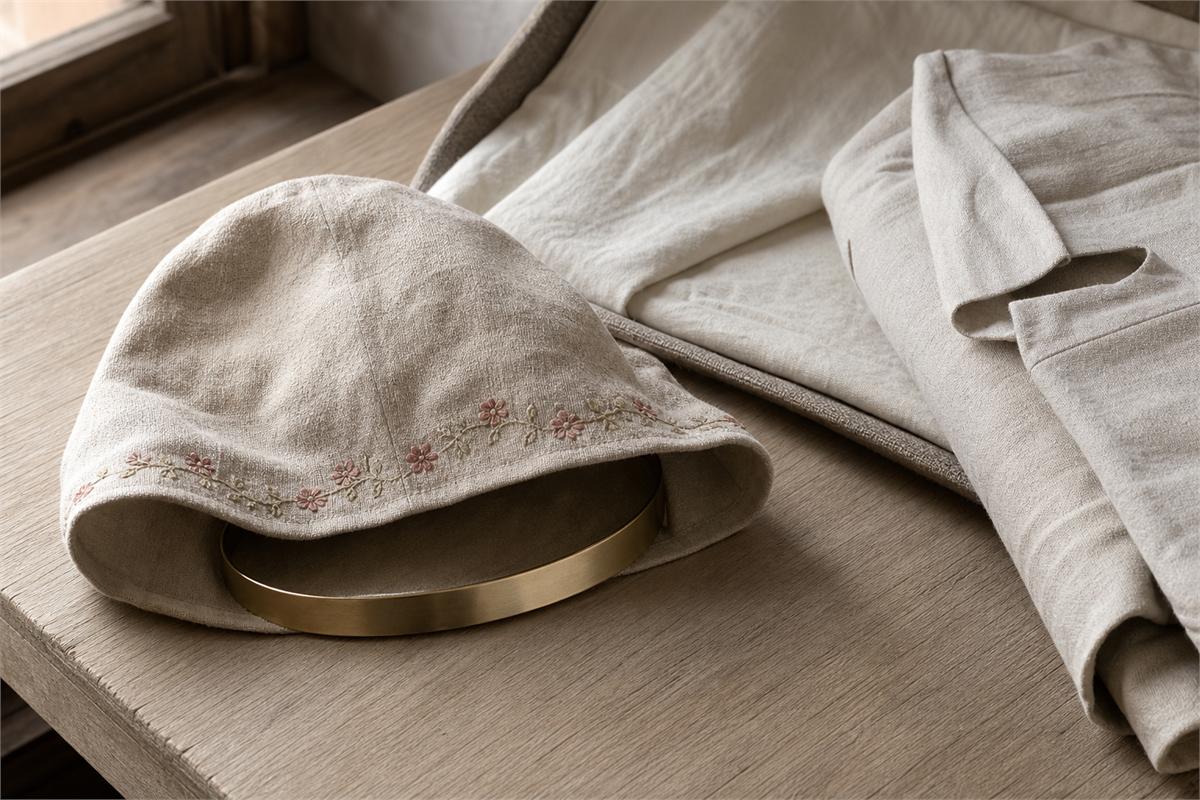
Tang Sanzang then recites the spell, and Wukong suffers severe head pain. He tries to remove or destroy the band but cannot. The episode establishes the practical relationship that continues through the pilgrimage: Tang Sanzang knows the words, and the Tight-Fillet responds. The novel does not need invented ideas about contracts, damage to the soul, or a modern technical “mechanism” to make the scene powerful. Its drama lies in deception, pain, authority, and the unstable trust between master and disciple.
What are the three fillets given to Guanyin?
Chapter 8 says that the Buddha gives Guanyin three similar-looking fillets together with three different spells: the Gold-Fillet, Tight-Fillet, and Prohibitive-Fillet—often rendered in English as the Golden, Constrictive, and Prohibitive fillets. They are tools for bringing powerful beings into the pilgrimage’s religious order. The novel later assigns them in three separate stories.

| Fillet | Who receives it? | What happens in the novel? |
|---|---|---|
| Tight-Fillet (紧箍儿) | Sun Wukong | It becomes the band controlled by Tang Sanzang’s Tight-Fillet Spell. |
| Prohibitive-Fillet (禁箍儿) | Black Bear Spirit | Guanyin subdues him and takes him to Mount Luojia as a guardian. |
| Gold-Fillet (金箍儿) | Red Boy | Guanyin transforms it into five bands for his head, wrists, and ankles before accepting him as Sudhana, the Child of Goodly Wealth. |
A popular modern explanation maps the three fillets onto the Buddhist triad of discipline, concentration, and wisdom. That can be a later interpretive framework, but the novel does not present the three objects as a direct, explicit one-to-one lesson in “precepts, meditation, and wisdom.” Keeping that boundary clear allows the book’s own episodes to remain vivid.
Does the Tight-Fillet disappear at the end?
Yes, but the wording matters. In Chapter 100, after Wukong has received the title Victorious Fighting Buddha, he asks Tang Sanzang to recite a “loosening spell” so the band can be removed and broken. Tang replies that it should already be gone now that Wukong has become a Buddha. Wukong touches his head and finds that it is indeed absent.

The scene does not describe the band falling off in front of the company, nor does it explain a mechanical process. Readers often understand its absence as a sign that external restraint is no longer required. That is a reasonable literary interpretation, not a technical rule stated by the narrator. It can suggest maturity, inner discipline, or release, while the memory of how the band was imposed keeps the ending ethically complex.
Where does the Ruyi Jingu Bang come from?
Sun Wukong finds the Ruyi Jingu Bang in the treasury of the Eastern Sea Dragon King in Chapter 3. It is first described as a divine iron pillar that had been used during Yu the Great’s flood-control work to determine the depth of rivers and seas. The Dragon King regards it as an ancient piece of iron, but it has recently begun to shine, and Wukong is led to it while searching for a weapon heavy enough to suit him.

The chapter does not identify Taishang Laojun as its maker. It also does not say that the staff consciously recognizes Wukong as its destined owner. The light around it and its responsiveness create a sense of a long-awaited meeting, but “active recognition,” “fated weapon,” and similar phrases belong to later retellings or interpretation unless clearly labelled as such.
What can the golden staff do?
The staff is an iron weapon with a golden hoop at each end. Its inscription gives its full name—Ruyi Jingu Bang—and its weight as 13,500 jin. “Ruyi” means “as one wishes,” and the name fits its defining ability: when Wukong asks it to become shorter or thinner, it changes accordingly.
- It can grow or shrink in response to Wukong’s command.
- It can become as small as an embroidery needle and be stored in his ear.
- It can expand to enormous proportions when he displays his cosmic form.
- Its great weight makes it unusable to ordinary bearers but natural in Wukong’s hands.
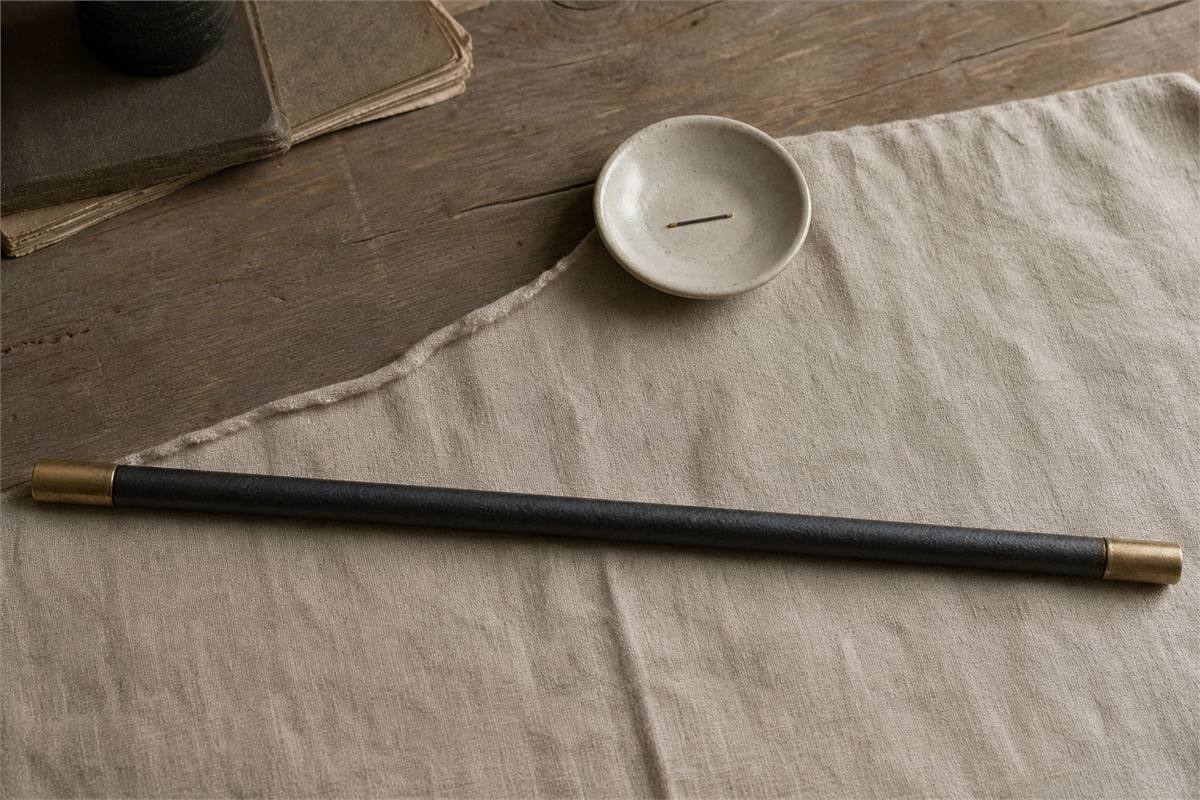
The novel describes the middle as dark iron and the two ends as golden hoops. It does not say that the main body is “nine-times-refined wrought iron” or that thin sheets of gold were simply wrapped around it. Nor does the text invite a modern bullion valuation. The “golden-hooped” name describes its form; the object’s value in the story comes from its responsiveness, history, and partnership with Wukong.
Headband and staff: why the contrast matters
| Tight-Fillet | Ruyi Jingu Bang | |
|---|---|---|
| Chinese name | 紧箍儿 | 如意金箍棒 |
| Basic role | Restrains Wukong through an incantation | Expresses Wukong’s fighting power and adaptability |
| How it reaches him | Placed through a deceptive cap episode | Chosen from the Dragon Palace treasury |
| Who controls it? | Tang Sanzang can activate it with the spell | Wukong commands its size |
| Central tension | Authority, pain, discipline, and coercion | Agency, mastery, flexibility, and protection |

It is tempting to turn the pair into a neat slogan—one “controls the mind” while the other “handles the world.” The novel is richer than that formula. The staff does reveal Wukong’s ability to adapt power to circumstance, and the fillet repeatedly forces questions about the direction of that power. But neither object has one fixed allegorical meaning.
What does Sun Wukong’s headband symbolize today?
Discipline and the direction of strength
One enduring reading sees the Tight-Fillet as the boundary that asks great ability to serve something beyond impulse. Wukong’s courage, perception, and energy are never erased; the pilgrimage gradually gives them direction. In this sense, the headband can carry a modern wish for patience, focus, responsibility, and the wisdom to use strength in protection of others.
Coercion and the moral limits of authority
The same symbol cannot be separated from the way it is imposed. Tang Sanzang can misjudge events, and Wukong can be punished even when he sees danger more clearly than his master. The band therefore also asks who has the right to control another person, whether pain can ever create genuine understanding, and how trust survives unequal power. It should not be used to romanticize punishment or make forced obedience look like the only path to growth.
From an outer boundary toward inner choice
The disappearance at the end makes possible a gentler interpretation: a boundary once felt only as force may, over a long journey, be reconsidered as a chosen commitment. Yet Wukong’s growth is not simply “learning obedience through pain.” He remains discerning, resistant, playful, and formidable. His maturity lies partly in learning when to fight, whom to protect, and how to carry responsibility without surrendering his essential spirit.

Modern film and popular culture have given the headband additional meanings, including the painful choice between personal freedom, love, and responsibility. Those later associations explain part of the image’s emotional reach, but they should not be mistaken for plot facts from the Ming novel.
Why these two objects still speak to readers
The headband and staff endure because they preserve a difficult balance rather than offering a simple lesson. Strength needs wisdom, commitment needs freedom, and boundaries need moral scrutiny. Wukong’s journey does not ask readers to become smaller. It asks how a brilliant, restless force can grow into courage, patience, protection, and responsible action while keeping its living fire.

For readers drawn to symbols of courage, guardianship, and an inner freedom that can live alongside chosen responsibility, Sun Wukong remains a powerful companion. Explore more stories in the Eastern Story archive, or discover meaningful symbols carried as wishes in the Blessing collection.
Frequently Asked Questions
Related Posts


One Comment