
The reclining Buddha most often represents Shakyamuni Buddha approaching or entering parinirvana: the peaceful completion of an awakened life and release from the cycle of rebirth. In many traditions, he lies on his right side in the lion posture, his head supported by his right hand or a cushion. Yet not every reclining Buddha shows the same event. Temple labels, attendants, trees, inscriptions, hand position, facial expression, and regional tradition tell you whether the image depicts parinirvana, auspicious rest, sleep, a teaching episode, or another story.

What does a reclining Buddha mean?
At the heart of the reclining Buddha meaning are peace, wisdom, compassion, impermanence, and completion. The horizontal form may first look like sleep, but a parinirvana image is not simply a portrait of tiredness or death. It remembers the Buddha at the close of his earthly life, calm amid change, after a lifetime of teaching.

This calmness does not dismiss grief. In many narrative ensembles, disciples mourn while the Buddha remains serene. The contrast gives sorrow a compassionate place within a larger vision: loss is real, change is unavoidable, and wisdom can meet both without fear or spectacle. For someone living through a transition, the image can carry a gentle wish for clarity, release, and 平安如意—peace and fulfillment as life changes.
The parinirvana story behind the image
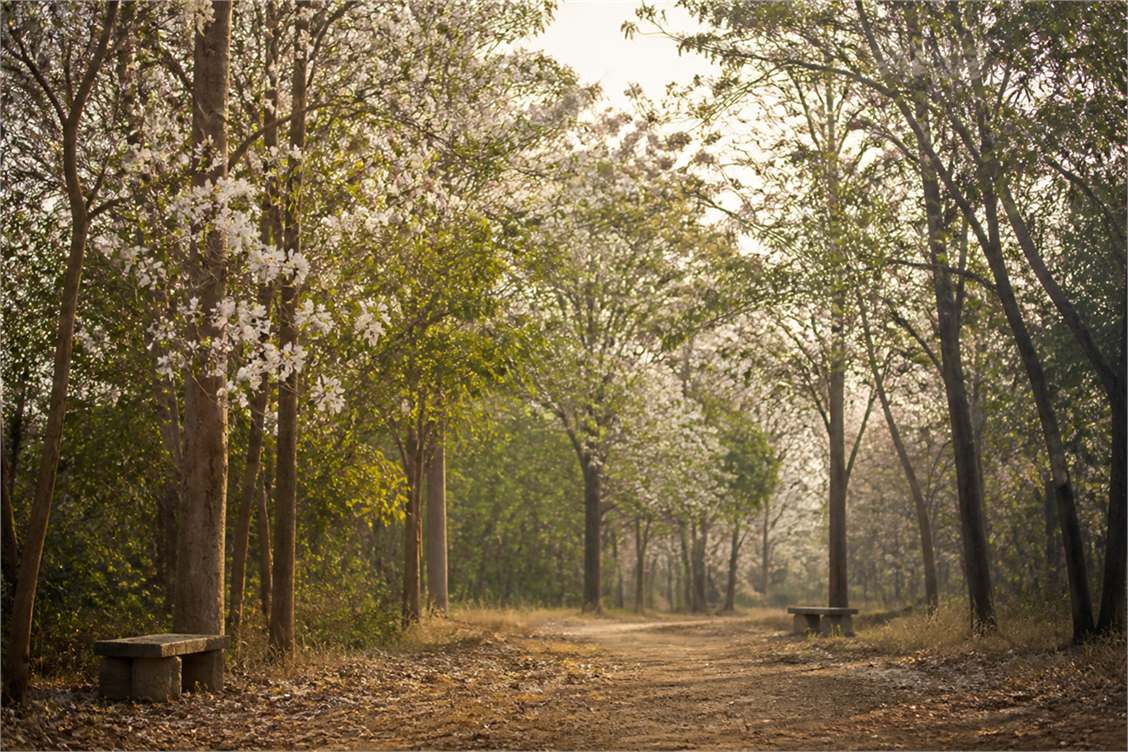
Buddhist traditions remember the elderly Shakyamuni traveling to Kushinagar, giving final guidance, reclining between sal trees, and passing into parinirvana. Artists transformed that account into a long horizontal scene: the Buddha at rest, disciples and other beings nearby, and the natural world participating in the moment.
Nirvana broadly names liberation from the causes of suffering and rebirth. Parinirvana, in common narrative usage, refers to the final passing of one who had already realized nirvana during life. English sources sometimes use “final nirvana” to make that distinction. The Chinese terms 涅槃 (niepan), 入灭 (rumie), and 圆寂 (yuanji) overlap in Buddhist translation and devotional language but are not perfect one-for-one labels in every school.
Mahayana teachings also discuss nirvana in ways that emphasize a buddha’s wisdom and compassionate activity rather than a simple disappearance into a separate place. That is one reason it is better to read a parinirvana image as a vision of awakened completion—not as a universal Buddhist diagram of what happens after death.
How to recognize a parinirvana Buddha
| Visual clue | What it often suggests | What to check next |
|---|---|---|
| Reclining on the right side | The lion posture associated with mindful composure and the final-life narrative | Hand, pillow, robe, feet, and temple label |
| Head supported by the right hand or a cushion | A formal reclining attitude rather than a casual pose | Whether the elbow is raised and how the eyes are shown |
| Feet aligned or placed one above the other | A composed, extended body in many regional traditions | Do not treat this as a rule for every period or school |
| Disciples or arhats nearby | Witnesses to the Buddha’s final teaching and passing | Some grieve; others meditate or remain composed |
| Sal trees and flowers | The grove at Kushinagar | Look for a fuller narrative setting |
| Decorated soles | Auspicious marks emphasized in some monuments | Patterns and meaning vary by place |
The familiar description—right side, head near the right hand, body extended, feet together—is useful, but it is not a checklist that makes every reclining image identical. Chinese cave art, South Asian pilgrimage images, Thai temple sculpture, and modern devotional figures can differ in direction, support, scale, materials, attendants, and narrative focus.

Is a reclining Buddha sleeping?
“Sleeping Buddha” is a common visitor and search term, and some reclining images genuinely relate to sleep, rest, dreams, or other episodes. But it should not automatically replace parinirvana Buddha. In Thai Buddhist iconography, for example, multiple reclining attitudes may be associated with different stories. A peaceful face and horizontal body alone are not enough to identify the subject.

- Parinirvana image: centers on the Buddha’s final passing and awakened completion.
- Auspicious or lion-posture rest: emphasizes mindful composure while reclining.
- Sleeping or dream narrative: belongs to a story in which sleep or a dream is actually part of the episode.
- Regional narrative image: may represent a teaching, miracle, encounter, or locally identified event.
A respectful description begins with what can be seen and what the temple or community calls it. “Right-side reclining Shakyamuni in a parinirvana scene” is precise when the setting supports that reading. “Sleeping Buddha” can remain a helpful secondary phrase, but it should not flatten all traditions into one meaning.
Why the calm face matters
The face is often the emotional center of a reclining Buddha. Lowered or closed eyes, a softened mouth, and an untroubled expression convey steadiness without coldness. Nearby disciples may weep, kneel, listen, or meditate. Their responses acknowledge the human reality of separation, while the Buddha’s composure carries the qualities of insight and peace.

For modern viewers, this contrast can offer a quiet way to sit with change. It does not demand that grief be hurried away, and it does not promise a particular destiny for someone who has died. Instead, it holds sorrow beside wisdom and compassion. Anyone facing deep or prolonged grief may also deserve support from trusted people, community care, or a qualified grief professional.
What parinirvana expresses in everyday life
- Impermanence: bodies, circumstances, and even cherished forms change.
- Completion: an ending can honor what has been learned and given.
- Inner peace: composure can be cultivated even when life is uncertain.
- Wisdom: seeing change clearly can soften clinging and fear.
- Compassion: calm is not indifference; it can make room for the feelings of others.
- Continuity: teachings, kindness, and memory can continue after a teacher’s physical presence ends.
These meanings differ from the welcoming abundance associated with Budai, the monk popularly called the Laughing Buddha, explored in our guide to the Laughing Buddha in temples. They also differ from the Pure Land associations of Amitabha in our Amitabha Buddha meaning guide. Identifying the figure and scene first keeps distinct Buddhist stories clear.

Three monuments, three ways of seeing
Famous monuments are most useful here not as a ranking, but as reminders that region, material, and architecture shape the meaning of a reclining Buddha.
Wat Pho, Bangkok
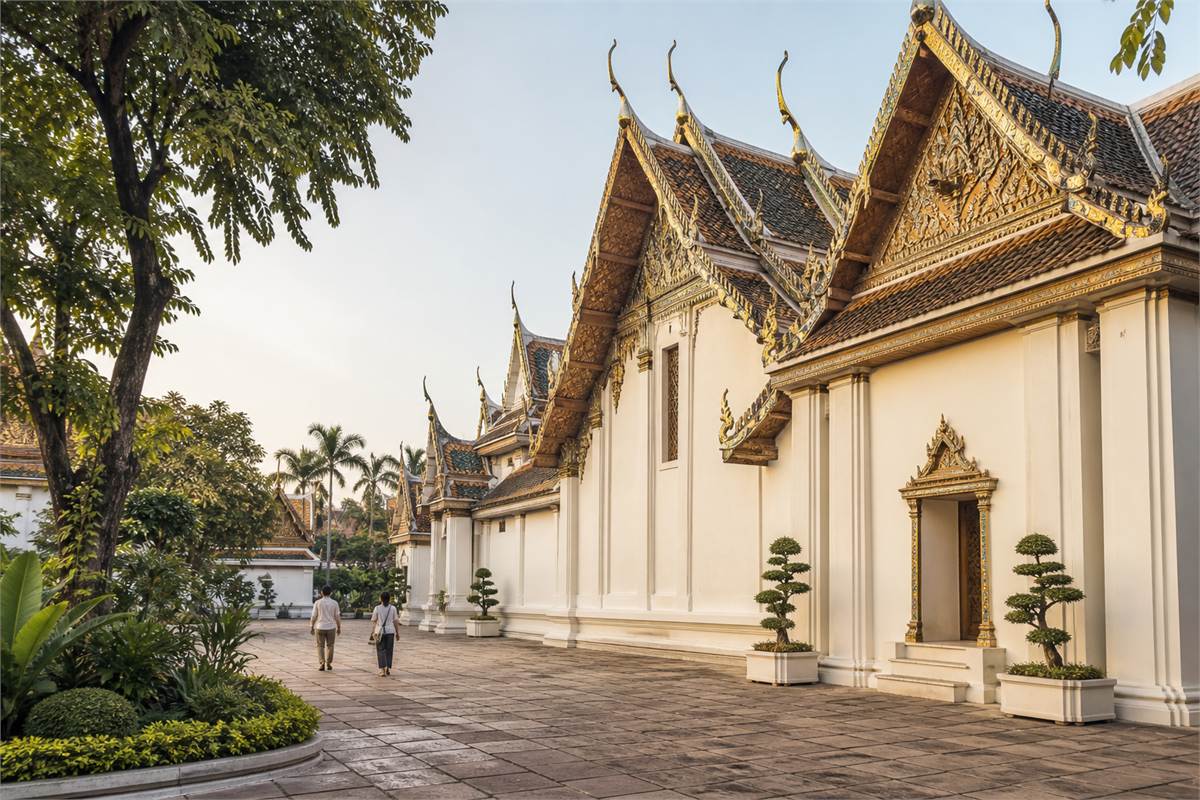
Wat Pho’s official temple information describes its celebrated reclining Buddha as 46 meters long, covered in gold leaf, with mother-of-pearl designs representing 108 auspicious signs on the soles of the feet. The visitor encounters the image gradually inside its hall: face, robe, long body, and richly patterned feet. The monument’s splendor supports devotion and contemplation; Wat Pho’s history and its traditional medicine and massage school are important parts of the wider temple, but they should not eclipse the sacred image itself.
The Dazu rock carvings
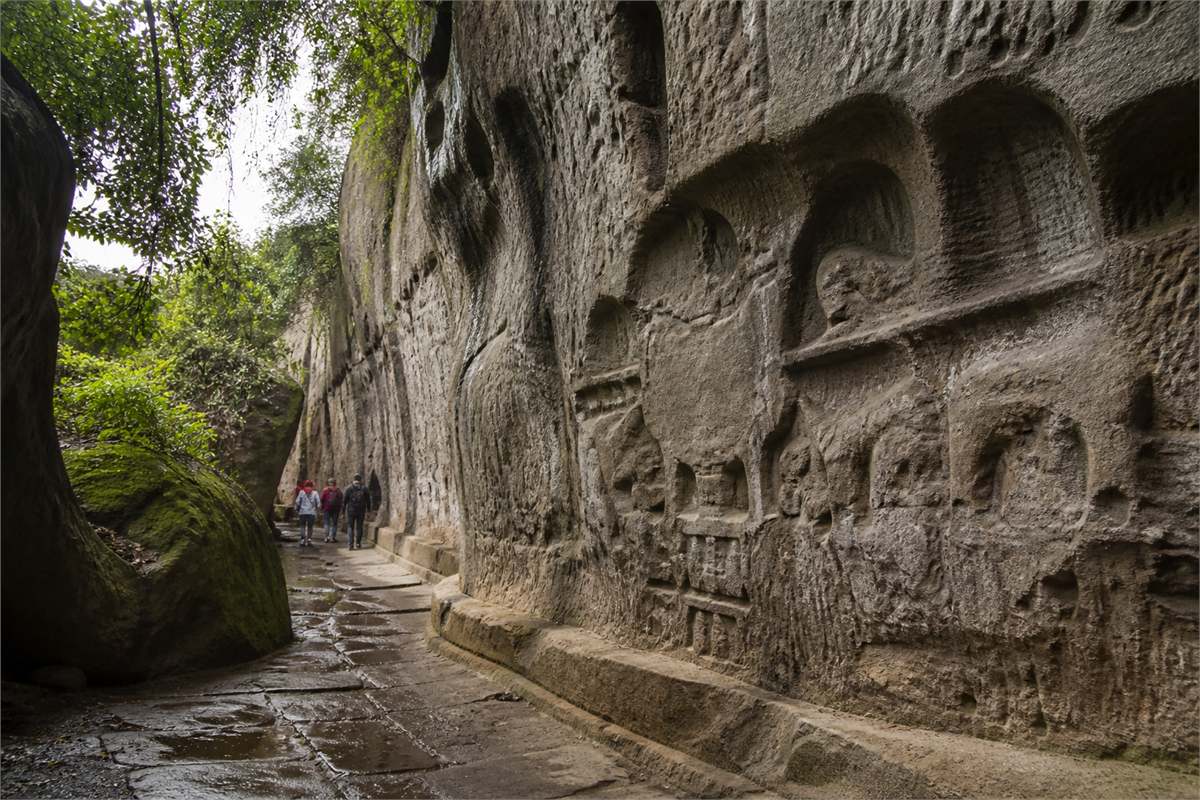
At Baodingshan in Chongqing, the parinirvana scene belongs to the larger Dazu Rock Carvings, a UNESCO World Heritage property whose principal groups date from the ninth to the thirteenth centuries. The reclining figure is part of a cliffside Buddhist program rather than an isolated statue. The surrounding carvings, landscape, and movement along the rock face make the story communal and spatial.
Kushinagar
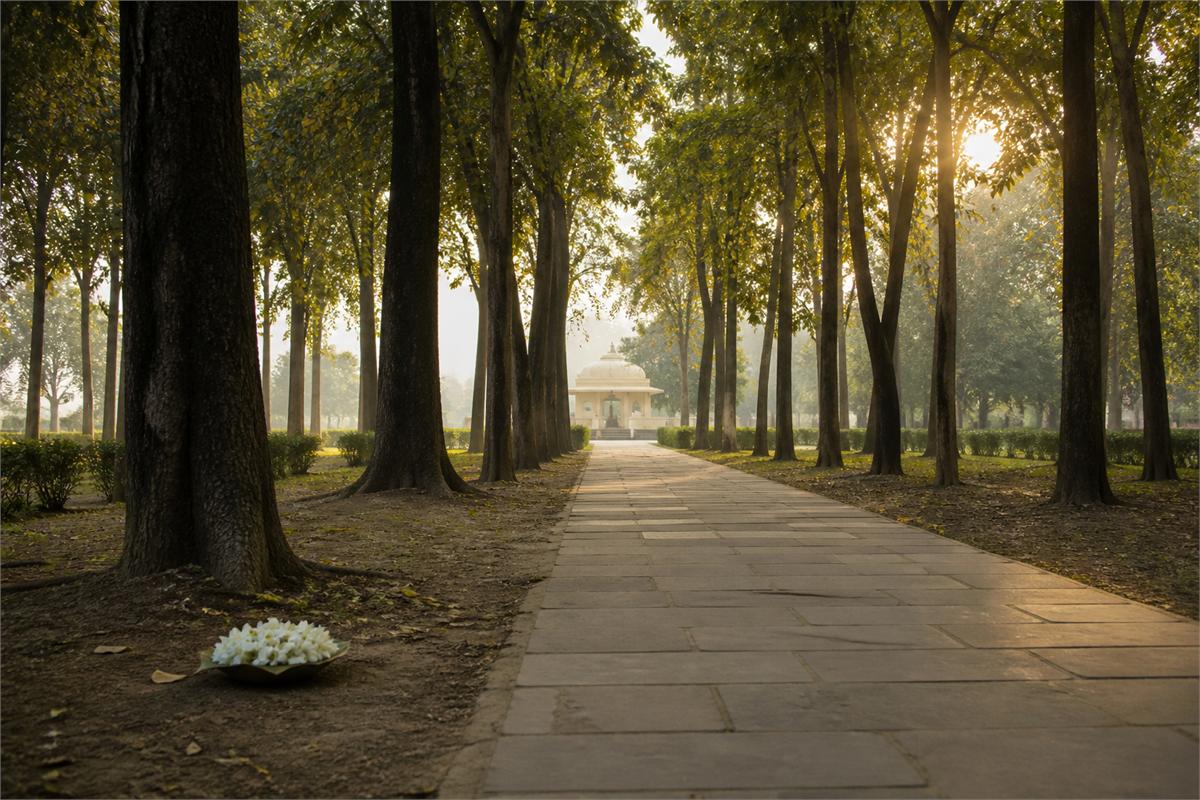
Kushinagar in northern India is revered in Buddhist tradition as the place of the Buddha’s final passing. Reclining images there connect the posture to sacred geography and pilgrimage memory. A parinirvana Buddha made far away may still look back toward this story, while expressing it through local materials and artistic language.
Other reclining Buddhas—including images in Chinese cave temples and monastery halls—may differ markedly in orientation, posture, materials, date, and accompanying figures. Those differences are meaningful. They are why claims such as “the world’s largest” or “the only correct direction” should never substitute for the monument’s own history.
Temple etiquette around a reclining Buddha
A reclining Buddha remains a sacred image, even when it is also a famous work of art or a major travel landmark. The most reliable etiquette is the guidance posted by the temple you are visiting, because clothing, shoes, photography, visitor routes, and ritual areas vary.

- Dress and behave in a way that keeps attention on the religious setting.
- Remove shoes where the temple requires it and follow designated paths.
- Keep your voice low and leave space for worshippers and monastics.
- Do not climb on the platform, touch the image, or cross ritual boundaries.
- Avoid posing as though the Buddha were a prop, imitating the reclining figure, or placing your feet toward the image when local custom regards that as disrespectful.
- Check current on-site rules before photographing; do not assume that permission in one hall applies everywhere.
Opening hours, admission arrangements, and photography rules can change. For a visit, consult the temple or site’s official information close to your travel date rather than relying on an old list.
Choosing and placing a reclining Buddha at home
A reclining Buddha chosen for the home can carry a wish for calm, clarity, compassion, and graceful completion. They express a wish—a medium through which people hope to bring about wealth, health, virtue, longevity, or a specific outcome in life. In this particular image, the strongest wish is usually for inner peace and the wisdom to meet change with steadiness.
Place the figure on a clean, stable, respectfully elevated surface with enough room to appreciate and protect the full horizontal form. A quiet shelf, meditation area, or dedicated display can work well. Keep it away from the floor, foot traffic, clutter, and any place where it may be knocked over or treated casually. If it is used devotionally, follow the practice of your own teacher, family, or community rather than a universal online “feng shui rule.”

Ideas such as “protecting the home” or welcoming 万事皆安—the wish that all may be at peace—belong to particular family and popular-cultural contexts. They can be meaningful aspirations, but they are not one binding rule shared by every Buddhist tradition. The simplest guide is sincere respect: keep the figure clean, give it visual breathing room, and let its presence encourage a calmer and kinder home.
If you are comparing devotional figures, our Guanyin and Buddha figure guide helps distinguish commonly confused subjects without turning the choice into a gender rule. For cleaning and storage, start with the object’s actual material and use the principles in Eastern Story’s object care guide.
A peaceful image of completion
The reclining Buddha most often points to Shakyamuni’s parinirvana, yet its full meaning comes from posture, setting, tradition, and the people who approach it. Its calm face does not make every reclining image identical, and it does not reduce the scene to death. It carries a warmer, deeper vision: change can be met with wisdom, sorrow can be held with compassion, and an ending can still radiate peace.
Frequently Asked Questions
Related Posts


