
People wear beaded bracelets because beads turn beauty, memory, blessing, and personal intention into something that can travel with the wearer. A strand may be chosen for color and texture, to remember a person or place, to accompany prayer, to celebrate skilled handwork, or to carry a wish for peace, love, good fortune, health, prosperity, and harmony. The meaning belongs to the particular bracelet, its materials, and the story shared by the person who wears or gives it.
That is the special warmth of a beaded bracelet: many small elements become one circle. Each bead can hold a moment, while the finished strand expresses connection and continuity. In Chinese gift language, a bracelet may accompany a wish such as ping an ru yi (平安如意)—peace and fulfillment—or bai shi ru yi (百事如意), the hope that all matters unfold as wished. They express a wish—a medium through which people hope to bring about wealth, health, virtue, longevity, or a specific outcome in life.

What does wearing a beaded bracelet mean?
There is no single meaning shared by every strand. A bright glass bracelet may be joyful fashion; a wooden strand may feel quiet and natural; a pearl bracelet can mark tenderness and celebration; a handmade design can preserve the maker’s touch. Buddhist mala bracelets belong to a practice context, while community and heritage beadwork may carry identities and histories that deserve accurate attribution.
For many wearers, touching a familiar bead becomes a personal sensory habit—a small cue to pause, remember an intention, or return attention to the present moment. The comfort comes from the wearer’s relationship with the object and routine; the bracelet should not be presented as a treatment for anxiety, sleep problems, or any medical condition.

Blessing, memory, and identity
- Blessing: colors, motifs, and charms can carry wishes for good luck, protection, affection, abundance, longevity, or yi qie ru yi (一切如意)—may everything be as you wish.
- Memory: a bead from a journey, an inherited component, or a color linked to a loved one can make the strand a wearable keepsake.
- Identity and belonging: beadwork can express cultural heritage, faith, community, or the individual voice of a maker. Use the maker’s or community’s own description instead of assigning a tradition from appearance alone.
- Personal style: repetition, color, scale, translucency, and movement let a small object quietly complete an outfit.
- Practice: some strands help count recitations or prayers. For that specific context, see Eastern Story’s guide to 108 mala beads.
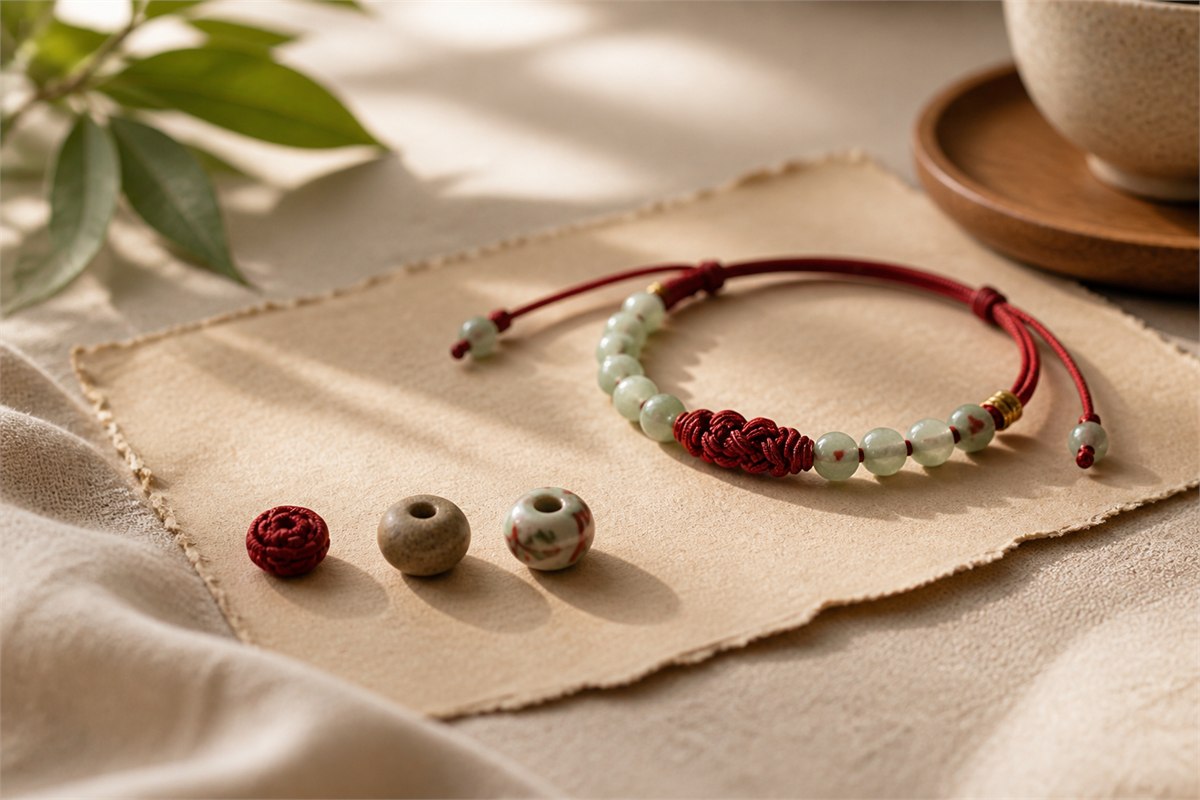
Common bead materials and the feelings they carry
Material changes a bracelet’s color, weight, sound, temperature, durability, and care. It also changes the emotional atmosphere. Natural variation can suggest individuality; translucent glass can feel luminous and festive; wood can bring warmth; ceramic beads can introduce the hand of the artisan. Choose the disclosed material rather than relying on a name or visual guess. Eastern Story’s jewelry Material Guide is the broader reference for material families.

| Material | Character and meaning | Practical notes |
|---|---|---|
| Stone, jade, and gem beads | Natural color and pattern can carry wishes for harmony, courage, affection, opportunity, or protection. | Hardness measures scratch resistance, not resistance to chipping or breaking. Treatments and porosity affect care. |
| Wood and seed beads | Warm, tactile, and often connected with nature, simplicity, prayer, or patient cultivation. | Water tolerance and finishing differ by species, coating, dye, and construction; follow the maker’s care advice. |
| Pearl and shell | Soft luster suits wishes for affection, grace, reunion, and treasured relationships. | Calcium-carbonate materials are sensitive to acids and abrasion. Wipe after wear and store separately. |
| Glass and liuli | Color, light, and skilled forming can convey joy, clarity, celebration, or traditional decorative beauty. | “Liuli” is a cultural or commercial term and does not by itself specify modern glass composition. Avoid impact and rely on product disclosure for lead or cadmium information. |
| Ceramic | Glaze, hand painting, and kiln variation give each bead an artisanal presence. | Clay body, glaze, decoration, and firing differ. Crazing may be intended or may indicate condition; inspect rather than assuming. |
| Resin and acrylic | Lightweight color, inclusions, and sculptural shapes invite playful, contemporary design. | Thermoset resin and PMMA/acrylic are different materials. Heat, solvents, coatings, and abrasion can affect them differently. |
| Metal beads and spacers | Add light, rhythm, contrast, and symbolic motifs. | 925 means sterling silver, not pure silver. 316L is a steel grade, not titanium. Plating and PVD wear depend on the base, thickness, use, and environment. |
Names such as jade, crystal, turquoise, and pearl should match the seller’s truthful material description. “Sand gold,” “imitation gold,” and similar expressions are too vague to explain composition: look for the actual base metal and surface finish. If shell, coral, wood, seed, or another wildlife-derived material is involved, choose legal and responsibly sourced material whose origin is clearly disclosed.

How bead bracelet design comes together
A successful design does not need a fixed formula. It needs a clear relationship among the beads, the wearer, and the wish the bracelet carries. Some strands are calm and repetitive; others are lively and asymmetric. One can be as meaningful as the other.

Focal beads, supporting beads, and visual rhythm
A focal bead or charm can hold the leading story, while supporting beads repeat color or texture around it. Spacer beads create breathing room and can protect surfaces that should not rub directly together. Alternating sizes create movement; gradual color changes feel gentle; asymmetry can preserve a travel bead, heirloom bead, or small symbol without forcing the rest of the strand to imitate it.
Construction that supports the story
Look beyond the front view. Check that drill holes are smooth, edges do not cut the cord, heavy elements are balanced, and dissimilar materials will not damage one another through repeated contact. Clasps should close reliably and suit the wearer’s dexterity. Stretch bracelets should return comfortably without being forced over the hand; corded and wire-strung designs need secure endings and components sized for their actual load.

How to choose a comfortable fit
Measure the bare wrist where the bracelet will sit, then compare that number with the seller’s sizing method. Some sellers quote inner circumference, some quote total strand length, and some give a wrist range. Large beads take up more internal space, so two bracelets with the same outside length can fit differently.
- Measure with a soft tape or a non-stretch paper strip. Keep it close to the skin without compressing it.
- Decide whether you want a close fit, easy movement, or room for layering.
- Confirm bead diameter, charm size, strand weight, clasp type, and whether a clasp-free bracelet can pass over the hand.
- Ask how the maker defines the listed size and whether adjustment is possible.
- For a gift, obtain the wearer’s measurement or choose an adjustable construction instead of guessing from gender, body type, or appearance.
There is no universal rule that every wrist needs the same added allowance, bead diameter, cord thickness, or hole size. Comfort depends on the wearer and the whole construction. For a more detailed measuring method, use the crystal bracelet size guide, while remembering that its examples must still be adapted to the actual material and design.

Why a beaded bracelet makes a meaningful gift
A bracelet circles the wrist and accompanies ordinary gestures, so it can feel intimate without needing to be grand. A birthday strand might carry joy and growth; a travel gift can carry safe-return wishes; a new beginning can be welcomed with courage and opportunity; a family gift may carry ping an ru yi—peace and fulfillment. Eastern Story’s Blessing collection offers more ways to connect an object with a heartfelt wish.
Begin with the recipient, not a rigid symbolism chart. Consider their favorite colors, preferred weight, wrist measurement, daily activities, metal sensitivities or allergies, and comfort with religious or cultural motifs. Include a short note explaining why you chose the bead, color, or blessing. Accurate, personal language is more touching than assigning a guaranteed power or invented romantic word origin.

DIY beaded bracelets: design with care
DIY makes the story visible because the maker chooses every transition and tie. Lay the beads out before stringing, test the weight, and inspect every hole for sharp edges. Select cord, wire, needle, clasp, and crimp components as one system rather than assuming any string will suit any bead.

- Use eye protection when cutting wire, and keep beading needles, cutters, and loose findings organized.
- Test knots, crimps, jump rings, clasps, and elastic recovery before wearing or gifting the bracelet.
- Stop using a strand if the cord is frayed, elastic remains stretched, a clasp opens unexpectedly, or a bead has developed an edge that can cut the string or skin.
- Loose beads and detached charms can be swallowed and may present choking or ingestion hazards to young children and pets. Store projects and finished jewelry securely and supervise any age-appropriate craft activity.
- Do not use smoke, flame, or household “cleansing” rituals as a care method. A clean cloth, safe storage, and material-specific instructions protect the bracelet without adding indoor-air, fire, or pet risks.
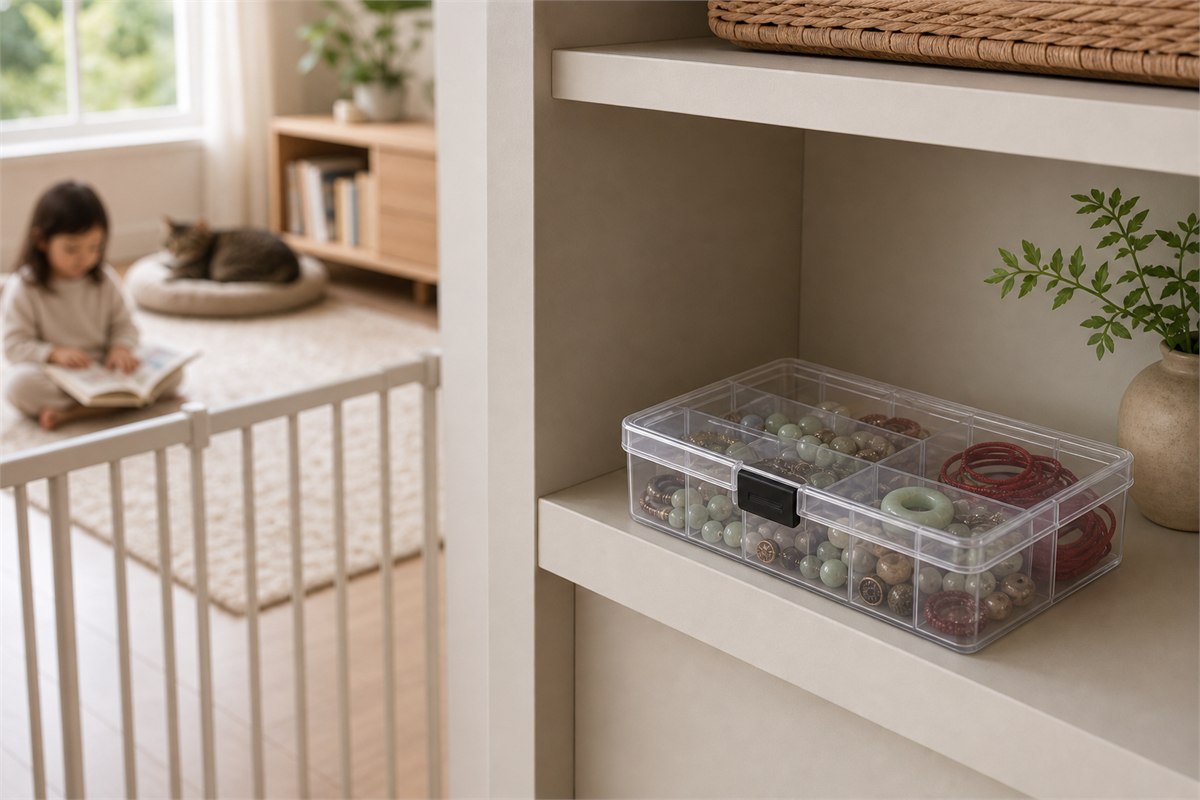
How to care for a mixed-material beaded bracelet
Care for the most sensitive component in the strand—the bead, coating, adhesive, cord, or metal finish that needs the gentlest treatment. Remove the bracelet before activities that expose it to hard impact, strong cleaners, solvents, heavy abrasion, or prolonged heat. After wear, inspect the stringing and wipe the strand gently before storing it away from pieces that may scratch it. For broader guidance, consult the Eastern Story Care Guide and the seller’s material-specific instructions.

Material-specific care at a glance
| Material | Gentle routine | Avoid or confirm first |
|---|---|---|
| Wood and seeds | Use a clean soft cloth; follow guidance for the identified species and finish. | Do not apply oil or impose a universal no-water rule without knowing the finish and construction. |
| Gemstones, jade, and crystal | Wipe gently and separate from harder items. | Confirm porosity, treatments, fillers, coatings, and whether water or soap is suitable. Hardness is not toughness. |
| Pearl and shell | Wipe with a very soft cloth after wear and store separately. | Protect from acids, perfume, harsh cleaners, abrasion, steam, and ultrasonic cleaning; dry stringing fully if it becomes damp. |
| Glass and ceramic | Handle over a soft surface and wipe carefully when the finish is sound. | Avoid impact. Painted, gilded, cracked, crazed, low-fired, or deteriorated surfaces may need specialist or maker advice before washing. |
| Resin and acrylic | Use a soft cloth and mild handling. | Avoid high heat, strong solvents, prolonged sun, and abrasive polishing unless the maker confirms compatibility. |
| Metal and plated parts | Wipe dry after wear and store separately. | Sweat, salt, cleaners, friction, base metal, and coating thickness all affect corrosion and finish life. |
Inspection is more useful than a fixed replacement calendar. Restring when the cord shows wear, loses recovery, loosens at its termination, or no longer supports the bead weight safely. Frequently worn, heavy, rough-edged, or heirloom strands may need attention sooner than a lightly worn bracelet.

A bracelet becomes meaningful through relationship
The best beaded bracelet is one whose beauty, fit, material, and story can stay close to a real life. It may hold a wish for good fortune, a loved one’s memory, a spiritual practice, or simply the delight of color in motion. When the description is truthful and the choice is personal, the bracelet becomes more than a row of beads: it becomes a circle of intention, made to accompany the wearer toward a beautiful life and all things as wished.

Frequently Asked Questions
Related Posts


One Comment