
A prayer wheel is a rotating cylinder associated especially with Tibetan Buddhism, usually made to hold written mantras or other sacred texts around a central axis. In practice, movement, recitation, attention, and compassionate intention come together. To many practitioners, turning the wheel is a way of carrying wishes for wisdom, peace, and the welfare of all beings into embodied daily practice.
The familiar English name “prayer wheel” covers several forms: a small handheld wheel, rows of fixed cylinders beside a monastery path, a large wheel in a dedicated hall, or an installation moved by water or wind. In Tibetan contexts, names are more specific; the Met, for example, identifies a handheld form as ma ni lag ’khor. “Mani wheel” is also common in English because many wheels are connected with the six-syllable mantra Om Mani Padme Hum.

The meaning of a prayer wheel
A prayer wheel gives sacred writing a physical rhythm. A practitioner may turn it while reciting a mantra, walking a pilgrimage circuit, or quietly directing the mind toward compassion. The circular motion can suggest continuity: returning to a good intention again and again, not as a hurried transaction, but as a steady practice.

Traditional Tibetan Buddhist explanations teach that turning a properly prepared wheel carries the blessing or merit associated with the mantras inside. Some describe a rotation as corresponding to the recitation of those texts. This is a religious understanding, not a measurable visitor promise. Its meaning belongs to the relationship among the written mantra, the construction of the wheel, the practitioner’s motivation, and the tradition in which it is used.
For someone encountering a wheel as a cultural object, its most generous message is still clear: compassion and wisdom are intentions worth returning to. A thoughtfully chosen wheel can carry a wish for peace in all things—平安如意—as a quiet reminder to meet everyday life with patience and goodwill.
What is inside a prayer wheel?
Many traditional prayer wheels contain a long paper roll printed or written with repeated mantras. The roll is wound around a central pole and enclosed within the cylinder. Om Mani Padme Hum is especially common, but the contents can differ by lineage, purpose, maker, and place. Other mantras, prayers, or sacred writings may be used.

The cylinder may display Tibetan or Sanskrit-script inscriptions, lotus bands, Buddhist images, the Eight Auspicious Symbols, or other motifs. An exterior inscription can indicate the wheel’s devotional context, but it does not by itself prove what is sealed inside. If the writing or imagery cannot be identified reliably, it is better to describe it modestly than to assign a mantra or deity from appearance alone.
| Part | What it does | What can vary |
|---|---|---|
| Cylinder or drum | Encloses the sacred text and rotates | Metal, wood, gilding, paint, resin, or modern composite construction |
| Central axis | Supports the roll and guides rotation | Fixed frame, tabletop base, large architectural support, or handheld shaft |
| Text roll | Carries mantras or other writings prepared for the wheel | Content, script, layout, quantity, and preparation follow a particular tradition |
| Handle or frame | Allows the wheel to be held or mounted | Handheld, wall-mounted, freestanding, or integrated into a shrine or path |
| Weighted chain | Helps some handheld wheels continue rotating | Not present on every form |
| Finial, cap, or decorative bands | Closes and completes the object | Plain, carved, painted, embossed, or gilded |
A religiously filled wheel should remain closed unless the responsible monastery, maker, qualified religious practitioner, or conservator directs otherwise. Sacred rolls are not ordinary packaging. Owners should not open them to count texts, replace contents, test materials, or attempt a home repair.
Common forms of prayer wheels
Prayer wheels can be grouped by scale, setting, and source of movement, but no single five-part scheme is universal across every tradition. A wall-mounted row and a water-powered wheel, for example, describe different dimensions—installation and motive power—so categories naturally overlap.

| Form | How it moves | Typical context |
|---|---|---|
| Handheld mani wheel | A gentle hand movement sets the weighted cylinder turning | Personal practice, recitation, or pilgrimage |
| Fixed row or prayer-wheel corridor | Individual cylinders are turned by hand along a route | Monastery, temple, stupa, or pilgrimage circuit |
| Large freestanding wheel | Turned using the method permitted at that site | Dedicated hall or public devotional space |
| Tabletop wheel | Turned by hand on a stable base | Home shrine, teaching setting, or modern cultural object |
| Water- or wind-powered wheel | A purpose-built mechanism uses flowing water or moving air | Specific historical, monastic, or landscape installations |
| Modern motorized or solar design | A motor or solar cell drives rotation | Contemporary devotional or decorative product |
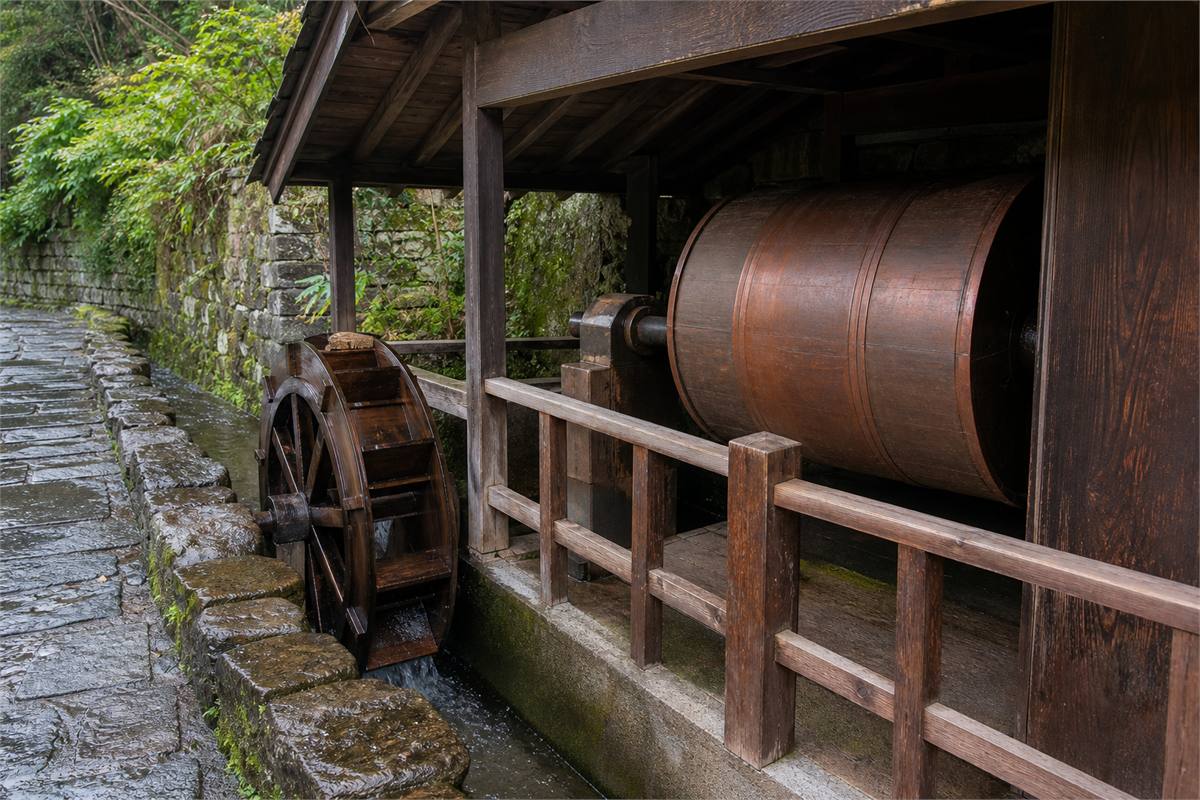
Historical sources also describe wheels moved by rising warm air. Because flames, lamps, hot surfaces, ventilation, and tipping all create real hazards, such forms should be understood in their specific religious and architectural setting—not copied as an unattended household project. Water and wind installations likewise require sound mechanical design, site permission, environmental care, and safe access.

Modern electric and solar wheels may borrow the visual form of traditional objects, but they are not automatic substitutes for a lineage practice. Electric models need the correct power supply, stable placement, ventilation, and regular observation. They should not run unattended around the clock. A vehicle is an especially poor place for a loose or hanging wheel: nothing should obstruct the driver’s view, controls, airbags, or become a projectile in a sudden stop.

Which direction should a prayer wheel turn?
At Tibetan Buddhist monasteries and sacred sites, prayer wheels and circumambulation routes commonly move clockwise. Museum descriptions connect this direction with the orientation in which the enclosed writing is read and with the wider clockwise movement around a sacred object or place.
That custom should not be turned into a rule for every Himalayan religion or every rotating cylinder. Bön traditions may use counterclockwise movement, and individual sites may have their own layout or instructions. If you are unsure, first look for signs, observe the established flow without imitating private ritual, or ask a member of staff. The locally taught direction takes priority over a generic travel tip.

How to use a prayer wheel respectfully
A prayer wheel is not automatically an interactive exhibit. Some are intended for public use; others may be fragile, restricted, under repair, or part of an active ritual setting. Begin by confirming that visitors are welcome to touch it.

- Check the site’s signs and follow staff guidance before approaching the wheel.
- Notice the direction and pace of the established route.
- If use is permitted, turn the wheel gently without climbing, striking, pulling, or forcing a mechanism that resists.
- Give space to people who are praying, reciting, prostrating, or completing a pilgrimage circuit.
- Keep paths and doorways clear rather than stopping the flow for a photograph.
- Ask permission before photographing people, ceremonies, shrine interiors, or any area marked as restricted.
Formal practice instructions can vary by lineage and object, including posture, pace, and the way a handheld wheel is held. A teacher or the host institution is the right source when the question goes beyond public etiquette.
The wheel is often used with Om Mani Padme Hum, associated in Tibetan Buddhism with Chenrezig, the bodhisattva of compassion. A 108-bead mala supports recitation in a different way, while Tibetan prayer flags place sacred writing in relation to wind. Each deserves to be understood on its own terms rather than treated as interchangeable spiritual décor.
Choosing a prayer wheel or cultural object
Start with the relationship you hope the object will hold. A wheel for established religious practice calls for guidance about its texts, preparation, and appropriate use. A museum-quality or older object calls for careful provenance and professional care. A modern cultural piece may be chosen as a meaningful reminder of compassion, clarity, and peaceful intention, but it should be described honestly.
- Purpose: Ask whether it was prepared for devotional use, teaching, respectful display, or contemporary design.
- Contents: If the wheel is sold as filled, look for a clear statement from the source about the mantra or text without opening it yourself.
- Writing and imagery: Choose a source able to identify the script and symbols it uses.
- Construction: The base or handle should feel stable, the closure secure, and the moving parts free from dangerous wobble or sharp edges.
- Materials: Copper, brass, silver, gold, gilding, alloy, wood, resin, and composite materials require different descriptions and care. Plated metal should not be presented as solid precious metal.
- Ethical sourcing: Avoid ivory, coral, bone, or other wildlife-derived decoration whose legal source, species, or religious context is unclear. Rarity does not make a wheel more sacred.
Price alone cannot identify religious preparation, material, or quality, and tourist-market figures from one place or date do not translate into a reliable global USD guide. For this page’s introductory purpose, careful description and responsible sourcing are more useful than an unstable price range.

Care, storage, and repair
A prayer wheel may combine metal, wood, paper, paint, gilding, adhesives, stone, textile, and moving parts. One cleaning method cannot safely serve every combination. Begin with the maker’s instructions. If the wheel catches, tilts, makes a new scraping sound, or becomes warm, stop turning it and place it on a stable surface.

- Remove loose surface dust gently with a clean, soft brush when the finish is stable.
- Keep water and cleaning sprays away from seams, paper contents, unfinished wood, gilding, paint, and electrical parts.
- Avoid household polish, abrasive cloths, plant oils, sewing-machine oil, wax, or an improvised lubricant unless the maker or a conservator specifies it for that exact material and mechanism.
- Do not assume stiffness means a dry bearing; misalignment, a loose roll, corrosion, swelling wood, damaged hardware, or motor trouble can produce similar symptoms.
- Keep a personal wheel stable, protected from falls, damp, direct heat, and long exposure to strong sunlight.
- Disconnect an electric model if it smells hot, becomes noisy, or turns irregularly. Do not open its motor, battery, or wiring yourself.
For an antique, painted, gilded, precious-metal, electrically powered, or religiously filled wheel, contact the appropriate specialist. Sacred contents are best referred to the source monastery, a qualified religious practitioner, or a conservator experienced with religious objects. General material advice in the Eastern Story Care Guide can help with preventive care, while the introduction to Tibetan Buddhism provides wider cultural context.
A wheel of compassion in motion
The beauty of a prayer wheel lies in more than its circular form. It joins sacred writing, careful making, physical movement, and a living community of practice. Approached respectfully, it carries a warm and enduring wish: that compassion become habitual, wisdom remain close, and peaceful intention continue through ordinary life.

Frequently Asked Questions
Related Posts


One Comment