Deer meaning in Chinese culture centers on the sound and image of the deer: deer and official rank (鹿与禄), prosperity, graceful blessing, longevity, and companionship. The Chinese word for deer, Lu (鹿), sounds like Lu (禄), the word associated with official salary, rank, and honorable livelihood. That sound connection made the deer one of the most refined animal motifs in Eastern jade carving, jewelry, paintings, textiles, ceramics, and gift objects.
A deer can also point toward long life and immortal atmosphere. In Taoist and folk imagination, the deer is a long-lived creature that walks beside immortals, carries Lingzhi (灵芝), stands near pine and cranes, and sometimes appears as a white deer (白鹿), an omen of virtue and peace. In modern jewelry and home objects, the same motif can carry a quieter message: graceful progress, steady fortune, family blessing, and Yi Lu You Ni (一鹿有你), a warm phrase meaning “with you all the way.”
Deer Meaning in Chinese Culture at a Glance
| Meaning layer | Core idea | Common design clue |
|---|---|---|
| Lu wordplay | Official rank, salary, prosperity, and honorable advancement | Deer with bats, coins, Ruyi, official imagery, or a confident walking pose |
| Longevity | Long life, health, and immortal blessing | Deer with Lingzhi, peach, pine, crane, Shou (寿), or an immortal figure |
| Auspicious omen | Virtue, peace, social harmony, and good governance | White deer, gentle deer in landscape, or deer appearing in classical scenes |
| Love and companionship | Paired blessing, loyal affection, and a wish to walk together | Two deer, mother-and-child deer, or Yi Lu You Ni (一鹿有你) jewelry |
| Modern gifts | Career encouragement, elder blessing, student wishes, partner gifts, and refined home decor | Jade deer pendant, deer plaque, gold or platinum deer necklace, wood/copper/ceramic deer object |

Why Deer Are Auspicious in Eastern Symbolism
Grace, alertness, and gentle movement
The deer is auspicious because it combines beauty, sound, and story. Its body is elegant, quick, and gentle. Its movement feels alert but not aggressive. In traditional art, this makes the deer suitable for scholar scenes, immortal landscapes, birthday objects, jade plaques, and quiet blessing jewelry.

The animal itself gives the motif a refined mood. A tiger or lion can feel protective and forceful; a dragon can feel elevated and powerful; a deer feels calm, literate, and approachable. That softer emotional tone is why deer designs often suit personal pendants, elder gifts, and objects meant to sit in a study, entryway, or bedside space.
Sound, status, and symbolic reading
The deeper meaning comes from pronunciation. Lu (鹿), deer, sounds like Lu (禄), the salary, rank, or official emolument connected with a stable and honored life. This is why a deer can stand for career progress without looking harsh or competitive. It expresses advancement with grace.
Deer also belong to the world of auspicious animals. From ancient rock imagery and Shang-Zhou jade objects to Ming-Qing porcelain, woven fabrics, carved plaques, and modern pendants, the deer has carried wishes for wealth, rank, peace, long life, love, and renewal. Its antlers fall and grow again each year, adding a natural image of life returning in cycles.
Deer and Official Rank (鹿与禄): Fortune, Salary, and Career Blessing
Deer and official rank (鹿与禄) is the main key to deer symbolism. In classical society, Lu (禄) referred to an official's salary and rank. A deer image therefore became a visual blessing for honorable employment, promotion, income, and a dignified position in life.

When Lu means a career blessing
This is why deer motifs often appear in career gifts, scholar gifts, jade plaques, desk objects, and designs meant for people entering a new stage of work or study. The meaning is not loud wealth language. It is closer to a wish for recognized ability, smooth advancement, stable resources, and a life supported by respect.
| Motif | Chinese phrase or idea | Meaning |
|---|---|---|
| Deer + bat | Fu Lu Shuang Quan (福禄双全) | Both blessing and rank; good fortune joined with prosperity |
| Deer + coin | Fu Lu Shuang Zhi (福禄双至) | Blessing and wealth arriving together |
| Hundred deer | Bai Lu (百禄) | Abundant rank, wealth, and repeated blessing through the sound of “hundred lu” |
| Deer + Ruyi | Lu and wishes fulfilled | Career smoothness and a wish that things go as hoped |
| Deer walking upward | Yi Lu Gao Sheng (一鹿高升) | A modern wordplay for rising steadily on one's path |

How to use the Lu meaning in a gift message
For a promotion, graduation, new business, or desk object, the clearest message is steady advancement. A short gift note can say that the deer carries Lu, a wish for honorable progress and a livelihood that grows with dignity. If the design includes bats, coins, or Ruyi, mention those details instead of using a generic “good luck” explanation.
When a deer appears with bats, the bat's name Fu (蝠) echoes Fu (福), blessing. Together they form Fu Lu Shuang Quan (福禄双全), blessing and rank complete together. When deer appear with coins, ingots, or Ruyi forms, the design leans more clearly toward livelihood, success, and good fortune. These readings fit naturally with the Eastern Story Blessing collection, where symbolic objects are chosen for meaning, gift language, and personal intention.
Longevity, Immortals, and the White Deer (白鹿)
White deer as an omen of virtue and peace
The deer also carries a strong longevity meaning. In Eastern folk and Taoist imagination, deer are long-lived animals with a close relationship to immortals. A common saying describes deer as living for a thousand years and becoming white after five hundred years, which is why the white deer (白鹿) became a sign of rare blessing, virtue, and peaceful rule.

In older auspicious language, a white deer appearing in the world could signal that virtue was present and society was in harmony. This reading gives the deer a moral quality: it is not only a sign of prosperity, but also a sign of good order, gentleness, and benevolent atmosphere. In a painting or carving, a white deer can therefore feel more elevated than an ordinary animal scene.

Deer with Lingzhi, peaches, cranes, and pine
In birthday and long-life imagery, the deer often appears near Shou Xing, the Star God of Longevity, or beside Lingzhi, peaches, cranes, and pine trees. Lingzhi connects the scene to immortal herbs and auspicious wishes; peaches point toward birthday blessing and long life; cranes and pine add refinement, high age, and endurance. For the broader long-life symbol system, the published guides to Lingzhi meaning and auspicious cloud meaning are useful companions.
He Lu Tong Chun (鹤鹿同春), cranes and deer sharing spring, is one of the classic longevity scenes. It joins the crane's high, refined long-life symbolism with the deer's Lu blessing and gentle immortal quality. Song Lu Yan Nian, pine and deer extending the years, creates a quieter scene of endurance. A deer holding Lingzhi in its mouth adds the idea of carrying long-life blessing toward the viewer.
Classical References: Lu Ming Banquet and Zhu Lu Zhong Yuan
Deer symbolism is not only decorative. It also appears in classical language. The Lu Ming Banquet (鹿鸣宴) takes its name from the Shijing poem line about deer calling and eating wild herbs together. The image of a harmonious deer group became associated with refined gathering, hospitality, and honoring talented people. Later, celebration banquets for newly successful examination candidates were called Lu Ming banquets, linking deer to scholarship, recognition, and the welcoming of talent.

Another phrase, Zhu Lu Zhong Yuan (逐鹿中原), “chasing the deer in the Central Plain,” belongs to the language of power and political contest. Here the deer is not a gentle birthday symbol but a metaphor for the realm being pursued. Related idioms such as Lu Si Shui Shou, who will win the deer, show that deer could also carry the heavy meaning of rulership, competition, and history.
These classical references help the reader avoid flattening every deer image into one meaning. A jade pendant for daily wear usually emphasizes Lu, blessing, grace, or longevity. A literary deer scene may suggest scholarship, harmony, or the gathering of talented people. A historical phrase about chasing deer belongs to a different register: power, territory, and the struggle for authority.
Jade Deer (玉雕鹿): Meaning, Carving, and Material Beauty
Jade deer (玉雕鹿) is a classic subject in traditional jade carving because the animal's body suits the material. Jade carries warmth, restraint, and quiet luster; the deer adds movement, gentleness, and layered blessing. Together they create a symbolic object that feels refined rather than showy.

What the jade material adds to the deer motif
In the wider system of Chinese jade carving meanings, deer belong to the animal-symbol group, but they connect strongly with both prosperity and longevity clusters. A single standing deer can emphasize Lu wordplay and graceful advancement. A deer with Lingzhi or peaches turns toward long life. A pair of deer can express companionship. A mother-and-child deer can suggest family harmony and safe growth.
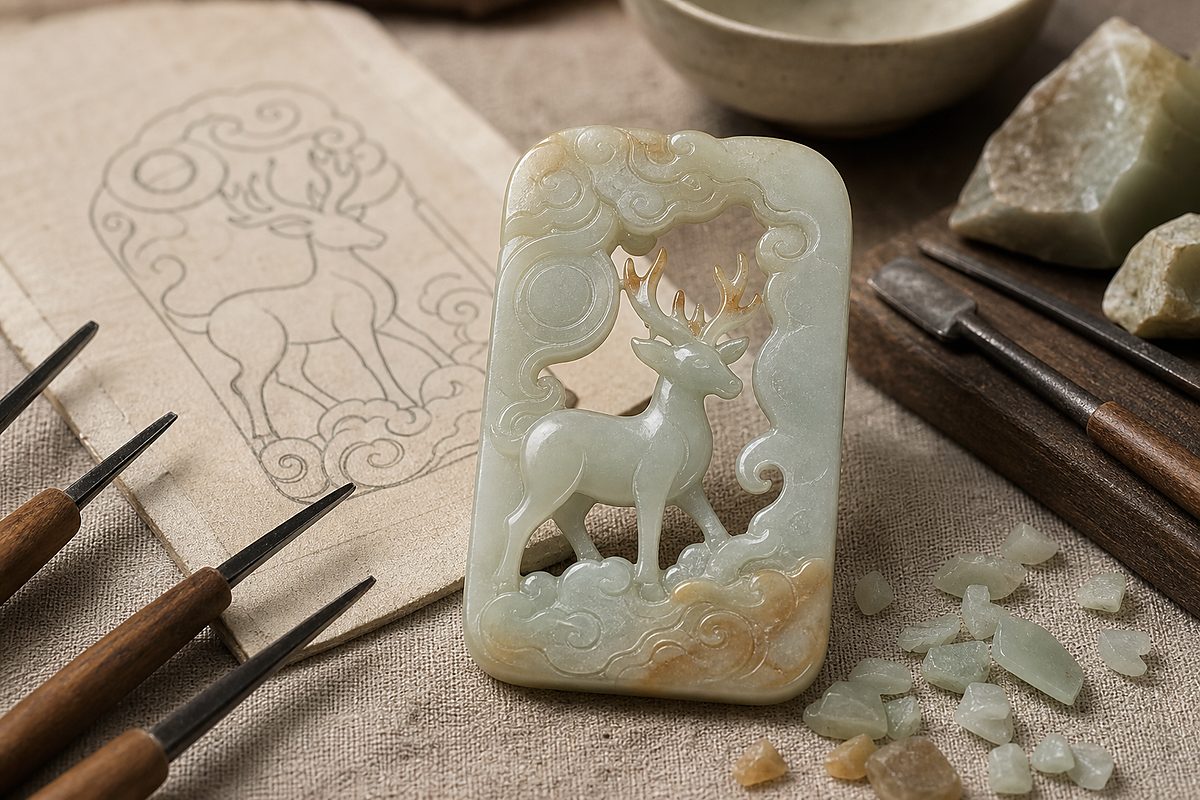
Jade changes the emotional register of the deer. Gold can make the motif festive, and platinum can make it modern, but jade makes the deer feel culturally rooted. Hetian jade, white jade, and green-white jade are especially suited to deer designs because their soft luster supports a calm, elegant animal form. This is why jade deer pendants often work well for people who prefer meaning and restraint over sparkle.
Carving methods: line, proportion, and clever color
Good jade deer carving depends on proportion, line, and spirit. Many carvers use smooth rounded surfaces, clean incised lines, openwork, relief carving, or full round carving to capture the deer's alert eyes, slender legs, and quiet motion. The best work feels as if the animal is still and moving at the same time.
In Hetian jade, especially fine white jade, green-white jade, or seed material with yellow Qin or red skin, the carver may use natural color as clever color carving: warm skin color for antlers or head, pale jade body for the animal, and a darker patch for ground, rock, or background. This is not only decorative. It helps the viewer read the deer quickly and makes the natural stone part of the story.
What to check before choosing a jade deer
When choosing a jade deer, look first at jade texture and carving quality. The surface should feel fine, warm, and balanced. The deer's head, eyes, antlers, back line, and leg proportions should look natural. Avoid stiff lines or a body that feels heavy in the wrong places. For material background and care, see jade meaning in Eastern culture and the Eastern Story care guide.
Classic Deer Pairings and How to Read Them
A deer motif is often read through its companions. The deer provides Lu, grace, and long-life potential; the nearby symbols decide which meaning becomes strongest. This is especially important in jade plaques, pendants, carved boxes, porcelain, embroidery, and home objects, where several symbols may share one small scene.
| Pairing | Chinese idea | Best reading | Good gift use |
|---|---|---|---|
| Deer + bat | Fu Lu Shuang Quan (福禄双全) | Blessing and rank together | Career, business, housewarming, general blessing |
| Deer + crane + pine | He Lu Tong Chun (鹤鹿同春) | Longevity, springlike renewal, refined elder blessing | Birthday, elder gift, family keepsake |
| Deer + Lingzhi | Immortal herb and long-life blessing | Health, longevity, auspicious wish | Elder gift, birthday, jade pendant |
| Deer + lotus | Yi Lu Lian Ke (一路连科) | Success in studies and repeated achievement | Student, exam, graduation |
| Deer + peach | Birthday and long-life imagery | Longevity, family happiness, warm blessing | Elder birthday, family occasion |
| Two deer | Yi Lu You Ni (一鹿有你) | Companionship, loyalty, affection, friendship | Partner, close friend, anniversary |
| Deer + coin or ingot | Lu and wealth arriving | Prosperity, stable resources, business blessing | Professional, entrepreneur, office decor |

The phrase Yi Lu Lian Ke (一路连科) comes from a sound-based reading: “all the way” plus “success in repeated examinations.” A deer with lotus can therefore suit students and exam-takers. The reading is modern gift language built from older sound symbolism, and it works best when the design visibly includes both deer and lotus.
For a reader trying to interpret a pendant or object, start with the visible deer, then read the companion motif, then match the whole composition to the occasion. A deer with bat is not the same gift as a deer with crane and pine. A deer with lotus is not the same as two deer walking together. The more specific the visible combination, the more specific the message should be.
Gift Meaning: Who Should Receive a Deer Motif?
A deer motif is strong when the message should feel positive, elegant, and culturally layered. It can be used for career encouragement, elder blessing, student success, romantic companionship, family harmony, and refined home atmosphere. The key is to match the visible motif to the recipient rather than giving every deer the same explanation.

For elders, leaders, and family occasions
- For elders: choose deer with crane, pine, peach, Lingzhi, or Shou (寿) imagery. The message is health, longevity, and family blessing.
- For leaders or professionals: choose a single deer, deer with Ruyi, deer with coin, or deer with bat. The message is honorable advancement, prosperity, and steady career support.
- For family gifts: mother-and-child deer or a deer family scene can suggest harmony, safe growth, and blessing passed between generations.
For students, partners, and close friends
- For students and exam-takers: deer with lotus, climbing movement, or a clean jade deer plaque can express Yi Lu Lian Ke (一路连科), a wish for achievement along the path.
- For partners or close friends: a small deer pendant, two-deer design, or Yi Lu You Ni (一鹿有你) necklace expresses companionship, loyalty, and affection.
- For daily self-wear: choose a design that feels calm and comfortable, especially if the deer is meant to serve as a personal reminder of steady movement and graceful progress.

For daily jewelry, comfort matters. A deer pendant should not have sharp antler edges that catch clothing. A bracelet charm should be recognizable at small scale. A plaque or desk object can hold more detail: pine, crane, Lingzhi, cloud, or landscape. If the recipient already likes jade, a jade deer feels especially appropriate because the material itself carries cultural weight and quiet refinement.
Modern Deer Jewelry and Home Objects
Modern deer jewelry materials
Modern deer designs keep the old meanings but use contemporary forms. In jewelry, deer may appear as antler necklaces, small deer pendants, pearl-and-deer necklaces, 999 gold deer-antler chains, platinum deer necklaces, 18K rose gold lab-grown diamond deer pendants, jade deer plaques, or delicate bracelet charms. The most common modern message is Yi Lu You Ni (一鹿有你), because it turns the deer into a warm symbol of companionship.
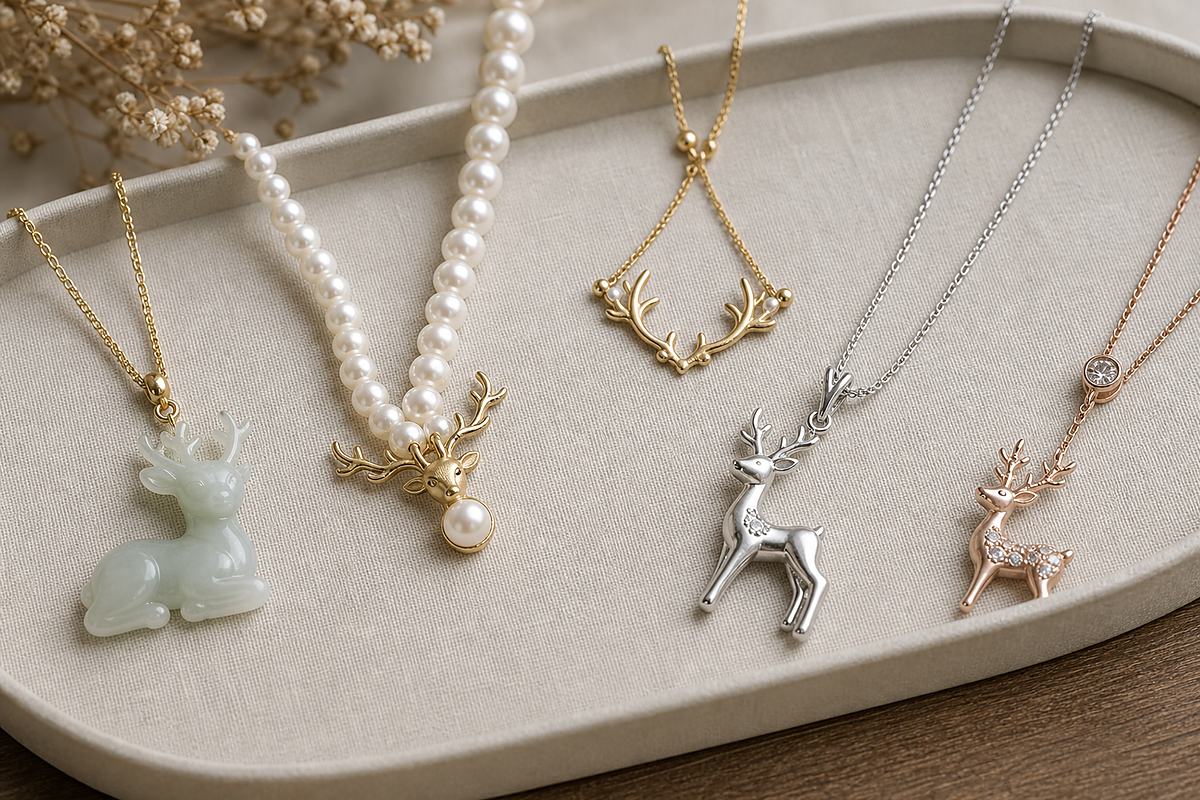
Materials change the mood. 999 gold makes a deer design feel celebratory and gift-ready. Platinum feels cool, clean, and modern. Pearl with a small deer motif feels soft and feminine. 18K rose gold with lab-grown diamonds turns the deer into a light-catching jewelry object for birthdays, anniversaries, or partner gifts. Jade remains the most culturally grounded choice when the main message is Lu, longevity, and Eastern symbolic beauty.
Home objects and placement language
Deer also appear in home objects. Ceramic deer in matte white, glossy black, or silver tones suit modern entryways and living rooms. Copper deer objects can create a stronger heritage feeling in a study or tea room. Walnut wood deer feel warm, forest-like, and calm on a desk or bookshelf. Crystal or acrylic deer can catch light in a niche or display shelf. A deer-head wall object can become a visual focus, while smaller deer cups, plates, trays, or enamel hanging plates bring the motif into daily use.

Placement can follow the gift message. A pair of deer near an entryway can express a smooth path and welcoming blessing. A small deer on a desk can carry Yi Lu Gao Sheng, rising steadily on one's path. A soft mother-and-child deer in a bedroom can suggest warmth and family companionship. These are cultural and decorative readings, best used as symbolic language and personal intention.
How to Choose and Care for a Jade Deer
Choose by message before material
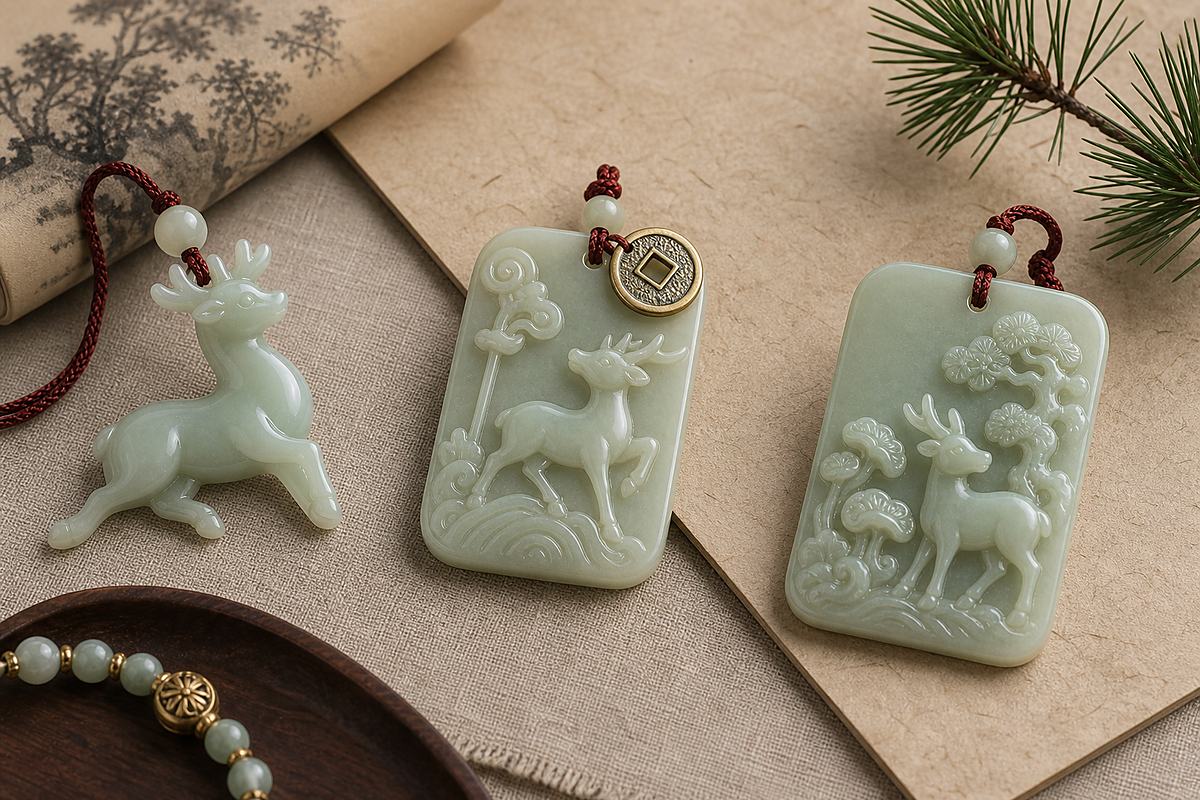
For jade deer jewelry, choose by message first, then material and workmanship. If the gift is for a career moment, a clean deer, deer with Ruyi, or deer with bat is stronger than a crowded longevity scene. If the gift is for an elder birthday, deer with crane, pine, peach, or Lingzhi gives a clearer long-life message. If the gift is romantic, a smaller, smoother deer pendant or two-deer design will feel more intimate than a large official-rank plaque.
Check jade texture, edges, and daily wear comfort
For Hetian jade, look for a fine, warm, oily texture rather than glassy shine. Green-white jade can feel cool and gentle for summer wear. White jade or seed material can feel calmer and more collectible. If natural yellow Qin or red skin is used in clever color carving, check whether the color truly supports the deer form instead of distracting from it.

Daily care is simple. Keep jade away from perfume, detergent, harsh acids, and alkaline cleaning liquids. Remove a jade deer pendant before bathing, heavy cleaning, or rough activity. Jade is durable, but hard impact can still create hidden cracks. Avoid long exposure to strong sun or very dry heat. Wipe the piece with a soft clean cloth after wearing. A well-worn jade pendant can develop a smoother, warmer surface through regular handling.
When several deer meanings are possible, choose the one the object actually shows. A deer with bat speaks most clearly about Fu Lu Shuang Quan (福禄双全). A deer with pine and crane speaks about long life. A deer with lotus supports study and achievement. A simple jade deer pendant can hold the broad meaning of graceful Lu, especially when the design is clean enough to wear every day. To continue reading nearby symbols, explore Chinese jade carving meanings, Lingzhi meaning, auspicious cloud meaning, and the Eastern Story Blessing collection.
Frequently Asked Questions

Deer meaning in Chinese culture is strongest when sound and image are read together. The deer is graceful, but it is also Lu: rank, salary, prosperity, long life, and a path walked with blessing. In jade, jewelry, gifts, and home objects, this gentle animal becomes a compact symbol of dignified success and meaningful companionship.
Related Posts


One Comment