
Direct answer: 2026 is the Bing-Wu (丙午) year in the Chinese sexagenary cycle (甲子): Bing is yang fire, Wu is the Horse branch, and together they form what many English readers call the 2026 Fire Horse Year. For people born in a Horse year, 2026 is their Benmingnian (本命年), or zodiac birth year return. In Chinese folk tradition, that makes the year feel more personally charged: a time for red customs, steadier decisions, careful relationships, meaningful gifts, and symbolic bracelets or clothing worn as reminders of balance.
The lunar year began on February 17, 2026, and continues until February 5, 2027; the next lunar year begins on February 6, 2027. People born near January or early February should check the lunar calendar boundary rather than assuming their zodiac sign from the Gregorian year alone.
This page focuses on one specific boundary: how Horse zodiac people can understand, wear, gift, and move through the 2026 Fire Horse Benmingnian. It is not a general definition page for Benmingnian, not a full Chinese zodiac (生肖) system page, and not a fortune-telling promise. Luck, love, career, wealth, and health language is treated here as Chinese folk-cultural symbolism, family practice, and self-management advice.
What Does Bing-Wu Horse Mean?
Bing-Wu is one of the sixty combinations in the traditional Chinese heavenly-stem and earthly-branch calendar. Bing belongs to yang fire. Wu is the earthly branch (地支) associated with the Horse, and it is also linked with fire and the midday period from 11:00 a.m. to 1:00 p.m. This is why 2026 is described as a Fire Horse, Red Horse, or Bing-Wu Horse year.

| Term | Literal role | Cultural reading for 2026 |
|---|---|---|
| Bing | The third heavenly stem (天干), associated with yang fire. | Bright, visible, active, and sun-like fire symbolism. |
| Wu | The seventh earthly branch, associated with the Horse and midday. | Movement, vitality, speed, travel, courage, and forward direction. |
| Bing-Wu | The stem-branch pair that repeats every 60 years. | A double-fire Horse year, often read as more intense than an ordinary Horse year. |
| Fire Horse / Red Horse | English and folk-style shorthand. | A memorable way to describe the year, not a separate zodiac animal. |
Not every Horse year has the same elemental quality. 2014 was Jia-Wu, often associated with Wood Horse; 2002 was Ren-Wu, associated with Water Horse; 1990 was Geng-Wu, associated with Metal Horse; 1978 was Wu-Wu, associated with Earth Horse. 2026 is special because both the heavenly stem and the Horse branch are read through fire symbolism.
Is 2026 the Fire Horse Year? Dates and Horse Birth Years
Yes. The Hong Kong Observatory's Gregorian-lunar calendar table shows February 17, 2026 as the first day of the first lunar month for the Bing-Wu year. Its 2027 table shows February 6, 2027 as the first day of the next lunar year, Ding-Wei, the year of the Goat. That makes February 5, 2027 the last day of the 2026 lunar Horse year.

| Horse year | Approximate Gregorian lunar-year span | Stem-branch note |
|---|---|---|
| 2026 | Feb. 17, 2026 – Feb. 5, 2027 | Bing-Wu, Fire Horse |
| 2014 | Jan. 31, 2014 – Feb. 18, 2015 | Jia-Wu, Wood Horse |
| 2002 | Feb. 12, 2002 – Jan. 31, 2003 | Ren-Wu, Water Horse |
| 1990 | Jan. 27, 1990 – Feb. 14, 1991 | Geng-Wu, Metal Horse |
| 1978 | Feb. 7, 1978 – Jan. 27, 1979 | Wu-Wu, Earth Horse |
| 1966 | Jan. 21, 1966 – Feb. 8, 1967 | Bing-Wu, Fire Horse |
| 1954 | Feb. 3, 1954 – Jan. 23, 1955 | Jia-Wu, Wood Horse |
| 1942 | Feb. 15, 1942 – Feb. 4, 1943 | Ren-Wu, Water Horse |
| 1930 | Jan. 30, 1930 – Feb. 16, 1931 | Geng-Wu, Metal Horse |
| 1918 | Feb. 11, 1918 – Jan. 31, 1919 | Wu-Wu, Earth Horse |
| 1906 | Feb. 5, 1906 – Jan. 24, 1907 | Bing-Wu, Fire Horse |
A simple rule is that Horse years repeat every 12 years. A more careful rule is that the zodiac year does not begin on January 1. In popular lunar-year usage, it begins on Lunar New Year. In some Chinese astrology and命理 contexts, practitioners may use Lichun (立春), the solar term called Start of Spring. For a birthday close to the boundary, check which system the family, calendar, or practitioner is using.
Horse Benmingnian Meaning in Chinese Tradition
Benmingnian means the year when a person's zodiac animal returns. For Horse-born people, 2026 is a Horse return. Many Chinese families treat a Benmingnian as a threshold year, sometimes called a kan er nian, or a year with a gate to cross. The idea is not that disaster is guaranteed. The idea is that the year deserves attention, discipline, and symbolic protection.
In traditional astrology language, Horse people in 2026 are said to zhi Tai Sui (太岁), meaning their zodiac animal meets the presiding Tai Sui of the year. The source material also mentions Wu-Wu self-punishment and strong double-fire qi. In this article those terms are kept as folk and命理 vocabulary, then translated into practical language: avoid rushing, manage heat and emotion, keep promises realistic, and turn fast movement into completed work.
The source material's phrase first suppressed, then rising can be read as a cultural rhythm rather than a prediction. For a Horse-born person, the first half of 2026 can be framed as a time to reduce friction, finish old obligations, and build stable habits. The second half can be framed as a time to convert motion into visible results, provided the person does not confuse speed with direction.
| Source idea | Careful English framing |
|---|---|
| Value Tai Sui | A Horse person treats 2026 as a personally significant zodiac return year. |
| Wu-Wu self-punishment | A reminder to watch impatience, overreaction, and self-created pressure. |
| Double fire | A symbol of visibility, passion, heat, urgency, and the need for cooling balance. |
| First suppressed, then rising | A folk rhythm: stabilize first, act with more confidence later. |
Horse-Year Customs and Festival Practices
The Horse year is not only about jewelry. The source material includes festival customs, family practices, folk worship, flowers, clothing, and gift language. These are best presented as regional and family traditions rather than as one national checklist everyone follows.

The sixth day of the first lunar month: Horse Day
In some Chinese folk calendars, the sixth day of the first lunar month is called Horse Day. It is linked with the old story that Nuwa created different beings across the first days of the new year, with the horse associated with the sixth day. Families and shops may connect this day with sending away poverty, cleaning out old refuse, reopening business, placing red couplets, using firecrackers where legal, and seeking an auspicious kai men hong, or opening red success.
New Year's Eve and the first day
The source material mentions ya ma qian, money for pressing or protecting the Horse, as a Horse-year version of lucky money. Amounts with 6 or 8 can be chosen for auspicious sound and number symbolism. Families may also tell Horse stories such as Bo Le judging horses or the old horse knowing the way, using them as lessons about recognition, experience, and perseverance.
Horse deity and Matou Niang traditions
Some older communities honored horse-related deities such as Ma Wang Ye, especially among people connected with horses, transport, livestock, or military life. The source material also mentions Matou Niang, a silkworm and sericulture protection figure in parts of Jiangnan folk culture. These traditions are retained as regional folk-religious context, not as requirements for modern readers.
Red wearing, birth flower, and Horse-face skirt (马面裙)
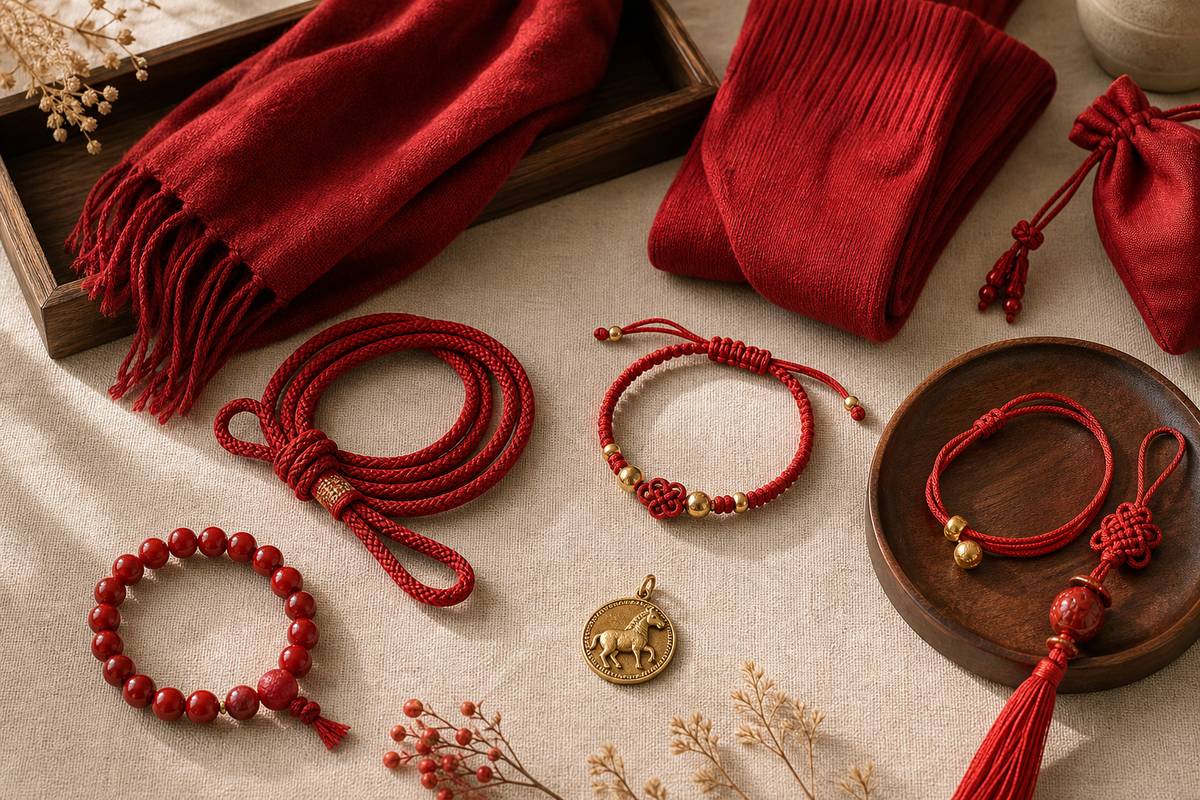
Red remains the best-known Benmingnian custom. Families may give red underwear, red socks, a red belt, red shoe insoles, or a red string bracelet to mark protection and blessing. The source material also names the calla lily as a Horse-year birth flower because its Chinese name contains the words horse hoof, and it mentions the Horse-face skirt, or mamianqun, as a traditional garment revived in modern festival fashion. These details help Western readers see that a zodiac year can shape flowers, clothing, family gifts, and visual culture.
What to Wear in a Horse Benmingnian
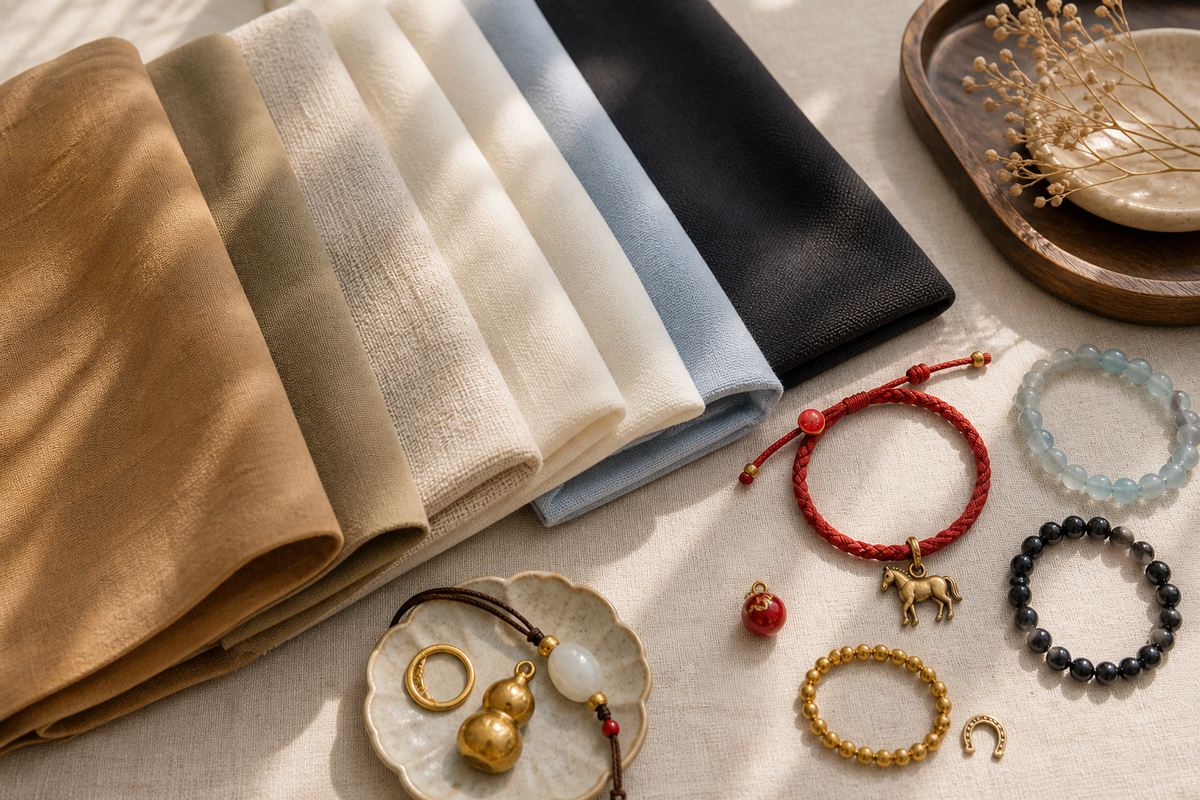
For a Horse-born person in 2026, wearing choices can be organized into three groups: red Benmingnian customs, Five Elements (五行) balancing colors, and personally meaningful symbols. The key is to keep the language symbolic. A color or bracelet can remind someone to stay steady; it should not be presented as a guaranteed shield against every problem.
| Wearing category | Examples | Symbolic role in 2026 |
|---|---|---|
| Benmingnian red | Red string, red socks, red belt, red innerwear, red shoe insoles. | Marks the zodiac return year and expresses protection, blessing, and family care. |
| Earth tones | Ochre, khaki, camel, coffee, warm brown. | In Five Elements folk logic, Earth can drain or settle excess Fire. |
| Metal and white tones | White, ivory, cream, gold, silver. | Metal can be read as clean structure, restraint, and clarity. |
| Water tones | Light blue, navy, black, gray-blue. | Water colors visually cool the double-fire theme. |
| Small red accent | A cord, bead, stitch, sock, charm, or inner detail. | Keeps the red custom without making the whole outfit feel overheated. |
It is advisable to avoid using bright red, orange-red, or vivid green over large areas of your outfit. This is considered a piece of folk wisdom regarding attire rather than an absolute taboo.
Be mindful of your use of red; if you are already feeling pressed for time, avoid excessive visual stimulation and opt instead for colors that instill a sense of groundedness and stability.
Clothing with buttons on the back, villainous motifs, rips or tears, blue vertical stripes, or a combination of more than three colors is said to bring bad luck. Conversely, clean, neat clothing and simple color combinations help the wearer project an air of composure and propriety.
Bracelets, Colors, and Symbolic Materials
Bracelets are the easiest Horse Benmingnian object to wear daily. The source material names zodiac allies, Five Elements materials, auspicious motifs, red-string customs, Buddhist-inspired symbols, and modern gemstones. They are reorganized below by meaning, safety, and gift usefulness.

| Material or motif | Chinese folk or symbolic meaning | Best careful use |
|---|---|---|
| Red string | A classic Benmingnian protection and blessing symbol. | Simple daily wear; often more meaningful when given by family, partner, or close friend. |
| Sheep / Goat motif | The Horse's Liuhe ally in zodiac compatibility language. | A gentle noble-person or harmony symbol for Horse people. |
| Tiger or Dog motif | Horse, Tiger, and Dog form a Sanhe (三合) trio in zodiac tradition. | Use for courage, loyalty, and support symbolism. |
| Horse motif | Identity, movement, travel, success, and forward direction. | Good when the page or gift is clearly about Horse Benmingnian. |
| Hetian jade (和田玉) / jade | Warmth, steadiness, dignity, and cultivated character. | Excellent for calming the Fire Horse theme without sounding mystical. |
| Citrine / amber / beeswax | Earth-toned stability, confidence, and abundance blessing. | Use as grounding and warm visual support. |
| Obsidian / black stone | Cooling, boundary, and protective folk symbolism. | Good as a small balancing accent; avoid fear-based selling. |
| Aquamarine / blue stone | Water-like calm, communication, and emotional cooling. | Useful when discusses double-fire intensity. |
| Southern red agate / red stone | Red blessing, vitality, and festival warmth. | Pair with grounding materials so the look does not become too visually hot. |
| Gold | Auspicious wealth language and celebratory value. | Suitable for gifts. |
| Ping an kou (平安扣) | Peace, wholeness, and smooth passage. | A respectful safety and family-blessing motif. |
| Gourd (葫芦) | Blessing, containment, and family peace in folk symbolism. | Good for elders and family gifts. |
| Pixiu (貔貅) | Later folk wealth-gathering and guarding symbolism. | Regarded as a symbol of wealth. |
| Da Shizhi Bodhisattva | A Buddhist figure often associated in popular zodiac jewelry with wisdom and mindful resolve. | Treat respectfully; avoid claims of divine guarantee. |
| Tang horse (唐马) / auspicious cloud | Classical Chinese style, motion, nobility, and open roads. | Good for refined cultural gifts. |
Cinnabar (朱砂) safety note: cinnabar is traditionally valued as a powerful red material, but true cinnabar is mercury sulfide. Do not describe cinnabar jewelry as automatically safe or harmless. Choose sellers that provide material and testing information; avoid broken, powdery, ground, heated, or chewable pieces; keep it away from children and pets; do not put it in the mouth; and be cautious with sensitive skin. If a piece is only cinnabar-colored resin or lacquer, say so honestly.
Love, Friendship, Family, and Daily Rhythm
The source material includes love, friendship, family, career, finances, and health. Those sections are preserved in a safer form: as cultural symbolism and daily rhythm advice, not as fixed predictions.

| Life area | Source theme | Final editorial treatment |
|---|---|---|
| Love | The Fire Horse year has passion, chances, and tests. | Use warmth, social courage, and emotional boundaries. Do not promise romance, marriage, or a perfect date window. |
| Friendship | Horse people are sincere, loyal, warm, and afraid of loneliness. | Keep the generous, expressive friendship profile, but present it as zodiac personality symbolism. |
| Family | The year can become more harmonious after earlier friction. | Translate into communication, shared routines, elder care, and small acts of repair. |
| Career | First stabilize, then act; second half can be more active. | Make records, confirm agreements, avoid impulsive leaps, and turn visibility into completed work. |
| Money | Control sudden spending and avoid high-risk investment. | Keep as practical budgeting advice, not a wealth forecast. |
| Health | Watch heat, fatigue, sleep, digestion, and overwork. | Use general wellness language only; no diagnosis, cure, or guaranteed improvement. |
A simple daily rhythm for Horse people in 2026 is: check keys, phone, documents, and wallet before leaving; drink water before major decisions; write down the strongest emotion before sleep; keep contract details in writing; reserve money for unexpected expenses; reduce late-night stimulation; and use movement, walking, and rest as part of the year rather than treating busyness as success.
Gift Ideas for Someone in a Horse Benmingnian
The source material's gift section contained repeated text and brand-like product names. The final version keeps the useful gift categories but removes direct advertisement-style recommendations. A Benmingnian gift should feel personal, wearable, and culturally thoughtful.

| Recipient | Better gift categories | Message to attach |
|---|---|---|
| Elder or parent | Light jade pendant, gourd charm, easy-clasp bracelet, warm scarf with small red detail, tea set, festival decoration. | May the year feel steady, warm, and peaceful. |
| Partner | Matching red cords, jade-and-red bracelet, small Horse charm, gold or silver zodiac detail. | Move bravely, return safely, and keep our bond steady. |
| Friend or sibling | Red string bracelet, Tang horse charm, practical travel pouch, desk object with Horse or cloud motif. | A year of direction, courage, and good roads. |
| Student | Small red cord, simple jade bead, notebook, pen, study lamp, practical learning tool. | Stay focused and move one step at a time. |
| Coworker or business contact | Neutral Horse-themed desk object, tasteful notebook, card with Bing-Wu explanation, understated bracelet if appropriate. | Wishing you clear direction and steady progress. |
| Someone who dislikes jewelry | Red socks, red bookmark, calla lily bouquet, Horse-face skirt-inspired textile accessory, tea, calendar, or cultural card. | A symbolic mark of the Horse year without forcing a wearable item. |
Avoid turning gifts into pressure. If the person does not believe in zodiac traditions, frame the object as a cultural New Year blessing or a thoughtful design reference. If the person is religiously sensitive, avoid Buddhist figures or mantras unless you know they would be received respectfully.
What to Avoid: Buying and Safety Notes
The strongest editorial rule for this article is that symbolic objects should not be sold as guaranteed outcomes. That is especially important for health, wealth, love, exams, promotions, investment, and spiritual protection.

- Do not promise results: a red string, jade, cinnabar, gold, Pixiu, or zodiac charm is traditionally understood as a symbolic wish rather than a fixed result for money, health, marriage, promotion, or safety.
- Check material claims: ask whether a bead is natural stone, treated stone, dyed stone, resin, lacquer, plated metal, or a composite.
- Be careful with cinnabar: avoid powder, broken surfaces, heat, grinding, ingestion, or unknown children's items.
- Protect delicate materials: pearls, amber, wood, turquoise, cords, and some stones can be damaged by water, sweat, perfume, sanitizer, and sunlight.
- Avoid fear-based selling: phrases such as must wear this or misfortune will happen do not fit Eastern Story's tone.
- Respect Buddhist imagery: Da Shizhi Bodhisattva and mantra-related designs should be described with dignity, not as magical switches.
- Keep comfort first: do not wear anything too tight, sharp, heavy, fragile, or hard to remove.
Related Eastern Story Guides
What Is Benmingnian? for the general zodiac birth-year concept.
- Chinese Zodiac Symbols for the broader 12-animal system.
- Red String Bracelet Meaning for the classic red-wearing custom.
- Eastern Story Editorial Policy for cultural, material, and claim boundaries.
FAQ
For readers choosing a symbolic gift or wearable blessing, Eastern Story's Blessing Shop offers related pieces organized around protection, harmony, love, clarity, and good wishes.
Related Posts


2 Comments