
What is Benmingnian (本命年)? Benmingnian, written 本命年, is the Chinese zodiac (生肖) year that matches the animal of your birth year. Because the zodiac has twelve animals, it returns about every twelve years: 12, 24, 36, 48, 60, 72, and so on. In Chinese families, this zodiac return is often treated as a sensitive but meaningful threshold, marked by red clothing, red string bracelets, family gifts, Tai Sui (太岁) customs, and a more careful attitude toward health, money, travel, and major decisions.
Why do people wear red in Benmingnian? Red is associated with celebration, vitality, auspicious beginnings, and the wish to keep inauspicious influences away. In a zodiac birth year, red becomes personal: a pair of red socks, a red belt, red underwear, a red string bracelet, or a red gift from family can work as a visible blessing and a daily reminder to move through the year with steadiness.
This guide explains Benmingnian for readers who may know the Chinese zodiac but not the surrounding customs. It keeps the cultural details, but it does not present folk beliefs as a symbolic wish for good fortune, guaranteed misfortune, medical treatment, wealth attraction, or destiny correction. The strongest modern reading is symbolic and practical: Benmingnian is a twelve-year checkpoint, a family blessing moment, and a chance to enter a new cycle with awareness.
Benmingnian at a Glance
- Meaning: the lunar year when your zodiac animal returns.
- Cycle: every twelve years, with age milestones such as 12, 24, 36, 48, and 60.
- Sixty: the 60th year completes one sexagenary cycle (甲子), often called huajia, 花甲.
- Core custom: wearing red or receiving red gifts from parents, partners, children, or close friends.
- Tai Sui connection: Benmingnian is popularly linked with zhi Tai Sui, or meeting the year's Tai Sui through one's own zodiac animal.
- Modern approach: keep the tradition as blessing, reflection, and practical care rather than fear.

What Is Benmingnian?
Benmingnian literally means the year of one's own life-root or birth destiny, but in everyday Chinese usage it refers to the year when the current lunar year's zodiac animal is the same as the animal assigned to your birth year. If you were born in a Horse year, a later Horse year is your Benmingnian. If you were born in a Rat year, a later Rat year is your Benmingnian.

This is why Benmingnian is also translated as a Chinese zodiac birth year, zodiac return year, birth-sign year, or one's own zodiac year. The phrase is easy to define but culturally dense. It brings together the zodiac animal cycle, family blessing, folk protection, Tai Sui worship, red clothing, and the feeling that life is entering another twelve-year chapter.
The tradition is not only about fear. Many families describe Benmingnian as a kanner year, a threshold year, or a year that asks for extra attention. The milestones often match real life transitions: a child around twelve, a young adult around twenty-four, a person taking on more responsibility around thirty-six, a midlife review around forty-eight, and a sixtieth birthday that completes a full stem-branch cycle.
How the Twelve-Year Cycle Works
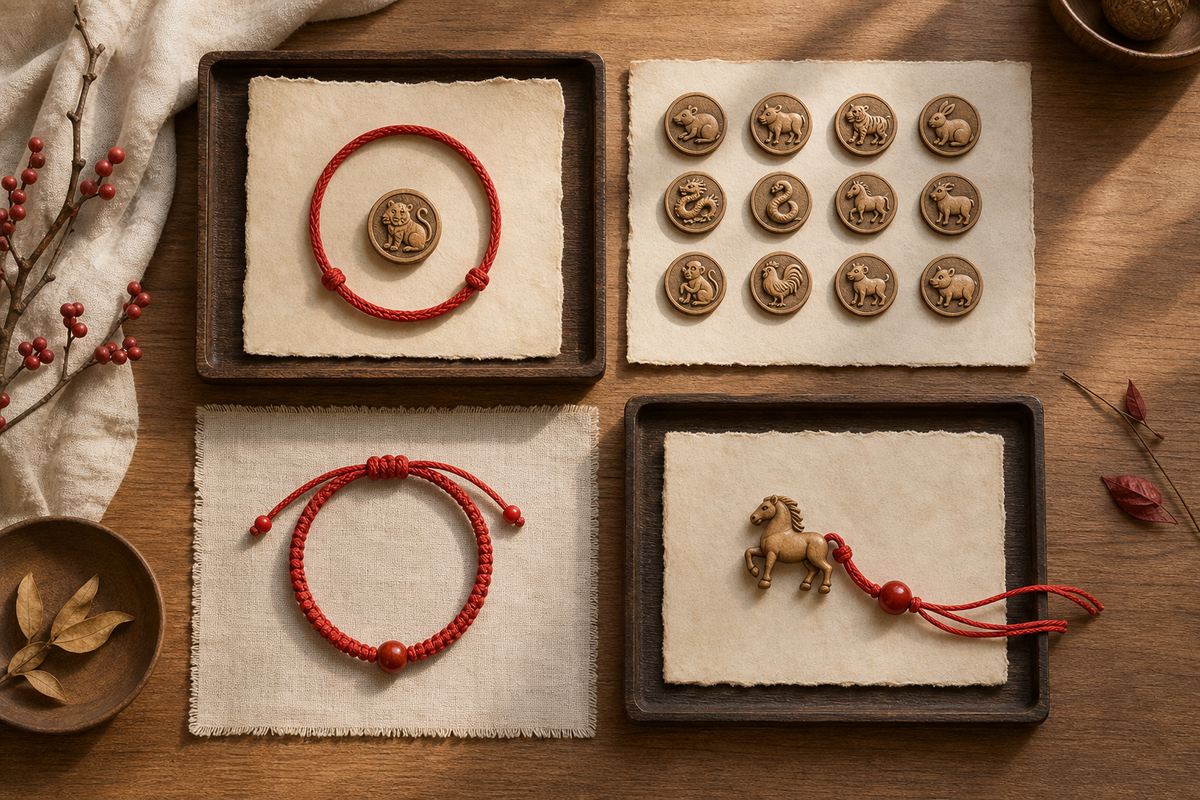
The Chinese zodiac uses twelve animals in a repeating order: Rat, Ox, Tiger, Rabbit, Dragon (龙), Snake, Horse, Goat, Monkey, Rooster, Dog, and Pig. The animal year normally changes at Lunar New Year, not on January 1. For people born in January or early February, the exact lunar calendar date matters because their zodiac animal may belong to the previous lunar year.

| Approximate age | What returns | Common cultural reading |
|---|---|---|
| 12 | First zodiac return | Leaving childhood and becoming more self-aware. |
| 24 | Second zodiac return | Education, work, independence, and early adult choices. |
| 36 | Third zodiac return | Career, family, money, and long-term responsibilities. |
| 48 | Fourth zodiac return | Midlife adjustment, health routines, and renewed priorities. |
| 60 | Fifth zodiac return | Completion of one sexagenary cycle, huajia, and a major family celebration. |
| 72 and beyond | Further zodiac returns | Longevity, family continuity, and reflection. |
A full traditional year name combines one Heavenly Stem and one Earthly Branch, producing a sixty-year cycle. The zodiac animal is a simplified and popular way to read the Earthly Branch part of the system. This is why the sixtieth birthday has a stronger ritual weight than an ordinary zodiac return: it is not only the same animal, but a return to the broader stem-branch cycle.
Origins: From Stem-Branch Time to Zodiac Custom
Benmingnian is best understood as a custom that grew from older Chinese ways of counting time. The sexagenary cycle, the twelve Earthly Branches, and the later animal zodiac gave people a way to connect personal age with cosmic and seasonal time. Popular culture simplified the system into a twelve-year animal return that most families could remember and explain.

The early form of the benmingnian (one's zodiac year of birth) can be traced back to the Western Han Dynasty, while its application during the Tang and Song dynasties led to the system's association with the twelve Chinese zodiac signs. Because these historical layers are complex, this article uses cautious wording: Benmingnian draws from ancient stem-branch timekeeping, later zodiac popularization, and evolving folk practice. It is safer to present it as an inherited cultural system rather than as a single custom invented in one dynasty.
In modern life, the exact historical path matters less to most families than the emotional function. Benmingnian gives a person a named moment: one year in which family members notice the zodiac return, prepare red gifts, offer blessings, and encourage the person to move with care.
Benmingnian, Tai Sui, and Fan Tai Sui
Tai Sui, 太岁, is a traditional calendrical and religious concept connected with the governing influence of the year. In Daoist and folk practice, the sixty Jiazi years may be associated with sixty Tai Sui deities or year generals. In popular speech, people often say that a person in Benmingnian fan Tai Sui, meaning the person has a sensitive relationship with the year's Tai Sui.

A more careful distinction is useful. Benmingnian is the year when your zodiac animal returns. Zhi Tai Sui, 值太岁, means your zodiac animal is the same as the year's zodiac animal. Fan Tai Sui, 犯太岁, is a broader folk and metaphysical category that may include different relationships such as conflict, clash, harm, break, or punishment depending on the system being used.
| Term | Simple meaning | Careful interpretation |
|---|---|---|
| Benmingnian | Your zodiac animal returns. | A personal twelve-year threshold in popular custom. |
| Zhi Tai Sui | Your zodiac animal matches the year's Tai Sui. | Often the specific Tai Sui relationship behind Benmingnian. |
| Fan Tai Sui | A sensitive relationship with the year's Tai Sui. | A broader folk category; not every use is the same across temples, families, or metaphysical schools. |
| Chong Tai Sui | A zodiac clash with the year. | Often discussed for the animal opposite the year's animal. |
| Hai / Po Tai Sui | Harm or break relationships in folk zodiac language. | Used as a traditional reference, not as a guaranteed life prediction. |
The old saying Tai Sui sits above your head; without joy there may be trouble is often quoted to explain why families become cautious. This should not be read as a fixed prediction. A better modern reading is that Benmingnian invites humility, preparation, and support. Some people visit a temple, request a Tai Sui talisman, or make offerings. Others simply wear red and keep a steady heart.
Why People Wear Red in Benmingnian
Red is the defining color of Benmingnian. In Chinese visual culture, red is associated with celebration, joy, vitality, prosperity, protection, weddings, New Year, and important life moments. During Benmingnian, that public festival color becomes personal. It moves from lanterns and couplets into underwear, socks, belts, bracelets, pendants, and small gifts.
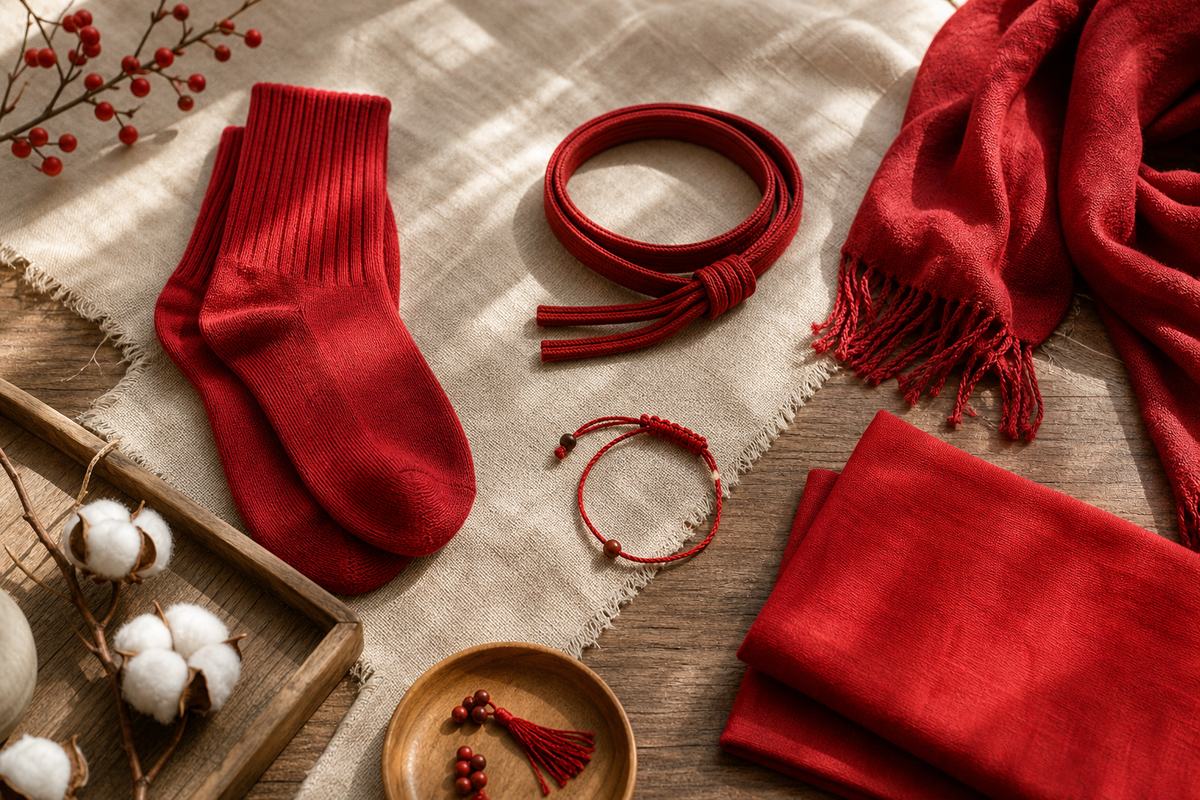
The common explanation is that red helps ward off inauspicious influences. A modern explanation can sit beside it: red creates a strong psychological reminder. It tells the wearer, again and again, that the year matters, family support is present, and careless decisions can wait. In this sense, the red item is both a folk symbol and a behavioral cue.
Many families prefer the red item to be given by someone close: parents, grandparents, children, a partner, or a trusted friend. The gift matters because Benmingnian is not only an individual year. It is a social blessing. The person wearing red enters the new cycle with visible support.
When to Start Wearing Red: New Year, Lunar New Year, or Lichun (立春)?
There is no single rule followed by all Chinese families. Three dates are commonly mentioned. Some people begin on January 1 because it is the civil New Year in the Gregorian calendar. Others begin on Lunar New Year's Eve or Lunar New Year because the zodiac year is tied to the lunar year. A third view uses Lichun, the solar term Beginning of Spring, because stem-branch timing is also discussed through the solar calendar.

| Starting point | Why people choose it | How to use it |
|---|---|---|
| January 1 | Simple modern calendar boundary. | Easy for people outside China, but not the traditional zodiac boundary. |
| Lunar New Year's Eve or Lunar New Year | Matches the festival and the visible beginning of the zodiac year for most families. | The most intuitive choice for red clothing, gifts, and family blessing. |
| Lichun, Beginning of Spring | Used in some stem-branch and folk-calendrical discussions. | Follow this if your family, temple, or teacher uses it. |
| Personal meaningful day | Some people adapt the custom to travel, ceremonies, birthdays, or family gatherings. | Acceptable when the goal is remembrance and blessing rather than rigid rule-following. |
Common Red Items and Symbolic Jewelry
Benmingnian red can be intimate, hidden, stylish, or openly festive. Some people wear red underwear, a red belt, or red socks because these are traditional and discreet. Others prefer a bracelet, bead, scarf, hat, brooch, or small zodiac object that fits modern clothes. The key is not to force a costume. A small red accent can carry the meaning without overwhelming the wearer.
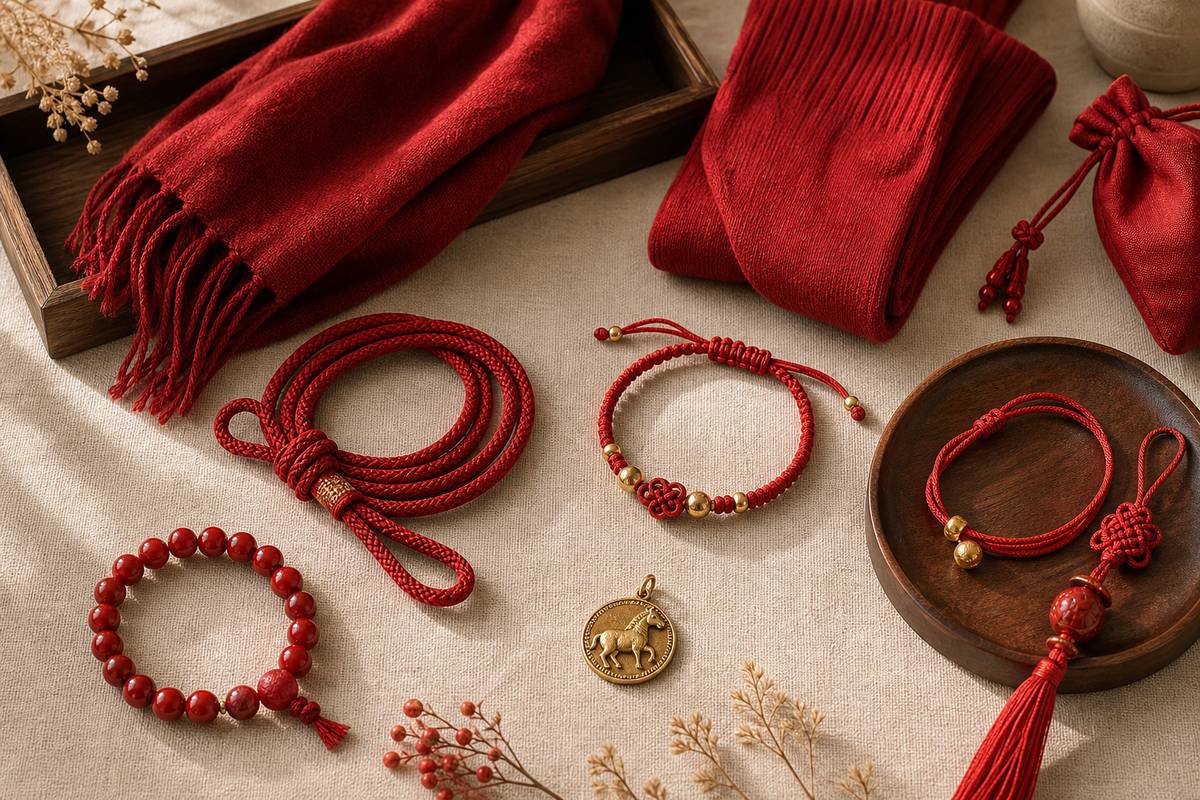
| Item | Symbolic meaning | Good for |
|---|---|---|
| Red underwear | Private protection and a close-to-the-body blessing. | Family tradition, Lunar New Year, people comfortable with intimate gifts. |
| Red socks | A discreet daily red item; sometimes jokingly linked with stepping through obstacles. | Work, school, travel, and people who cannot wear jewelry. |
| Red belt or waist cord | A red circle around the body's center. | Traditional wearers and people who prefer hidden red. |
| Red string bracelet | Everyday intention, protection symbolism, and family blessing. | Most readers; easy to wear and gift. |
| Red shoe insoles | A folk image of carrying good steps through the year. | People who like practical hidden customs. |
| Burgundy cardigan, scarf, coat, or knit vest | Modern red styling without bright festival clothing. | Office wear, dates, winter outfits, and low-key fashion. |
| Red agate, jade, gold, or silver on a red cord | Adds material symbolism to the red custom. | Jewelry gifts |
| Cinnabar (朱砂)-style bracelet | A traditional red mineral or cinnabar-colored blessing object. | Tapping into psychological needs—such as seeking protection and good fortune during one's zodiac year—these designs often incorporate traditional Chinese elements like Ruyi (如意) motifs, the meander pattern, and zodiac symbols, making them suitable for pairing with “New Chinese Style” or minimalist everyday outfits. |
| Zodiac pendant or small desk object | A personal link to the returning animal. | People who want the zodiac motif without wearing much red. |
| Red beret, small scarf, brooch, or bag charm | A gentle visible accent. | Modern styling and people who prefer symbolic fashion. |
Cinnabar requires special care. In Chinese material culture, it symbolizes the color red and embodies protective significance, often associated with spiritual aspirations such as safeguarding one during their zodiac year, warding off evil, and attracting good fortune. Its designs frequently incorporate traditional Chinese motifs—such as Ruyi patterns, the meander (cloud/thunder) pattern, and zodiac signs—making it a perfect accessory for “New Chinese Style” or minimalist everyday outfits.
Benmingnian Gifts and Message Ideas
A Benmingnian gift works best when it combines traditional blessing with daily usefulness. The goal is not to buy the strongest-looking charm. It is to give something the person will actually use, keep, and associate with care. A small red object plus a sincere sentence is often more meaningful than an expensive item described with exaggerated promises.

| Gift idea | Suitable recipient | Message direction |
|---|---|---|
| Red string bracelet with jade or a small bead | Partner, friend, sibling, or adult child. | A steady reminder that you are supported through this zodiac year. |
| Gold or silver transfer-bead red cord | People who like fine jewelry but still want a traditional red item. | May each turn of the bead remind you to move carefully and hopefully. |
| Cotton or silk red sock gift box | Parents, grandparents, close friends, or practical relatives. | May every step in your new cycle be steady, warm, and bright. |
| Zodiac desk ornament | Coworker, student, or someone who does not wear jewelry. | A small sign of your zodiac year and a calm beginning for the next twelve years. |
| Burgundy scarf, knit, or cardigan | People who prefer subtle fashion. | Red does not need to be loud; may this year bring quiet courage. |
| Cinnabar-style or red agate bracelet | Adults who understand material care. | A traditional red blessing, chosen with care and worn with intention. |
| Handwritten red envelope or card | Anyone, especially when the budget is small. | The words carry the blessing more than the price of the object. |
- “May your Benmingnian be steady, safe, and full of good beginnings.”
- “A new twelve-year cycle begins. May you keep what matters and release what weighs you down.”
- “Red for courage, and this gift as a reminder that you do not walk this year alone.”
- “May every ordinary day in your zodiac year carry warmth, patience, and support.”
- “This is not for perfect luck; it is for a steady heart and a bright path.”
What to Do During Benmingnian: A Practical Modern Approach
Traditional advice often says to wear red, avoid risky decisions, do good deeds, visit a temple, request a Tai Sui talisman, or use auspicious objects. A modern interpretation can keep the spirit without turning the year into anxiety. The practical heart of Benmingnian is attention: pay attention to health, money, relationships, sleep, travel, and the emotional patterns that repeat every few years.

| Traditional idea | Respectful modern interpretation |
|---|---|
| Wear red | Use red as a blessing, identity marker, and daily reminder. |
| Receive red from family | Let the gift express care and shared support. |
| Wear charms, transfer beads, zodiac objects, Guanyin (观音), Buddha, Guan Gong, Pixiu (貔貅), or similar symbols | Frame them as religious, folk, or symbolic objects chosen with respect. |
| Bai Tai Sui or request a Tai Sui talisman | Follow temple rules if this belongs to your tradition. |
| Do good deeds | Choose charity, volunteering, helping relatives, blood donation if medically appropriate, or other ordinary acts of kindness. |
| Health caution | Schedule normal preventive care, dental cleaning, annual checkups, rest, exercise, and better routines. |
| Positive mindset | Treat the year as a review period and make calmer decisions. |
If a family says one happy event can block three troubles, treat it as blessing language rather than a formula. Weddings, births, anniversaries, graduations, and reunions may bring joy into a sensitive year, but they do not need to be used as fear-based tools. The safest reading is simple: let good events remind the person that support exists.
2026 Example: Horse Year and Other Tai Sui-Sensitive Signs
The year 2026 is the Bingwu, 丙午, Year of the Horse. According to the Hong Kong Observatory Gregorian-Lunar calendar, the 2026 Lunar New Year falls on February 17, 2026. In the Benmingnian framework, people born in Horse years meet their zodiac birth year in 2026 and are commonly described as zhi Tai Sui.

| Zodiac sign in the 2026 folk framework | Traditional relationship | Careful wording for readers |
|---|---|---|
| Horse | Zhi Tai Sui / Benmingnian | A zodiac return year; many families advise calm decisions, red items, and reflection. |
| Rat | Chong Tai Sui / clash | Often framed as a year of movement, changes, or communication friction in folk zodiac language. |
| Ox | Hai Tai Sui / harm | Often described as a year to reduce inner pressure and avoid unnecessary conflict. |
| Rabbit | Po Tai Sui / break | Often associated with plan changes, relationship maintenance, and careful spending in popular readings. |
| Other signs | No direct example in this simplified list | Still use ordinary planning, health care, and family blessing if meaningful. |
For all signs, the best practical advice is modest: sleep enough, spend carefully, check travel and contracts, respond slowly when emotions rise, maintain ordinary preventive care, and keep supportive people close.
How Benmingnian Differs from a General Chinese Zodiac Guide
A general Chinese zodiac page explains all twelve animals, personality associations, zodiac years, compatibility, and the broader system. Benmingnian is narrower. It asks what happens when one person's own animal returns and why that return becomes emotionally important. This article therefore mentions the twelve animals only to explain the cycle and keeps the focus on birth-year customs, Tai Sui, red traditions, gifts, and modern reflection.
Frequently Asked Questions
For readers choosing a symbolic gift or wearable blessing, Eastern Story's Blessing Shop offers related pieces organized around protection, harmony, love, clarity, and good wishes.
Related Posts


19 Comments