
Tibetan prayer flags are sacred cloth or paper prints raised to carry prayers for peace, compassion, good fortune, and the well-being of all beings into the moving air. Their five colors, sacred words, and wind-horse imagery make blessing visible across mountain passes, rooftops, courtyards, and other places shaped by Tibetan and Himalayan community life.
When wind moves through the flags, it is warmly understood within the tradition as extending their prayers beyond the person who raised them. The gesture is generous rather than private: a wish for safe journeys, harmonious surroundings, favorable conditions, and happiness shared with people, animals, and the wider landscape.
What Tibetan prayer flags mean
The meaning of Tibetan prayer flags rests in a relationship among intention, sacred text, wind, and place. A new set may be raised to invite harmony and protection, remember loved ones, mark a transition, or offer wishes for the welfare of all beings. The cloth is not meant to hold a prayer still. It meets sun, rain, snow, and wind, allowing the blessing to become part of the living environment.

This is why prayer flags are more than a bright band of color. Their beauty comes from compassionate purpose. Seen moving against a wide sky, they express the hope that peace and kindness can travel farther than one voice and that human life can remain in harmony with the natural world.
Wind horse, prayer flags, and the names of different forms
Rlung rta, commonly written lungta, means “wind horse.” The term names a Tibetan cultural idea associated with vitality, favorable movement, good fortune, and flourishing. It also refers to flags bearing the wind-horse design. Because prayer flags carry many other texts and images, however, lungta should not be used as the single name for every Tibetan prayer flag.
| Form | How it appears | How to understand it |
|---|---|---|
| Horizontal string flags | Rectangular or square panels joined along a cord | Often called lungta when they carry the wind-horse print; other prayer texts also appear in this form |
| Vertical pole flags | Long cloth banners fixed upright to poles | Often transliterated as darchor; spelling and local usage vary |
| Large standards | Tall banners used in communal, monastic, or ceremonial settings | Darchen is used for some larger forms, but local terminology and purpose should guide identification |
| Paper wind-horse prints | Small printed sheets released in appropriate ritual settings | A distinct practice, not an invitation for visitors to scatter paper at sacred or public sites |

These words are useful guides, not a reason to force every regional form into one category. Tibet, Bhutan, Nepal, and other Himalayan communities have their own languages, lineages, proportions, and ways of raising banners. When local people, a monastery, or a maker uses a particular name, follow that context.
The wind horse and the images around it
On a classic wind-horse flag, a spirited horse moves at the center carrying a precious jewel or a group of jewels often understood in relation to the Three Jewels: Buddha, Dharma, and Sangha. The image joins the swiftness of wind with the strength and forward motion of a horse. It carries a wish for uplifted spirit, favorable circumstances, and the flourishing of life.

Many designs place four powerful animals around the horse: garuda, dragon, snow lion, and tiger. They contribute qualities such as fearlessness, dignity, strength, and expansive energy. Their identities, positions, and meanings are not identical in every Buddhist and Bon design, and some flags write the animal names instead of drawing them. Not every prayer flag includes this five-animal composition; other flags may center a sacred figure, a long prayer, or another auspicious image.
What the five prayer flag colors represent
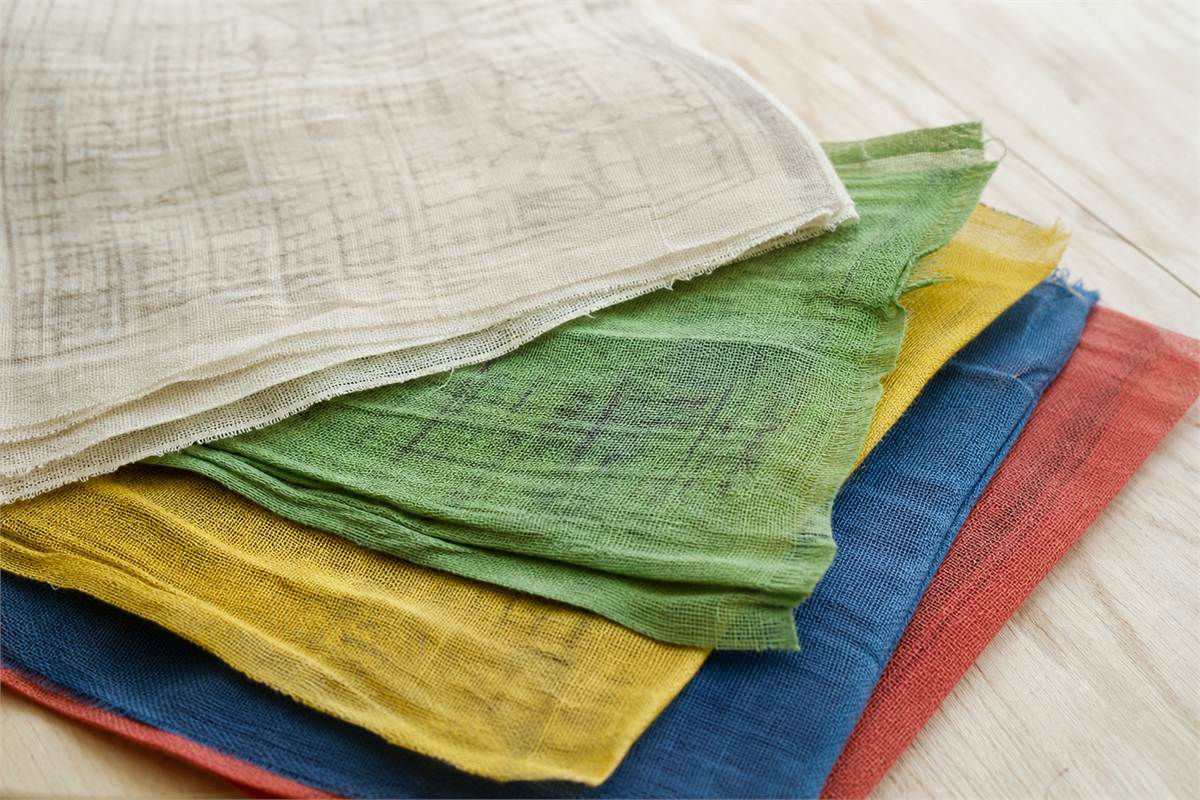
The familiar five-color set is blue, white, red, green, and yellow. A widely used explanation relates them to space or sky, air or wind, fire, water, and earth. Together they evoke a complete world held in balance: open sky above, solid ground below, and the forces that sustain life moving between them.
| Color | Common elemental association | Wish it can evoke |
|---|---|---|
| Blue | Space or sky | Openness, endurance, and a wide view |
| White | Air, wind, or cloud | Purity, peace, and clarity |
| Red | Fire | Warmth, compassion, and vitality |
| Green | Water and living nature | Growth, balance, and active life |
| Yellow | Earth | Stability, nourishment, and wisdom |

Many ready-made strings repeat the blue-white-red-green-yellow sequence, while a vertical display may make the same colors appear from top to bottom. Yet directions, color theology, Five Buddha associations, and ritual arrangements can vary by tradition, region, and flag type. Keep an existing set in its intended order, and seek local guidance when replacing or raising flags in a religious setting rather than relying on one universal online chart.
What is printed on Tibetan prayer flags?
Prayer flags may carry Tibetan prayers, Sanskrit mantras in Tibetan script, dharanis, verses, auspicious wishes, sacred figures, and symbolic animals. One well-known mantra is Oṃ maṇi padme hūṃ, associated with Avalokiteśvara, the bodhisattva of compassion. It is common on some flags, but it is not printed on every set.
Sacred words in motion
Within the devotional understanding of prayer flags, air that touches the printed prayers carries their beneficial intention onward. This gives the familiar phrase “prayers on the wind” its warmth: the wish is allowed to move through the world for the benefit of all beings. Different prayers invite different blessings, so the words and images of a specific flag matter more than a generic label.
Why legibility and orientation matter
Clear printing helps preserve the dignity of sacred words and images. Before raising a set, identify its top edge and intended face from the maker or a knowledgeable guide. Avoid inventing a translation from appearance alone: similar-looking panels can contain different prayers, and a wind-horse flag is only one of many designs.
Where prayer flags are raised—and why travelers should not add their own
Prayer flags are traditionally seen at mountain passes, hilltops, rooftops, courtyards, monasteries, bridges, paths, and places of communal prayer. Wind and visibility make these settings powerful, while the flags can carry wishes for safe passage, household well-being, peace, favorable weather, and harmony between people and their surroundings.

A sacred mountain, lake, monastery, mani stone mound, bridge, or public viewpoint is not an open space for visitors to install whatever they bring. Raising flags can involve site permission, local custom, an appropriate text, and guidance about timing and placement. Travelers should ask the monastery, local community, land manager, or someone with traditional knowledge before purchasing, raising, or replacing a set. Do not tie flags to structures or living trees without permission, and do not scatter paper prints as a personal travel ritual.
Respectful travel and photography etiquette
- Do not step on or cross over fallen flags. Give sacred text space and follow a safe path around it.
- Do not pull, rearrange, sit on, or privately remove flags. Weathered cloth remains part of the place and community that raised it.
- Ask before photographing people or ritual activity. Permission matters when a monastery ceremony, blessing, or local family is involved.
- Let the landscape remain the subject. Prayer flags should not be grabbed, worn, or stretched into position as a photo prop.
- Follow local circulation guidance. Use signs, community custom, or a guide to determine the appropriate direction around a monastery, shrine, stupa, or mani wall; one rule should not be imposed across every region and tradition.

Quiet attention often creates the most meaningful encounter. Notice how the flags relate to the wind, paths, buildings, and people who care for the place. The Eastern Story archive continues this approach to cultural symbols: begin with meaning, context, and respect.
Raising prayer flags at home with care
Prayer flags can be raised at home when the choice grows from sincere respect and informed guidance. Choose a clean, elevated position where the cloth will not be stepped over, brushed by shoes, used as a table covering, or mixed into disposable party décor. Keep the panels securely attached without creating a hazard for neighbors, wildlife, or traffic.

Start by learning what is printed on the set and how its community expects it to be oriented. A monastery, Tibetan cultural organization, maker with traditional knowledge, or local practitioner can advise on placement and replacement. This turns the act into a considered wish for peace and harmony rather than a styling decision.
Fading, replacing, and caring for old prayer flags
Sun-bleached color and softened cloth are part of the visual life of prayer flags. Their weathering can carry a moving image of prayers continuing through changing seasons. When fabric becomes loose or fragile, replacement can renew the offering while preventing pieces from becoming litter.

Ask before removing or disposing of a set
Old-flag customs differ. Do not place a fallen flag on a mani pile, burn it, throw it away, or relocate it simply because an online guide gives one absolute instruction. If it belongs to a public or sacred site, leave it to the responsible community and alert a caretaker when appropriate. For a household set, ask the monastery, maker, community, or knowledgeable practitioner connected with it, then choose a method that respects the sacred print and avoids smoke, plastic residue, and environmental harm.
Choose materials that will not burden the landscape
For outdoor flags, favor natural fibers and inks or materials that can be managed responsibly at the end of their life. Avoid plastic film, brittle synthetic fabric, glitter, wire fragments, and easily detached decorations. Traditional hand printing can offer beautiful clarity and a close relationship with craft, while other careful production methods can also keep the text legible. Material and technique support the prayer; they do not determine the strength of its blessing.
A blessing shared with the whole landscape
Tibetan prayer flags give color and movement to a compassionate wish. The wind horse carries vitality and favorable motion; the five colors hold a vision of balance; sacred words invite peace, protection, and happiness to extend toward all beings. Raised with permission and treated with care, the flags become a quiet meeting of human hope, living tradition, and the natural world.

Readers looking for personal objects created for gifting and everyday keeping can explore the Eastern Story Blessing collection. Prayer flags themselves deserve the purpose, place, and dignity of their tradition.
Frequently Asked Questions
Related Posts


0 Comments