
Samantabhadra rides a white, often six-tusked elephant because the image brings his vast vows into visible form. In East Asian Buddhism, Samantabhadra—Puxian Bodhisattva (普贤菩萨) in Chinese and Fugen Bosatsu in Japanese—is closely associated with great practice: the patient work of turning wisdom and compassion into daily conduct. The elephant conveys strength, steadiness, and the ability to carry a great undertaking; its white color evokes purity, and its six tusks are commonly connected with the six perfections.

This is more than an animal attribute. The bodhisattva, elephant, lotus seat, and calm movement form a complete image of aspiration becoming action. For worshippers, pilgrims, art lovers, and people who keep a small devotional object close, it carries a wish for clear intention, compassionate practice, patient courage, peace, and the fulfillment that comes from walking a good path faithfully.
Who is Samantabhadra, or Puxian Bodhisattva?
The Sanskrit name Samantabhadra is translated in several ways, including “Universal Worthy,” “Universal Virtue,” and “All-Good.” In Chinese Mahayana Buddhism, Puxian is especially associated with expansive vows and conduct. A familiar Chinese expression calls him the bodhisattva of “great practice” (大行): not action for its own sake, but action guided by wisdom, compassion, reverence, and benefit for others.
This emphasis gives the white elephant its emotional force. A beautiful wish can begin in the heart, yet Samantabhadra’s example asks how that wish will be lived. Kindness becomes a generous act. Patience becomes the choice to remain steady in difficulty. Respect becomes attention to another person. A vow becomes something renewed through many ordinary days.

In common Chinese Buddhist language, Puxian may be named alongside Manjushri or Wenshu (文殊菩萨), Guanyin (观音菩萨), and Ksitigarbha or Dizang (地藏菩萨) as four great bodhisattvas associated respectively with practice, wisdom, compassion, and vows. That grouping is influential in Chinese Buddhism, but it is a particular cultural and devotional framework rather than a single classification shared unchanged by every Buddhist tradition.
Why does Samantabhadra ride a white elephant?
Elephants carried royal, auspicious, and Buddhist associations long before this image reached its mature East Asian forms. Their size suggests the capacity to bear weight, while a trained elephant presents power under calm direction. In Samantabhadra imagery, that combination becomes an eloquent companion to great practice: strength is made gentle, movement is guided by vows, and endurance serves compassionate purpose.
| Visual feature | Common reading in Puxian imagery | Modern life reflection |
|---|---|---|
| Elephant | Strength, steadiness, and the capacity to carry a vast undertaking | Let a worthy intention become sustained action |
| White body | Purity and an auspicious sacred appearance | Return to clarity when the path feels crowded |
| Six tusks | Commonly related to the six perfections | Cultivate generosity, discipline, patience, effort, concentration, and wisdom together |
| Lotus seat | Awakened purpose present within the world | Keep a compassionate intention amid ordinary responsibilities |
| Calm movement | Power shaped by practice rather than impulse | Move steadily without losing gentleness |
The image of an elephant walking slowly and leaving a deep footprint can be a useful modern analogy, but it should not be mistaken for a quotation from scripture. Its value lies in the picture it offers: meaningful work may be unhurried, yet every well-directed step matters. The white elephant reminds us that perseverance can be both strong and peaceful.

What do the six tusks mean?
The six tusks are widely interpreted through the six perfections, or six paramitas (六波罗蜜), cultivated on the bodhisattva path. This reading connects the mount directly with Samantabhadra’s spirit of practice. The six are usually presented as follows:

- Generosity: offering time, care, knowledge, or material support without being ruled by possessiveness.
- Ethical discipline: giving conduct a reliable direction and choosing actions that reduce harm.
- Patience: meeting difficulty, difference, and delay without abandoning compassion.
- Diligent effort: returning to beneficial practice with energy and continuity.
- Meditative concentration: steadying attention so the mind is less scattered and reactive.
- Wisdom: seeing conditions and relationships clearly and responding with discernment.
The association is meaningful, but it should not turn every physical detail into a rigid universal code. Some later explanations connect the elephant’s four feet with the four bases of spiritual power; such readings belong to particular explanatory traditions and are not the only way Buddhist communities interpret the image. Similarly, a sculpture or painting may show fewer visible tusks because of scale, damage, viewpoint, or regional style. The whole composition matters more than counting every feature in isolation.

Samantabhadra’s ten great vows: the practice behind the image
The “Conduct and Vows of Samantabhadra,” traditionally appended to the final section of the Flower Ornament Sutra, presents ten great practices and vows. English wording varies by translation, but the established order is: to honor all buddhas; praise the tathagatas; make extensive offerings; confess and reform harmful actions; rejoice in the merit and virtue of others; request the turning of the Dharma wheel; ask enlightened teachers to remain in the world; continually learn from the Buddha; accord with living beings; and dedicate all merit universally.
Together, these vows explain why Puxian is remembered through movement rather than still intention alone. Reverence is practiced. Praise is voiced. Offerings are made. Harm is acknowledged and transformed. Another person’s goodness is welcomed rather than envied. Learning continues, compassionate response adapts to real beings, and the benefit of practice is shared. The white elephant carries this spacious vision forward.

For a contemporary reader, the vows offer a gentle rhythm for life: begin with respect, notice goodness, repair what can be repaired, keep learning, and let each effort reach beyond the self. A Puxian image may therefore be chosen to welcome steadiness, kind action, clarity, and the wish that worthy plans come to fulfillment—an everyday expression of all things going as one sincerely hopes, baishi ruyi (百事如意).
The Lotus Sutra scene behind the white elephant
The twenty-eighth chapter of the Lotus Sutra presents Samantabhadra as a supporter of those who receive and practice the teaching and describes his arrival on a white elephant with six tusks. The related Sutra on the Contemplation of Samantabhadra develops the visionary image within practices of contemplation, repentance, and purification. These texts help explain why the elephant is active: the bodhisattva comes, supports, encourages, and accompanies practice.

The Flower Ornament tradition adds the great horizon of Samantabhadra’s vows. The white-elephant image and the ten vows do not need to be collapsed into a single origin story. They meet through a shared emphasis on conduct that is spacious, sustained, and directed toward awakening and the benefit of beings.
How to recognize Samantabhadra in Buddhist art
- Begin with the mount: a white elephant is the clearest East Asian identifier, and six tusks may be visible.
- Look for a lotus seat or platform on the elephant’s back.
- The bodhisattva may hold the hands together or carry an object, but gestures, crowns, lotus blossoms, scrolls, scepters, and other attributes vary by period and place.
- In a triad, compare the elephant rider with Manjushri on a lion.
- Use the full composition, inscriptions, location, and collection record when the identity is uncertain.

A 12th-century Japanese painting in the Nara National Museum, for example, shows Fugen riding a six-tusked white elephant and reflects the flourishing devotion connected with the Lotus Sutra during the Heian period. It is one clear historical form, not a template imposed on every region or century. Costume, posture, attendants, hand gestures, and objects can all change while the relationship between Fugen and the elephant remains recognizable.
East Asian Puxian and Tibetan Kuntuzangpo are not one visual type
The Sanskrit name Samantabhadra is also used in Tibetan Buddhist contexts, where Kuntuzangpo is commonly understood as a primordial buddha, especially in Nyingma traditions, and appears in a very different doctrinal and visual setting. The Chinese and Japanese elephant-mounted bodhisattva should not be mechanically projected onto Tibetan images with the same translated name. Eastern Story’s introduction to Tibetan Buddhism offers a wider map of these distinct lineages and visual languages.
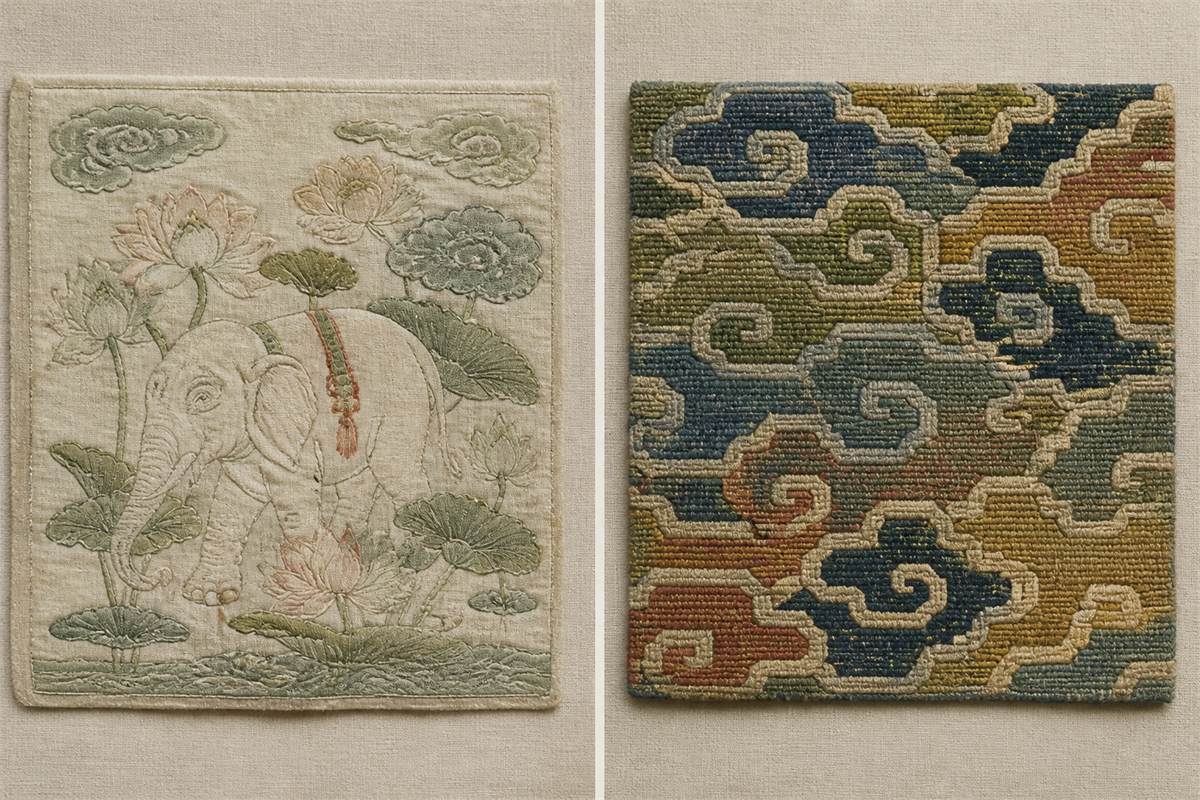
Samantabhadra, Manjushri, and the Huayan triad
Samantabhadra and Manjushri are often paired as practice and wisdom. Manjushri may ride a lion and carry a sword associated with discerning insight; Samantabhadra rides the elephant of vows and conduct. In Huayan settings they may flank Vairocana Buddha, while other East Asian images and temple arrangements place them with Shakyamuni. The exact central figure and left-right arrangement should therefore be read according to the particular temple, image, and tradition rather than treated as identical everywhere.

The pairing remains moving because it speaks to a familiar human need. Wisdom helps us see the path; practice allows us to walk it. Action without discernment can lose direction, while insight without compassionate conduct remains unfinished. Readers new to this vocabulary may also explore the guide to enlightenment, bodhi, and nirvana.
Mount Emei and the living devotion to Puxian
Mount Emei in Sichuan is one of the places most closely associated with Puxian devotion in Chinese Buddhism. Pilgrimage there brings landscape, temple practice, art, and the bodhisattva’s vows into one living tradition. At Wannian Temple, an officially documented Song-period bronze image of Puxian riding a six-tusked white elephant stands 7.85 meters high and weighs 62 metric tons. These figures belong to that specific monumental work; they are not a standard size for Puxian images.
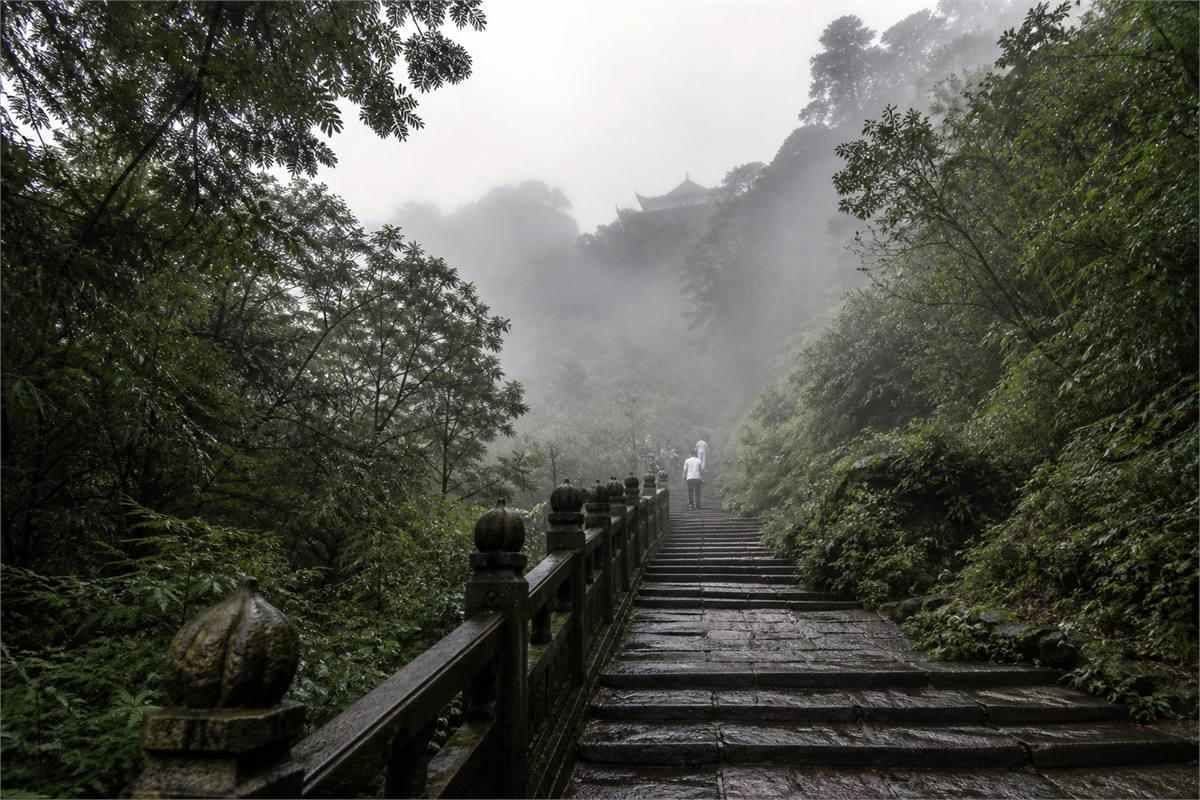
For visitors, Mount Emei can make “great practice” feel tangible. A pilgrimage unfolds one ascent, one act of reverence, and one encounter at a time. People may visit to honor the bodhisattva, renew a compassionate intention, pray for peace and fulfillment, or carry a wish that their own good vows become steady enough to shape daily life.
Zodiac guardians and the lunar commemoration date
Modern popular guardian-Buddha systems often pair Puxian with people born in Dragon (龙) and Snake (蛇) years. This is a folk and contemporary devotional association, not a rule from the Buddha’s lifetime or a teaching held uniformly across Buddhism. Someone may still choose a Puxian pendant or image because it carries a wish for protection, steady action, clear purpose, peace, and auspicious completion—whether or not their birth year is Dragon or Snake. The fuller cultural context belongs in Eastern Story’s guardian Buddha by zodiac year guide.

The twenty-first day of the second lunar month is observed in parts of Chinese Buddhist and folk tradition as Puxian’s commemoration or sacred birthday. It is best understood as a devotional calendar tradition rather than a worldwide historical birth date. Lighting a lamp, making an offering, reading a teaching, doing a kind deed, or renewing a vow are ways people may honor the spirit of great practice on that day.
What a Puxian image can carry in modern life
A Samantabhadra image is often chosen at a moment when a person wants to move from hoping to doing: beginning a long course of study, caring for family, rebuilding after difficulty, committing to service, or patiently completing meaningful work. It can be worn to invite calm courage and kept as a reminder that gentleness and strength belong together.

As a gift, the white-elephant image speaks beautifully to someone carrying responsibility with grace. It can express confidence in their patience, gratitude for their dependable care, and a wish for peace, clarity, protection, and fulfillment. When the object depicts a revered figure, choose and place it with respect. A clean, stable space and an accurate name matter more than rigid rules about gender, profession, life stage, hand, or zodiac sign.

If you are considering a pendant or other wearable form, Eastern Story’s Buddhist necklace meaning guide explains how figures, mantras, and devotional objects differ. You can also explore the Blessing collection for pieces chosen to carry wishes for peace, protection, courage, and a beautiful life.
Why the white elephant still matters
The white elephant makes Samantabhadra’s teaching visible: aspiration needs strength, strength needs guidance, and guidance becomes meaningful through repeated compassionate action. The six tusks gather six cultivated qualities into one memorable form. The lotus, the rider, and the calm mount turn a vast religious ideal into an image the heart can remember.

That is why Puxian’s elephant continues to accompany people across temples, paintings, sculpture, pilgrimage, and personal objects. It carries a warm but demanding hope—that a good wish will not remain distant, and that patient steps can bring wisdom and compassion into the life directly before us.
Frequently Asked Questions
Related Posts


