
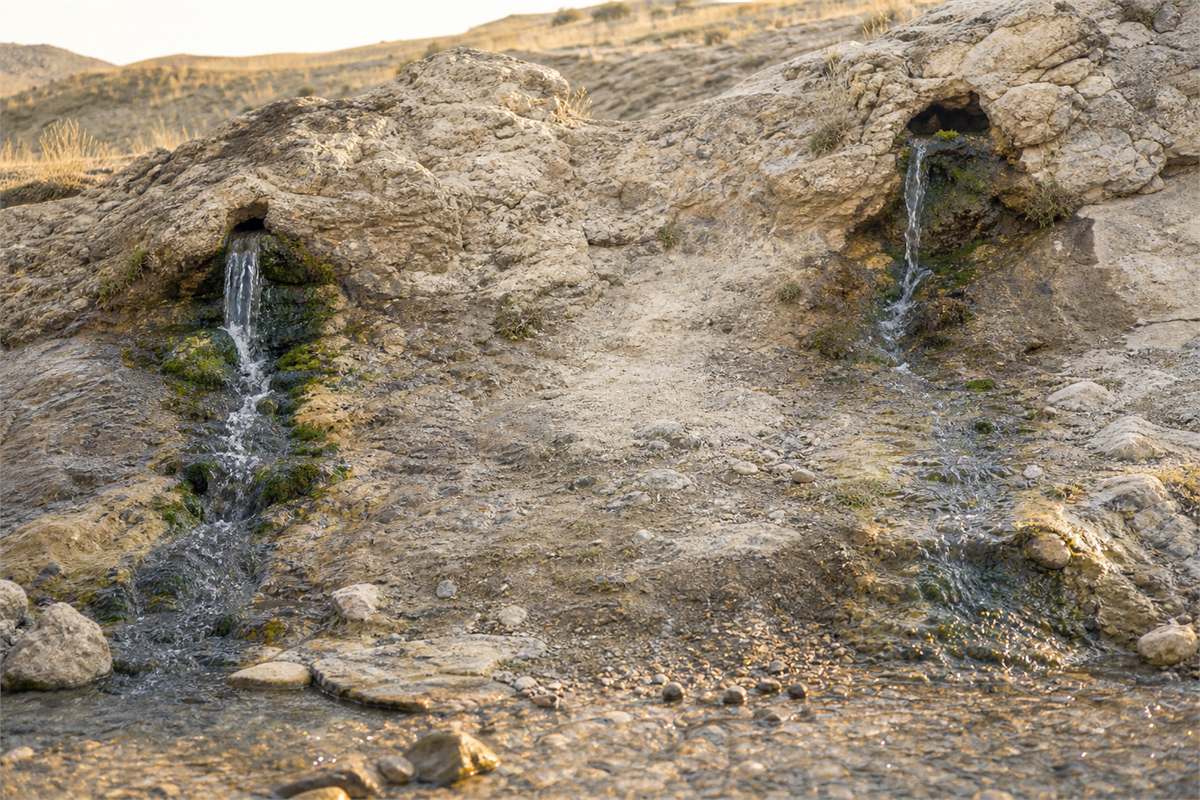
“Fu Lu Shuang Quan” usually refers to Fu Lu Shuang Quan (福禄双全): “blessing and rank are both complete.” In unmarked romanization, however, quan can also represent quan (泉), “spring,” producing the different phrase Fu Lu Shuang Quan (福禄双泉). The first is an established auspicious expression. The second is usually a context-specific modern name for two springs, a fountain composition, a product, or wordplay involving water or coins.
This distinction changes how a pendant, carving, ornament, or indoor fountain should be read. Bats and deer can form a traditional Fu-and-Lu rebus. A gourd can suggest Fu Lu through sound. Coins have their own vocabulary, while two water outlets remain a practical design feature unless the maker supplies a symbolic title.
Fu Lu Shuang Quan: 双全 or 双泉?
| Term | Literal sense | Best-supported use | What to look for |
|---|---|---|---|
| 福禄双全 | Fu and Lu are both complete | Established blessing phrase | Written characters, bat-and-deer rebus, or another clear Fu/Lu pairing |
| 福禄双泉 | Fu-Lu double spring | Context-specific name or modern wordplay | Two actual springs, two water outlets, a named fountain, product title, or place-specific explanation |
| 双泉 | Two springs | Landscape, place, or water-feature description | Two natural sources, jets, cascades, basins, or channels |
| 双钱 / 双古钱 | Double coin / two old coins | Coin motif or decorative pairing | Two round coins, often with square holes; interpret accompanying motifs separately |
| 泉 / 泉币 | Spring / an old term for currency | Historical monetary vocabulary in the right context | Inscriptions, numismatic context, or an explicit coin reference |
Fu (福) expresses blessing, happiness, and favorable fortune. Lu (禄) originally concerns official emolument: the salary, rank, or material support attached to office. Shuang quan (双全) means that both sides are present together. The phrase therefore has a more precise historical center than a generic promise of money: it joins a good life with recognized standing and a secure livelihood.
Quan (泉), by contrast, means a spring or source of water. It also appears in older vocabulary for money, including quanbi (泉币), but that linguistic fact alone does not turn every pair of coins into “Fu Lu double springs.” Object type, inscription, composition, and maker description must agree before that reading is useful.
The established meaning of Fu Lu Shuang Quan (福禄双全)
The established phrase can be translated as “blessings and emolument in full,” “both happiness and rank,” or, more naturally for a modern gift, “a wish for a fortunate life and dignified prosperity.” It belongs to a broad language of auspicious wishes used in words, pictures, decorative objects, textiles, carvings, and gifts.
Modern English descriptions often reduce Lu to “wealth.” That is only part of the idea. Lu carries associations of office, salary, status, professional recognition, and dependable means. For a graduation or promotion gift, “blessing and a well-earned place in life” often conveys the tone better than “get rich.”

How bats, deer, gourds, and coins create different readings
Bat Fu (蝠) and blessing Fu (福)
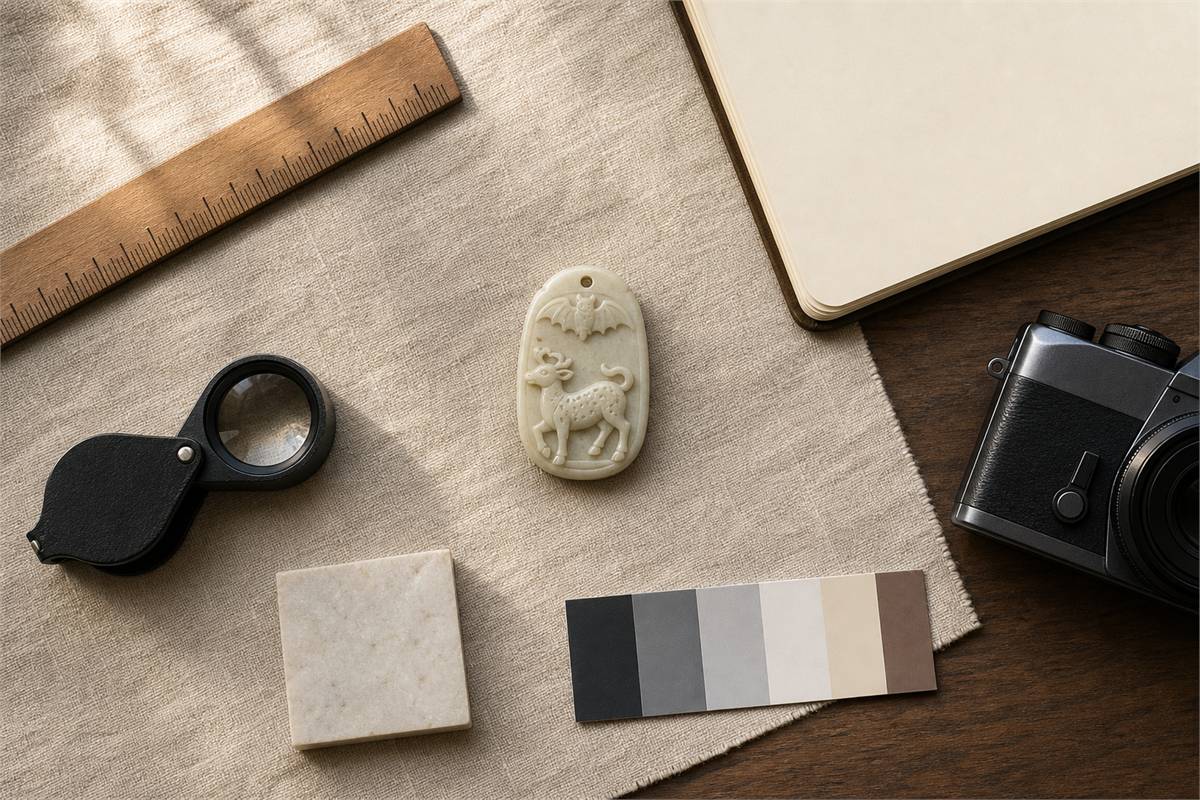
Eastern decorative art frequently uses rebuses—images whose spoken names suggest another word. Bat Fu (蝠) sounds like blessing Fu (福), so the animal became an auspicious visual sign. The number and companions matter: five bats can suggest the Five Blessings, while a bat paired with a deer can express Fu and Lu together. The bat symbol guide explains these neighboring compositions in greater depth.
Deer Lu (鹿) and emolument Lu (禄)
Deer Lu (鹿) sounds like emolument or rank Lu (禄). A deer can therefore carry a professional or livelihood wish through wordplay. Deer also participate in longevity scenes, especially when joined by pine, crane, lingzhi, peaches, or an immortal. A deer alone is not enough to label every object Fu Lu Shuang Quan; its companions determine whether the scene emphasizes Lu, longevity, nature, or another story. See the deer meaning guide for that wider visual vocabulary.

Gourd hulu (葫芦) and Fu-Lu wordplay
The bottle gourd hulu (葫芦) is closely associated with Fu-Lu sound play in modern and traditional decorative culture. Its double-lobed silhouette also makes it visually satisfying in jewelry and carving. Yet a gourd remains a distinct symbol with its own botanical form, Daoist associations, vessel history, fertility imagery, and gift uses. It should not be described as proof that an object depicts two springs. For the full distinction, use the gourd meaning guide.
Double coins, coin motifs, and the word quan (泉)
Quan can refer to currency in historical language, and old coins are sometimes called guquan (古泉). Decorative double-coin designs may also invite sound play with shuang quan, “both complete.” Even so, “double coins,” “double-coin motif,” and “Fu Lu Shuang Quan” are not interchangeable labels. A reliable description names the two coins first, then explains any accompanying bat, deer, Fu character, Lu character, or inscription that completes the auspicious message.
Square-holed cash, later charms, and modern coin-shaped pendants can look similar while belonging to different categories. The ancient coin guide helps separate monetary objects, charm-like objects, and modern decorative references before symbolism is assigned.

What “Fu Lu double spring” usually means today
Fu Lu Shuang Quan written as 福禄双泉 is best treated as a modern or local title unless a dependable source establishes a specific historical use. It can name two actual springs called Fu Spring and Lu Spring, a landscape with paired water sources, a fountain product with two flows, a hospitality room, a promotional series, or a commercial design. In each case, the name belongs to that place or product rather than to a universal ancient composition.
Water can still contribute an attractive poetic layer. A spring suggests freshness, continuity, sound, and movement; two flows can create balance and symmetry. These are reasonable aesthetic readings. Claims about automatic financial results, altered energy fields, health improvement, or a compulsory compass direction belong to modern folklore or sales language rather than to verifiable product performance.

Place names deserve the same care. A town called Shuangquan, a pair of springs called Fu and Lu, and a scenic site called Fushou Shuangquan are three different identities. Keep the exact written name, location, and official description together. A nearby sound or similar tourism name should never be used to manufacture an origin story for 福禄双泉.
Where the motifs appear and how materials change the design
Jade and hardstone carving
Jade pendants, plaques, and small carvings can combine characters with animals, clouds, gourds, or coins. Relief carving makes the rebus readable on a flat plaque; openwork can separate a bat’s wings from a deer or gourd; qiaose carving may use a contrasting patch of color to distinguish one symbol from another. The best description follows the forms that are actually visible and uses the jade carving motif guide for technique and layout.

Metal, wood, ceramic, and textile work
Metal charms can render crisp characters and coin outlines, while cast desk ornaments support larger animal groups. Wood suits rounded gourds and low-relief plaques but requires attention to grain direction and fine projections such as antlers. Ceramics and enamel allow color to separate red bats, green or blue grounds, coin borders, and cloud bands. Textiles repeat motifs across a larger field, so count and placement may carry as much meaning as a single central figure.

Fountains and indoor water features
For an object sold as a “Fu Lu double spring” fountain, begin with construction rather than symbolism. Identify whether it has two independent pumps or one pump feeding two outlets; inspect basin depth, splash control, access to tubing, cable routing, pump replacement, and whether the material tolerates continuous moisture. A named double flow may be the visual reason for the title, even when no bat, deer, gourd, or coin motif appears.
How to choose a symbolic object or indoor fountain
For jewelry and small carvings
- Read the characters. Confirm whether the final word is quan (全), “complete,” or quan (泉), “spring.”
- Name visible motifs. Count bats, deer, gourds, coins, peaches, cranes, and written characters instead of relying on a listing title.
- Check carving clarity. Antlers, wings, coin holes, gourd lobes, and inscriptions should remain legible at the object’s actual scale.
- Inspect condition. Look for cracks, loose fittings, sharp edges, unstable bases, worn cord, and fragile openwork.
- Match the message to the occasion. Fu Lu Shuang Quan suits graduation, a new role, promotion, family milestones, and gifts that express blessing with professional respect.

For an indoor water feature
- Measure the full operating footprint. Include splash distance, cable reach, access for refilling, and space to remove the pump.
- Listen before buying when possible. Pump hum, falling-water volume, and resonance from a hollow basin matter in bedrooms and work areas.
- Protect surfaces. Use a level, water-resistant tray or mat and keep the unit away from books, electronics, porous wood, and traffic edges.
- Plan for safe power. Follow the manufacturer’s indoor-use instructions, keep plugs and connections dry, and avoid damaged cords or overloaded outlets.
- Consider children and pets. Choose a stable base, restrict access to cables and small decorative parts, and treat standing water as a hygiene and supervision issue.

Maintenance: water, metal, wood, and carved materials
An indoor fountain needs regular water changes, basin wiping, and pump inspection. Mineral deposits can narrow outlets and dull surfaces; algae grows more readily with light, warmth, and accumulated organic material. Use only cleaning methods approved for the basin, coating, sealant, and pump. Refill before the pump runs dry, and disconnect power before handling the pump or water.

For jewelry and dry decorative objects, care follows material rather than motif. Keep carved projections away from impact. Wipe metal after handling, keep unfinished wood away from soaking and rapid humidity changes, and prevent jade or hardstone pieces from striking harder surfaces. Store pendants so antlers, bat wings, openwork, and coin edges do not catch on chains or other objects.

Fu Lu Shuang Quan, Fu Lu Shou, and nearby phrases
| Phrase | Core idea | Typical visual cues |
|---|---|---|
| 福禄双全 | Blessing and emolument/rank together | Fu and Lu characters; bat and deer; a clearly explained Fu-Lu rebus |
| 福禄寿 | Blessing, emolument, and longevity | Three star gods or a combination that adds Shou, peaches, crane, pine, or lingzhi |
| 五福 | The Five Blessings | Often five bats or a written Five Blessings theme |
| 福在眼前 | Blessing before your eyes | Bat with a coin or coin-like “eye” motif |
| 福禄双泉 | Fu-Lu double spring | Context-specific paired springs, water outlets, place name, or modern title |
These phrases can share animals and objects without becoming identical. A deer beside a peach may emphasize longevity; a bat beside a coin may form another rebus; a gourd can carry Fu-Lu sound play without showing a deer. Good interpretation works from the complete composition outward.

A practical description formula
Start with the exact written term. Next, identify the object and visible motifs. Explain only the sound play supported by those motifs, then describe material, technique, scale, and practical use. End with the gift message or design mood. For example: “This jade plaque uses a bat for Fu (福) and a deer for Lu (禄), forming a visual wish for blessing and dignified prosperity. Its shallow relief keeps both animals readable at pendant scale.”
For a fountain, a more accurate description would be: “This compact indoor water feature divides one recirculating flow between two outlets. Its Fu Lu Shuang Quan title is modern auspicious wordplay; the value of the piece lies in its balanced movement, sound, material finish, and ease of maintenance.” This approach respects symbolism while giving the buyer concrete information.
Explore the Blessing collection for objects chosen around meaning, and use the linked bat, deer, gourd, coin, and jade-carving guides when a design needs a more specific reading.
Frequently Asked Questions
Related Posts


2 Comments