
Ancient Egyptian pottery is clay-based ceramic ware made for storing, preparing, serving, transporting, offering, lighting, writing, and burial. It ranges from coarse Nile-silt bread moulds and beer jars to finely burnished Predynastic vessels and painted New Kingdom pottery. It should not be confused with Egyptian faience, Egyptian blue, glass, or carved stone.
That distinction matters because many objects casually called “Egyptian pottery” were made by completely different technologies. Egyptian faience is a quartz-rich glazed or self-glazing material; Egyptian blue is a synthetic copper-calcium-silicate pigment or frit; glass is a fully vitreous material; and stone vessels were carved rather than formed from clay. This guide explains how to tell those categories apart, how ancient pottery was made and used, and how to approach modern Egyptian ceramics safely.

Ancient Egyptian Pottery at a Glance
| Material | Main body | Typical use | Key distinction |
|---|---|---|---|
| Pottery / terracotta | Clay, commonly Nile silt or marl | Vessels, bread moulds, lamps, figurines, offering equipment | Clay-based and fired |
| Egyptian faience | Mostly crushed quartz or sand with alkali, lime, and colorant | Beads, amulets, shabtis, tiles, small figures, vessels | Siliceous ceramic, not ordinary clay pottery |
| Egyptian blue | Copper calcium silicate made as a synthetic frit | Ground and mixed with a binder as blue pigment; sometimes formed into small objects | A pigment/frit, not another name for faience |
| Glass | Vitreous silica-based material | Vessels, inlays, beads, ornaments | Glassy throughout, rather than a quartz core with a surface glaze |
| Stone | Calcite, limestone, hard stones, and other rock | Vessels, canopic containers, palettes, sculpture | Carved, not fired from clay |
“Ceramic” is the broad materials term. Pottery is one ceramic family, and faience can also be described as a ceramic material in that broad sense, but calling faience “glazed pottery” hides its quartz-rich body and different forming behavior.

Nile Silt Clay vs Marl Clay
Egyptian archaeologists commonly begin pottery identification with the fabric: the clay body and its inclusions. The Vienna System divides Egyptian pottery fabrics into Nile and marl groups, each with several subtypes. These are not a simple early-versus-late sequence. Both clay families remained useful over long periods because they behaved differently and suited different vessels.

| Feature | Nile silt clay | Marl clay |
|---|---|---|
| Source | Alluvial deposits laid down by the Nile | Calcareous clays associated with shale and limestone deposits, often away from the active floodplain |
| Typical fired color | Often red, reddish brown, brown, or grey-brown because of iron and firing conditions | Often pale buff, cream, pinkish, grey, or greenish depending on fabric and firing |
| Fabric | Ranges from fine to coarse; plant remains and sand occur in some subgroups | Often dense, hard, and relatively low in porosity; limestone and sand inclusions vary by subgroup |
| Common strengths | Readily available for household and large utilitarian wares | Well suited to harder, paler, often carefully finished vessels and transport containers |
Temper was not a single universal recipe. Sand, plant matter, crushed ceramic, limestone, shell, or other inclusions can occur, but each claim should be tied to a particular fabric, workshop, period, or archaeological sample. Straw and shell should not be presented as ingredients in every Egyptian pot.

Predynastic Black-Topped Red Ware
Black-topped red ware is one of the most recognizable forms of Predynastic Egyptian pottery. It appears in Badarian contexts and was especially prominent in Naqada I, continuing into parts of Naqada II during the fourth millennium BCE. Many examples use fine Nile-silt clay, a red slip, and careful burnishing. The upper wall and interior are black, while the lower body is polished red.

The color was created through controlled firing rather than simply painted on. Oxidizing conditions help iron-rich clay develop its red color; a reducing, smoky, carbon-rich environment can blacken the rim and interior. Experimental archaeology has reproduced the effect in more than one way, and researchers continue to debate the exact sequence and kiln or open-fire arrangement used by different potters. “Fire red first, then bury the rim in ash” is a useful hypothesis, not a universal recipe proven for every vessel.

Later Egyptian texts and art associate red with desert, heat, danger, or disorder in some settings and black with fertile Nile soil and regeneration. Those associations can enrich modern interpretation, but projecting a complete death-and-rebirth doctrine onto every Predynastic black-topped pot goes beyond the surviving evidence. Fabric, surface treatment, vessel shape, findspot, and use should come first.
Naqada Painted Pottery
Naqada pottery developed several decorated traditions. Naqada I includes polished red vessels with white cross-lined designs. Naqada II decorated ware often uses pale marl clay with red-brown painted imagery. Boats, human figures, long-legged birds, antelopes or gazelles, plants, wavy lines, triangles, cross-hatching, and other geometric elements appear in changing combinations.

A securely excavated Met jar from Hierakonpolis, dated to about 3500–3300 BCE, shows boats; a large British Museum Naqada IID jar combines a many-oared boat, birds, gazelles, wavy bands, and triangles. Even on well-documented objects, individual elements can remain disputed: what looks like a sail to one scholar may be read as a banner by another.

Painted narrative scenes should not be explained as a side effect of the potter’s wheel. Early vessels were hand-built, and the decoration belongs to changes in workshop practice, burial display, exchange, and image-making. Claims about a specific “king smiting captives” pot at Abydos require a named object, date, excavation record, and collection; without that evidence, the safer account is that boats, animals, people, hunting, and ceremonial imagery formed part of Predynastic visual culture.
How Pots Were Formed and Fired
Ancient Egyptian potters pinched and hollowed clay, built walls with coils or rings, shaped vessels with paddles or other tools, formed pieces over cores, and later used rotating devices and the potter’s wheel. Wheel use expanded over time and is clearly documented in Old Kingdom production; moulds also became important for lamps, figurines, and specialized forms in later periods.

After forming, a vessel could be scraped, smoothed, slipped, burnished, painted, stamped, or incised. It then dried before firing. Open firing could produce lower and less even temperatures, while kilns offered better separation of fuel and vessels and greater control over heat and atmosphere. Firing color therefore reflects clay chemistry, surface treatment, oxygen supply, fuel, temperature, and cooling—not a single ingredient.

Repeated forms, standardized fabrics, kiln waste, potters’ marks, and workshop installations show that production could be organized at substantial scale. At the same time, hand-built village pottery, state-connected workshops, temple industries, and regional traditions coexisted. “Ancient Egyptian pottery” covers thousands of years of changing labor rather than one unbroken factory system.
Ancient Egyptian Pottery Uses in Daily Life
Most pottery was practical. Jars, bowls, dishes, stands, cups, and large containers held or moved grain, water, beer, wine, oils, prepared foods, and ingredients. The exact contents depended on period, region, household, and trade; olive oil should not be treated as a universal commodity in every phase of Egyptian history.

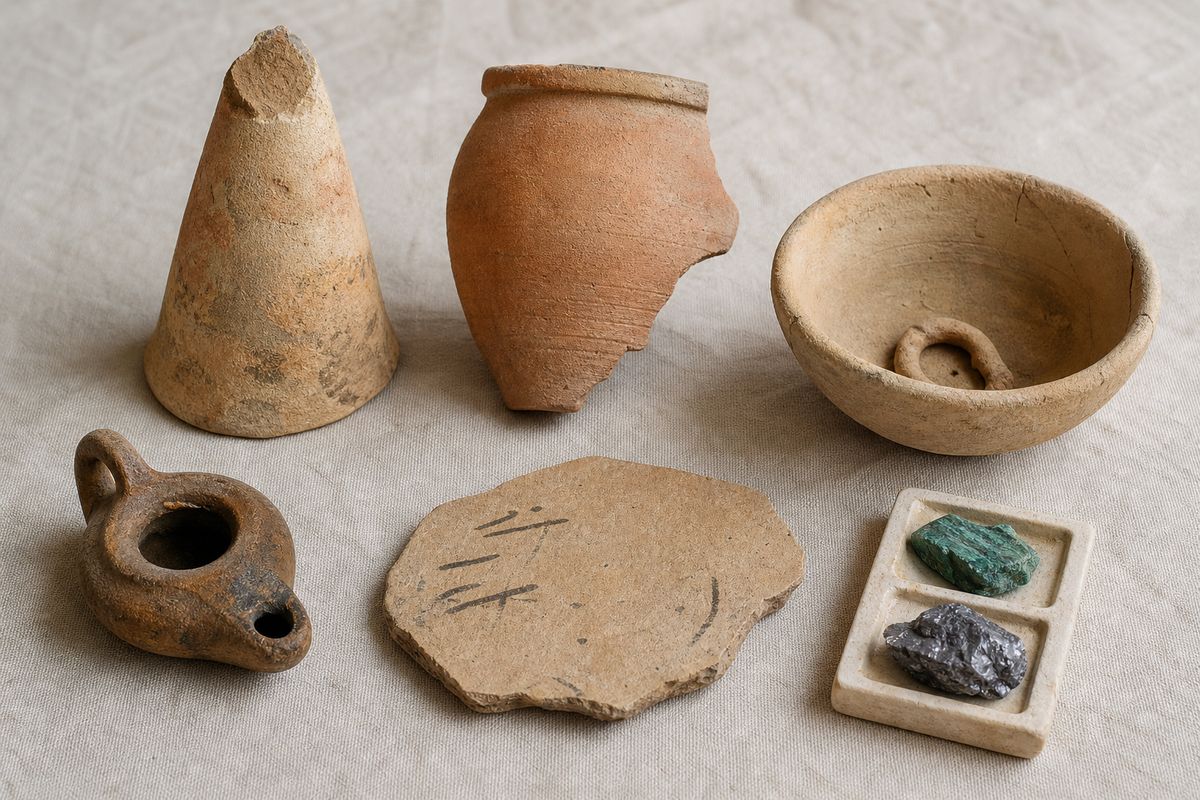
- Bread and beer: Old Kingdom sites preserve ceramic bread moulds and vessels associated with brewing.
- Storage and transport: jars and amphorae carried liquids and dry goods, sometimes with seals, labels, or inscriptions that recorded contents and origin.
- Water: porous unglazed vessels could cool water through evaporation, while stands supported round- or pointed-base containers.
- Lighting: clay lamps held oil and a wick; forms changed substantially in Ptolemaic, Roman, and Late Antique periods.
- Textile work: pottery spinning bowls helped manage flax rove and moisture during thread production.
- Writing and drawing: potsherds used as ostraca provided a cheaper writing surface for notes, accounts, exercises, literary passages, and sketches.
- Cosmetics and pigments: small pottery and stone containers could hold cosmetic materials. Malachite is green; galena was widely used for grey-black or black kohl.
- Ritual and offering: vessels presented food, drink, incense, oils, or libations in temples, shrines, chapels, and tombs.
Pottery in Tombs, Offerings, and the Afterlife
Pottery entered graves from the Predynastic period onward, but its meaning depended on context. Some vessels contained food or drink; some reproduced household forms; some were made or selected for funerary display; others supported offering rituals. A grave pot was not automatically a mystical symbol, and an everyday form could acquire a new role when placed with the dead.

Archaeologists examine residue, wear, breakage, sealing, inscriptions, placement, associated objects, and parallels from settlements and workshops. That evidence can distinguish a used household jar from a purpose-made model, an offering tray, a canopic container, or a vessel deposited as provision for the deceased.

Canopic Containers, Shabtis, Soul Houses, and Jar Burials
Canopic containers were not always pottery
Canopic containers held organs removed during mummification, most often the liver, lungs, stomach, and intestines. Sets could be made from limestone, travertine, calcite, pottery, wood, faience or glazed composition, linen and stucco, and other materials. Early New Kingdom examples could have human-headed lids; the familiar baboon, human, jackal, and falcon heads identifying the Four Sons of Horus became usual from the New Kingdom, not from the beginning of the tradition.

Shabti, shawabti, and ushabti changed over time
Shabti, shawabti, and ushabti are related Egyptological names used for funerary figures whose terminology and form evolved. Figures inscribed with the work spell appear by the late Middle Kingdom; later examples were expected to answer when the deceased was called to agricultural or other manual labor in the afterlife. They were made from stone, wood, faience, pottery or clay, and occasionally other materials. A green-blue figure may be faience, painted wood, or ceramic, so color alone does not identify it.

Soul houses were offering equipment as well as models
So-called soul houses are hand-built ceramic offering trays with an architectural model attached. They are associated especially with the First Intermediate Period and Middle Kingdom and often include modeled bread, meat, vegetables, vessels, courtyards, or libation channels. Scholars continue to debate how their house imagery, offering function, tomb placement, and social setting relate. Calling each one the deceased’s literal “eternal home” turns one interpretation into a fact.

Jar burial varied by place, date, and age
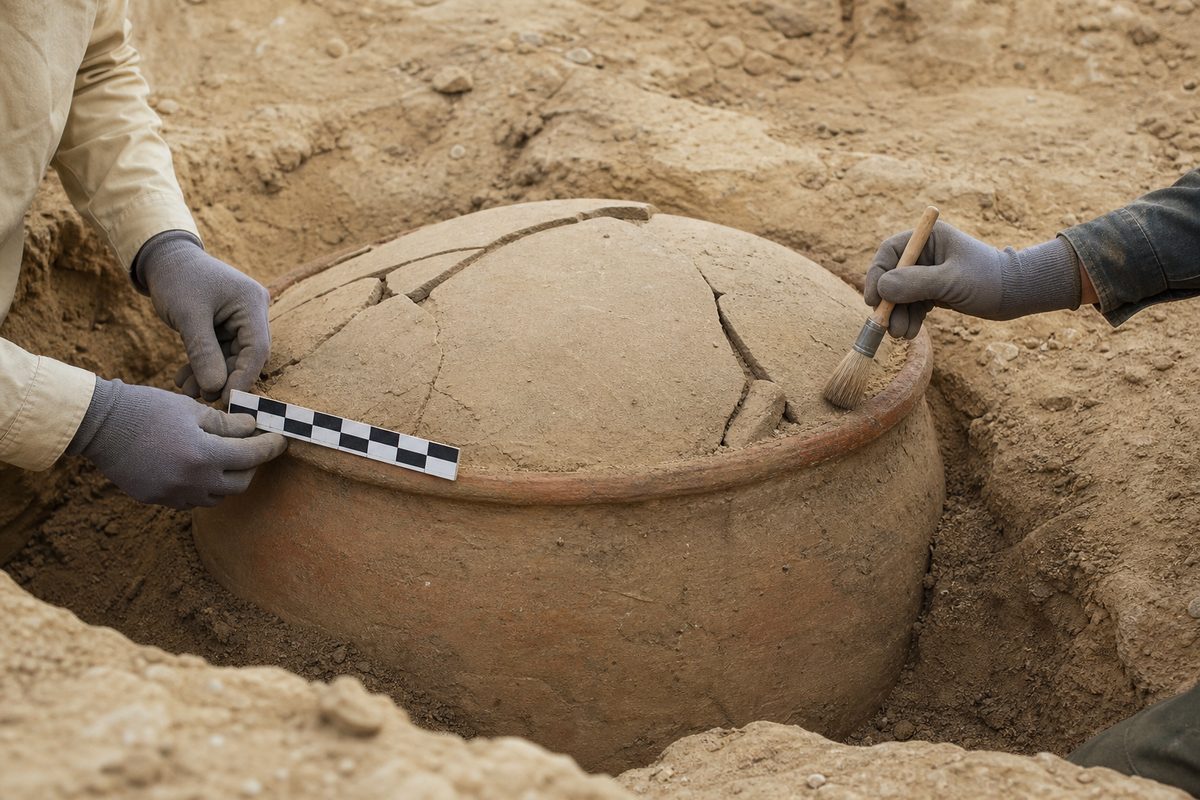
Burial in large ceramic vessels is documented in different Egyptian communities and periods. At Predynastic Maadi, infant burials occurred within the settlement in vessels or pits, while adults were buried in a separate cemetery. Other sites and later periods produced different patterns. Jar burial should therefore not be reduced to “mainly a children’s custom,” nor should a womb-and-rebirth meaning be asserted without evidence from the specific cemetery.
William the Faience Hippopotamus: Why It Is Not Pottery
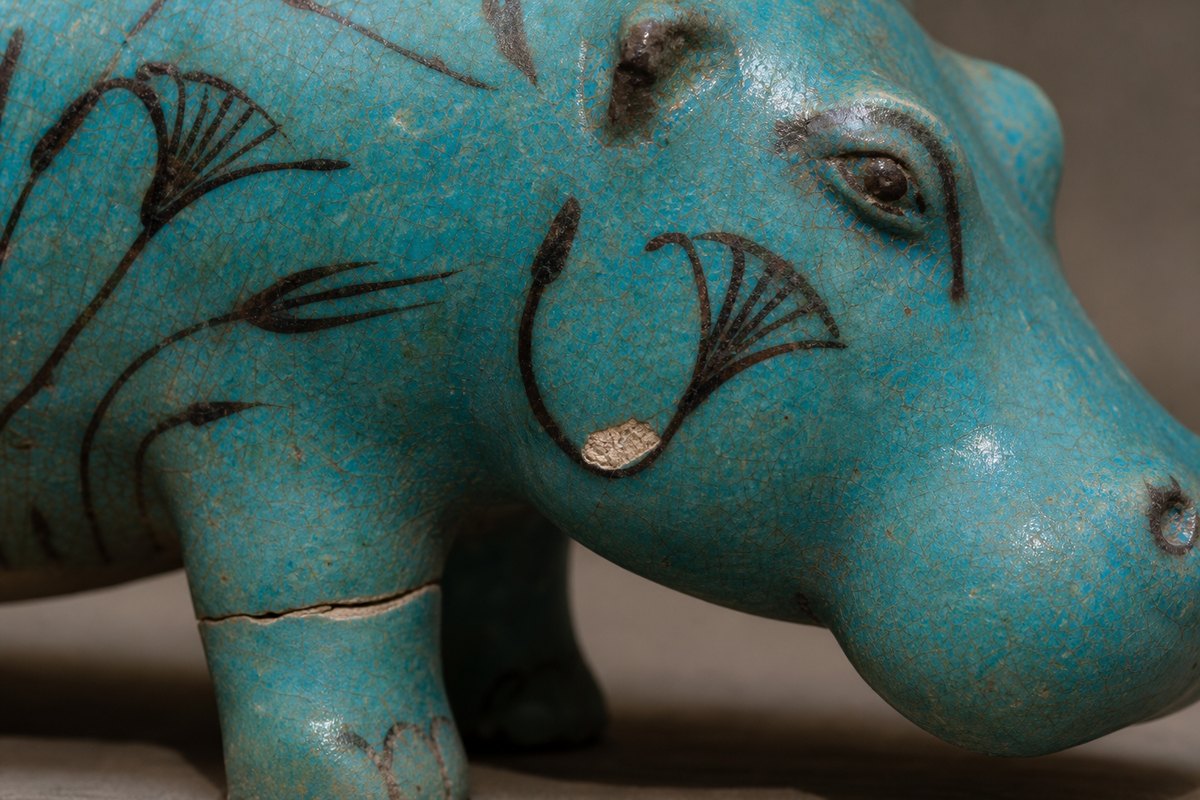
The Metropolitan Museum of Art’s hippopotamus nicknamed “William” is Egyptian faience, not blue-glazed pottery. It dates to about 1981–1885 BCE, early Dynasty 12, and came from the tomb of Senbi at Meir. The figure measures 11.2 × 20 cm. Its quartz-rich body and blue-green glaze place it in the faience tradition.

Painted aquatic plants connect the animal visually to the Nile marsh. The hippopotamus was also dangerous, so the figure cannot be reduced to a harmless “pastoral afterlife” mascot. The Met explains that three legs were broken in antiquity, probably to prevent the animal from threatening the tomb owner, and were later restored; the surviving original leg can be distinguished from the reconstructions.
William is a useful identification lesson: a shiny blue-green ancient Egyptian object is not automatically glazed clay. Museum material records, a visible quartz-rich core, manufacturing evidence, and scientific analysis carry more weight than color or a tourism label.
Colors and Symbols: Evidence and Interpretation
Color and imagery mattered in Egyptian visual culture, but meanings were neither fixed nor identical across four millennia. Blue and blue-green could evoke water, sky, vegetation, life, divine radiance, and renewal. Faience could imitate the appearance of turquoise and other valued stones, yet it also became prestigious in its own right through skilled production and ritual use.

Egyptian blue belongs beside—not inside—the faience category. It is a synthetic copper calcium silicate frit that was commonly ground into pigment and mixed with a binder for painting. Faience has a shaped quartz-rich core with a glaze formed through efflorescence, direct application, cementation, or combinations of these methods. Glass is different again.

Predynastic boats, animals, people, plants, waves, triangles, and cross-hatched fields provide evidence for image-making, movement, environment, ceremony, and social display. Their exact reading can be uncertain. A boat may be transport, procession, status image, ritual vehicle, or several things at once; it should not automatically be called the soul’s journey to the afterlife.
Scarab amulets and seals were frequently made from faience or stone, not ordinary pottery. They need only a brief place here; readers can explore their materials, Khepri connection, seal function, and funerary variants in the published Scarab Symbol Meaning guide.
Later Egyptian Ceramic Traditions
Pharaonic pottery did not simply end in a single decline. New Kingdom workshops produced distinctive painted wares, including late Dynasty 18 vessels with floral decoration and cobalt blue. Ptolemaic and Roman Egypt developed their own table, kitchen, transport, figurine, and lamp traditions within wider Mediterranean networks.

Late Antique and Coptic contexts introduce different forms, workshop regions, Christian imagery, and uses. Islamic-period Egypt includes both glazed and unglazed pottery, delicate filtered water jars, lamps, bowls, and regional production connected with changing technologies and trade. These later objects belong to Egyptian ceramic history, but flattening Roman, Byzantine, Coptic, and Islamic wares into one timeless “ancient Egyptian pottery” style erases their dates and communities.

Modern Egyptian Pottery and Food Safety
Modern Egyptian pottery includes functional cookware and tableware, unglazed cooling vessels, studio ceramics, decorative tourist ware, and factory-made souvenirs. Bright color, hand painting, glossy glaze, crazing, low weight, heavy weight, or a “Made in Egypt” label cannot prove whether an item is food-safe or whether its glaze releases lead or cadmium.
- Use a ceramic item for food or drink only when the manufacturer clearly identifies it for that purpose and can show compliance with the food-contact and lead/cadmium migration requirements that apply where it is sold or used.
- Treat an item marked decorative—or one with unknown maker, glaze, or intended use—as decoration, not tableware.
- Acidic foods and drinks can increase migration from an unsafe glaze. Heat and long contact time can add further stress, but these risks cannot be judged from appearance alone.
- Rice water, porridge water, boiling, seasoning, or “sealing the pores” cannot make an unknown glaze food-safe.
- Use a microwave, dishwasher, oven, stovetop, or freezer only when the manufacturer explicitly approves that use. Metallic decoration should stay out of the microwave.
- Use a porous water jar for drinking water only if it was designed and documented for potable-water use, then clean and maintain it according to the maker’s instructions.

When documentation is unavailable, the simple safe choice is to use the piece as a dry decorative object. This protects the user without making unsupported claims that all handmade or low-fired pottery is hazardous.

Buying Egyptian Pottery Souvenirs and Export Rules
A useful souvenir decision begins with category, not “authenticity” judged by weight or roughness. Decide whether you are buying a newly made functional pot, a modern decorative piece, an authorized museum reproduction, or an archaeological object. Only the first three belong in an ordinary tourist purchase.

- Ask who made it: request the workshop, maker, material, intended use, and care information.
- Keep documentation: retain an itemized receipt, maker or store details, product label, and photographs, especially for museum-style replicas.
- Do not rely on visual shortcuts: weight, shine, crazing, hand-painted lines, and imperfect symmetry do not distinguish handmade Egyptian pottery from resin, imported wares, or modern reproductions.
- Separate replica from antiquity: an authorized replica should be sold and documented as modern. A sales receipt is not an antiquities export permit.
- Avoid archaeological material: Egyptian Customs lists antiquities among prohibited exports, and Egypt’s Antiquities Protection Law controls ownership, trade, and export. Do not attempt to remove an actual antiquity from Egypt.
- For any claimed antique outside Egypt: require a documented ownership history, lawful export evidence from the country of origin, invoices, and specialist legal and provenance review before purchase.
Prices change by city, workshop, scale, and sales channel. Without a current, attributable source for a specific object, invented dollar ranges or a universal “start bargaining at 30–50%” rule are less useful than clear documentation and a purchase you understand.

How to Display and Care for Egyptian Pottery
Modern functional pottery
Follow the maker’s instructions for washing, heating, soaking, and storage. Avoid sudden temperature changes and impacts. Retire a functional vessel from food use if the glaze flakes, the body cracks, or the maker’s safety documentation is missing. Do not try to repair foodware with a household adhesive and return it to service.

Modern decorative pottery and replicas
Place decorative pottery on a stable shelf that can carry its weight, away from edges, direct sun, heat sources, vibration, children, and pets. Use an inert, well-fitted stand or specialist mount; a pointed-base jar needs full support and should never balance on its tip. A case reduces dust and handling. Respectfully displayed canopic-jar replicas are a personal choice, not a forbidden form of home decoration.

Archaeological or high-value pottery and faience
Reduce handling and obtain an object conservator’s assessment. Support the base and center of gravity with both hands; never lift by a rim, handle, spout, lid, or old repair. Clean hands or gloves should follow the institution’s protocol and the object’s surface condition. Paint, glaze, labels, salts, and earlier restorations can make a seemingly solid object fragile.
Do not soak, oil, season, desalinate, coat, consolidate, glue, or ultrasonically clean archaeological ceramics or faience at home. Do not apply Paraloid B-72, silicone, resin, or another conservation material without professional training and a treatment plan. Even a soft brush or cotton swab can remove friable paint or glaze; use one only after a conservator confirms the surface is stable.
There is no universal household temperature and humidity number for every ancient ceramic. Needs depend on salts, porosity, glaze, paint, burial environment, previous treatment, and current condition. The practical priorities are a stable environment, minimal fluctuation, low dust, no direct sunlight or heat, inert support, and prompt professional review if crystals, powdering, flaking, cracks, or old repairs change.

Choosing Egyptian Pottery as a Gift
For a usable gift, choose modern tableware with clear food-contact documentation and care instructions. For a history enthusiast, consider a licensed museum reproduction with the original object, date, material, and collection identified. For home decoration, a contemporary Egyptian studio piece can be meaningful when the maker and technique are named rather than hidden behind generic “pharaoh style” marketing.

A faience-inspired bead, scarab, or blue-green object is a modern interpretation, not an ancient artifact. Present it with a short material story and honest date. Readers looking for a symbolic modern gift can also browse the Eastern Story Blessing collection, where meaning is carried through contemporary objects rather than claims of archaeological authenticity.
Frequently Asked Questions
Related Posts


