
Purple crystals in feng shui are most often centered on amethyst. Amethyst is a purple variety of quartz, a silicon dioxide mineral admired for its violet color, glassy luster, and long use in jewelry, crystal clusters, geodes, and home display pieces. In modern feng shui (风水), purple crystals are chosen for dignity, calm focus, reflective judgment, creativity, spiritual refinement, and the auspicious image of Purple Qi Arrives from the East (紫气东来).
The best use of amethyst is specific rather than excessive. A small bracelet can become a personal reminder of composure. A polished point or cluster on a desk can mark a study habit. A geode in a living room can create a refined focal point. A pale purple accent in a bedroom can soften the room without making it heavy. This guide explains amethyst meaning, mineral facts, origins, Five Elements use, placement in the living room, office, study, and bedroom, jewelry wearing, buying checks, authenticity clues, care, and purple interior styling.
Purple Crystals in Feng Shui at a Glance

| Question | Direct answer |
|---|---|
| Main purple crystal | Amethyst is the main purple crystal in feng shui and crystal jewelry. Purple fluorite, lepidolite, charoite, sugilite, and lavender jade-like stones may appear in broader purple-stone styling, but amethyst carries the clearest search and buying intent. |
| Core meaning | Dignity, refined taste, calm judgment, inward focus, creativity, loyalty, sincere feeling, and auspicious purple qi (气). |
| Five Elements reading | Purple is commonly read through the fire element huo (火), especially when the stone is used for visibility, inspiration, warmth, and transformation. Quartz as a mineral can also invite a secondary Metal reading in some systems. |
| Best home areas | Living room focal point, southeast wealth position Cai Wei (财位), study desk, office shelf, reading corner, or a soft bedroom accent. |
| Best jewelry uses | Bracelets, pendants, rings, and beads for a calm, elegant, meaning-led style. Many wearers choose amethyst as a quiet companion for study, work, reflection, or meaningful gifting. |
| Best buying checks | Color depth, clarity, natural inclusions, color zoning, cracks, bead drilling, origin disclosure, treatment disclosure, and certificate support for higher-value pieces. |
| Main care rule | Keep amethyst away from strong sun, high heat, hard knocks, harsh cleaners, and rough storage with harder or sharper jewelry. |
What Are Purple Crystals? Amethyst as the Main Stone
In everyday crystal language, “purple crystal” usually means amethyst. Mineralogically, amethyst is purple quartz: its main component is silicon dioxide, and its color is connected to trace iron, natural radiation, and color centers formed over geological time. It may occur in hydrothermal veins, cavities in granitic rocks, and geodes inside volcanic rocks, including basaltic lava cavities. This material background matters because amethyst is both a natural mineral and a symbolic object.

Amethyst can appear as loose crystals, polished stones, beads, pendants, rings, carved pieces, clusters, and geodes. A small bracelet has a different feeling from a large amethyst cave. The bracelet is intimate and wearable; the geode is architectural and decorative; the cluster feels spreading and lively; a smooth sphere or palm stone feels quiet and contained. Good feng shui styling begins by matching the form to the activity of the place.

Other purple stones can support a purple feng shui palette. Purple fluorite may be chosen for its bands and cool geometric feeling. Lepidolite is often appreciated for its soft lavender tone. Charoite and sugilite can look more dramatic and saturated. Still, for this page, amethyst remains the main subject because it is the stone most readers mean when they search for purple crystals in feng shui, amethyst placement, or purple crystal jewelry.
Purple Crystal Meaning in Eastern Symbolism
Purple has a high place in Eastern symbolism because it suggests noble presence, refined power, and auspicious arrival. The phrase Purple Qi Arrives from the East (紫气东来) is one of the most important cultural anchors. It describes purple qi approaching from the east as a sign of blessing, fortunate timing, and a dignified opening. In modern home and jewelry language, amethyst can carry this phrase as a symbol of welcome, good wishes, and a more elevated mood.

In Eastern folk tradition, purple also sits between red warmth and blue calm. That mixed character makes it useful for explaining amethyst without turning the stone into a loud luck object. Red gives warmth, attention, and social brightness; blue suggests quiet, distance, and thought. Purple brings those qualities together into a tone of measured transformation, inward focus, and restrained charisma.
Amethyst is also widely known as the February birthstone and as a sixth wedding anniversary gemstone. These modern gemstone meanings fit naturally with the Eastern Story tone: loyalty, sincerity, depth, kindness, perseverance, and thoughtful affection. As a gift, an amethyst bracelet or pendant can say, “I chose this for calm, loyalty, and a steady heart,” without overloading the object with dramatic claims.
Amethyst, Color, and the Five Elements Wu Xing (五行)
In the Five Elements wu xing (五行), purple is commonly connected with the fire element huo (火) because it belongs to the red-purple family. Fire language is about visibility, warmth, transformation, inspiration, and active presence. That is why purple crystals are often used in settings connected with career expression, creativity, public-facing work, study motivation, or a more vibrant room atmosphere.


A simple placement map reads purple and amethyst as friendly to the south, which is often associated with recognition and visibility, and useful in the southeast when the reader is using a wealth position Cai Wei (财位) or a business-growth corner. The same material can feel too intense when used in large quantities, especially deep purple in a small bedroom, a kitchen, a bathroom, or a room already full of dark colors.
There are also smaller alternative readings. Because amethyst is quartz, and quartz is a mineral, some systems discuss it through Metal language. Pale lavender may be treated differently from deep grape purple because color changes the feeling of the room. These differences do not need to become a dispute. For daily jewelry and home styling, the most useful rule is this: treat purple as a Fire-colored symbol, then soften or strengthen it according to shade, form, room purpose, and personal taste.
| Purple tone | Symbolic feeling | Best use | Use with care |
|---|---|---|---|
| Pale lavender | Gentle dignity, calm support, soft relationship tone, and a quieter mood. | Bedroom accents, reading areas, small jewelry, soft textiles. | Can disappear visually if the room is already very pale; pair with ivory, silver, light wood, or warm white. |
| Medium amethyst purple | Balanced refinement, focus, creativity, and auspicious presence. | Desk, living room shelf, bracelet, pendant, study corner. | Keep the arrangement simple so it does not feel busy. |
| Deep purple | Authority, mystery, confidence, and strong personal taste. | One focal geode, statement bead, or display object. | Avoid covering a whole room with deep purple; it can feel heavy without enough light. |
| Purple-red | Festive warmth and expressive charm. | Small accent, celebratory gift, warm outfits. | Use sparingly if the room already has red, orange, or gold. |
| Purple with white or clear quartz | Purification language, clarity, and visual breathing space. | Study area, desk tray, bedroom side table, crystal combination. | Choose stable forms and keep sharp clusters away from hands. |
Major Amethyst Types and Origins
Amethyst origin language is common in the trade, but it should be read as descriptive rather than a complete quality ranking. Color, transparency, zoning, inclusions, cutting, bead matching, and treatment disclosure matter more than origin alone. A beautiful Brazilian bead strand can be more wearable than a poorly selected stone from a more prestigious origin. A deep Uruguayan cluster can be magnificent as decor but too strong for a small bedside table.

| Origin or trade type | Common appearance notes | Best use | Buying note |
|---|---|---|---|
| Uruguayan amethyst | Often described as deep, saturated purple and highly prized for geodes and clusters. | Living room focal pieces, collector geodes, strong purple displays. | Rich color can command higher prices; inspect cracks, stability, and whether the geode base is safe for display. |
| Brazilian amethyst | Often lighter or cooler purple, with broad availability and many bead or decor forms. | Bracelets, pendants, small clusters, accessible home styling. | Good for everyday jewelry; check color zoning and whether the price matches clarity and workmanship. |
| Zambian amethyst | Often known for smaller crystals and reddish-purple or saturated tones. | Jewelry stones, bead strands, compact decorative pieces. | Look for attractive color under natural light and honest treatment disclosure. |
| Korean amethyst | Often described in trade language as a distinctive blue-purple tone. | Collectors and readers who like cooler purple colors. | Availability and descriptions vary; rely on seller transparency and visual quality. |
| Bolivian or pale amethyst | May appear lighter, sometimes in softer lavender tones. | Bedroom styling, subtle jewelry, calm palettes. | Pale color can be elegant; do not judge only by darkness. |

For authenticity, natural amethyst often shows color zoning, slight unevenness, cotton-like inclusions, internal veils, or ice-like cracks. Very clean material exists, but a low price combined with perfect color, perfect clarity, and large size should invite closer inspection. In beads, also check drilling, roundness, polish, strand tension, and whether the color looks flatly uniform under phone light or a lamp.
Where to Place Amethyst in the Living Room
The living room is the easiest place to use amethyst because it can be both symbolic and decorative. A medium or large amethyst cluster, geode, or polished point works well where people naturally pause: a sideboard, a low shelf, a display cabinet, a console table, or a stable corner near the seating area. The object should feel intentional, not squeezed between cables, remote controls, and loose clutter.

For a wealth and blessing reading, many people place amethyst in the southeast or in the wealth position Cai Wei (财位). In this context, amethyst is not treated as a coin substitute; it is a purple focal point for refined abundance, calm confidence, and good wishes entering the home. A clear tray, warm wood base, or neutral cloth can make the placement feel more elevated.

An entryway can also hold amethyst, especially in a villa, larger apartment, or spacious foyer. A stable amethyst geode near the entrance may be used as a symbolic guardian of the threshold and a dignified welcome object. The practical rule is important: keep the piece away from door swing, foot traffic, children, pets, and direct sun. If the stone is heavy, use a secure base.
- Good living room positions: southeast corner, console table, low shelf, sideboard, display cabinet, or a calm focal point near seating.
- Good companion materials: light wood, ivory ceramic, white quartz, brass accents used sparingly, linen, stone, and clear glass.
- Places to avoid: hot window ledges, unstable narrow shelves, cluttered TV wires, damp corners, and spots where the geode can be knocked over.
Office and Study Placement for Focus and Creativity
In an office or study, amethyst works best as a visual cue for attention. Place a small point, cluster, palm stone, or bracelet stand near the edge of the desk rather than in the center of the work surface. It should be visible enough to mark the work rhythm, but not so close that it competes with the notebook, keyboard, lamp, or hands.

For study, amethyst can be paired with clear quartz when the intention is clarity, memory, or a cleaner desk atmosphere. In Eastern study language, some readers also connect the desk with Wenchang (文昌), the cultural idea of learning, writing, examination, and scholarly focus. Amethyst belongs here as a calm purple marker of disciplined thinking and creative judgment.

For creative workers, a medium purple crystal can be placed near a sketchbook, design board, music stand, or planning area. The most useful practice is to link the object to an action: opening the notebook, starting the first draft, tidying the desk, or choosing the day's priority. The stone supports the ritual because it is seen and handled regularly.
| Work setting | Suggested amethyst form | Why it fits |
|---|---|---|
| Writing or study desk | Small point, polished stone, or bracelet dish | Keeps the reminder close without taking over the workspace. |
| Creative studio | Cluster, geode slice, or purple-white combination | Adds a visual cue for imagination and ordered expression. |
| Office shelf | Medium cluster with clear base | Looks refined and professional while keeping the desk clear. |
| Meeting or consultation room | Small, understated purple accent | Adds warmth and dignity without creating a mystical shop feeling. |
Bedroom Placement and Purple Interior Styling
In the bedroom, amethyst should be softer than it is in the living room. A pale amethyst bracelet dish, small polished stone, lavender textile, or gentle purple accent can support a quiet bedtime atmosphere. Large deep-purple geodes can feel too visually strong beside the bed, especially in a small room or a room with little natural light.

The bedroom material should also be easy to live with. Avoid sharp clusters where hands reach at night. Keep heavy stones off unstable nightstands. Do not place amethyst where morning sun hits it every day. If the stone feels visually busy or the color feels too intense, move it to a reading corner or living room display and use pale purple textiles in the bedroom instead.
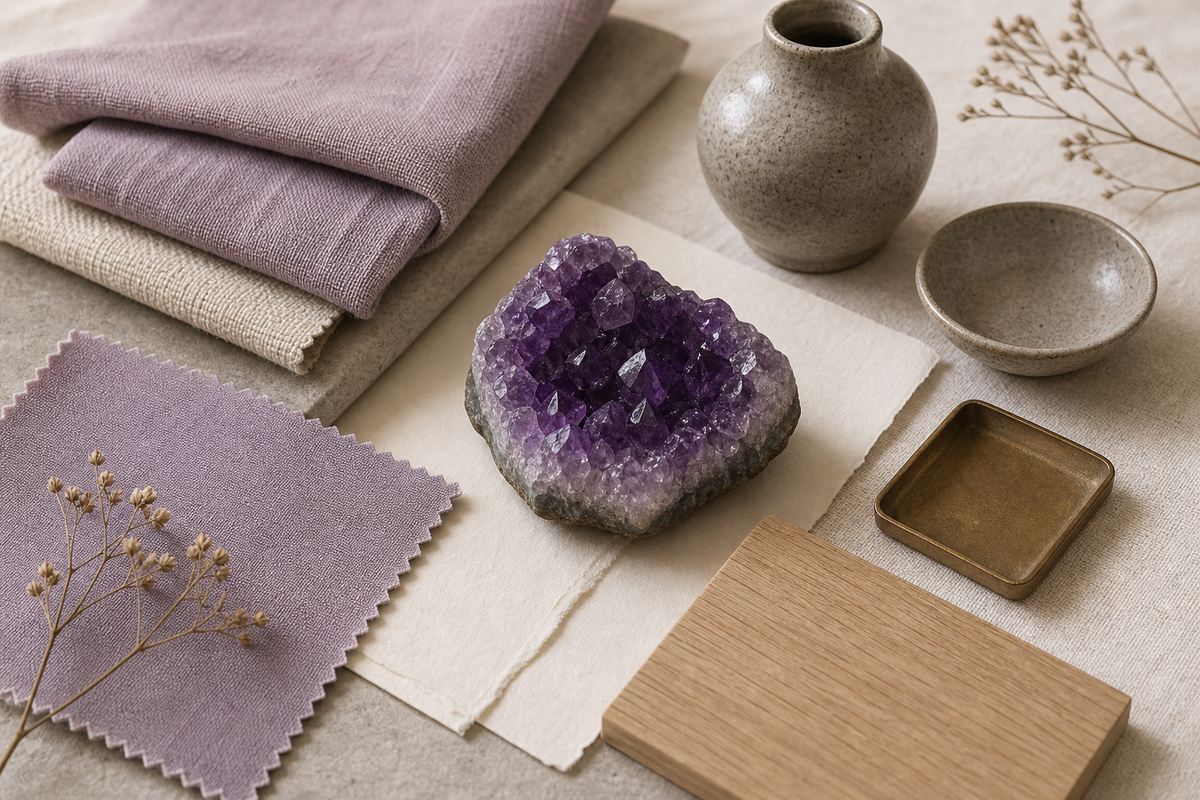
Interior color matters. Purple can feel refined or heavy depending on area and tone. A small purple cushion, curtain edge, vase, bracelet tray, or amethyst bead accent is usually safer than a deep purple wall. If you want a larger purple surface, choose lavender, gray-lilac, or another softened tone. Balance it with white, warm gray, light wood, blue, ivory, or soft metallics.
- For a softer room: use pale lavender, warm white, light gray, and natural wood.
- For a more mature room: pair medium purple with blue, charcoal used sparingly, and clear negative space.
- For a brighter room: use small orange or gold accents only if the room already has enough white or neutral space.
- For a calm bedroom: avoid large areas of deep purple, black-purple combinations, and cluttered crystal displays.
Wearing Amethyst and Purple Crystal Jewelry
Amethyst jewelry turns purple crystal meaning into a daily object. Bracelets, pendants, rings, and bead strands are easy to style because purple can be elegant without being loud. A small amethyst bracelet with silver, white, or clear beads feels calm and refined. A deeper purple bead strand feels more expressive. A pendant can sit closer to the heart and works well as a loyalty, sincerity, or thoughtful-gift symbol.

In folk wearing language, the left wrist is often described as a receiving side, so some people wear amethyst bracelets on the left as a symbol of welcoming calm, focus, or good wishes. Modern wear can stay practical: choose the wrist that avoids desk impact, tools, heavy hand use, and uncomfortable rubbing. Remove the bracelet for intense exercise, swimming, showering, cleaning, sleep if it catches on fabric, or any activity where the stone or cord could be damaged.

Amethyst is also a meaningful gift. Because it is linked with February, the sixth wedding anniversary, loyalty, sincerity, and composed affection, it works for birthdays, anniversaries, study milestones, work transitions, friendship gifts, and self-care rituals. The best gift message is simple: “A purple stone for calm judgment, sincere feeling, and steady days.”
| Jewelry form | Best symbolic use | Style note |
|---|---|---|
| Amethyst bracelet | Daily calm, study rhythm, gentle focus, or a quiet blessing. | Pairs well with silver, white quartz, pale jade, warm wood, or minimal gold accents. |
| Amethyst pendant | Sincerity, loyalty, reflection, and an emotionally centered gift. | Choose a simple setting if the purple color is deep. |
| Amethyst ring | Personal taste, dignity, and visible creative confidence. | Protect it from hard knocks and strong cleaners. |
| Amethyst beads with other crystals | Layered meaning: clarity, calm, warmth, or growth. | Keep the combination readable; too many meanings can feel scattered. |
How to Choose and Buy Purple Crystal
Start with the purpose. If the amethyst is for wearing, comfort and durability matter first. If it is for collecting, color, rarity, form, and provenance matter more. If it is for room decor, size, stability, color balance, and sunlight exposure become important. A good purchase serves the actual use, not just the most dramatic photograph.

| Check | What to look for | Why it matters |
|---|---|---|
| Color | Medium to deep purple with pleasant life; slight red undertone can be attractive; avoid color that is so dark it looks black unless that is the intended style. | Color is a major value driver, but very dark stones may lose detail in jewelry or small rooms. |
| Transparency and brightness | Clear, lively material for faceted stones or beads; attractive natural texture for clusters and geodes. | Different forms need different standards. A geode can be beautiful with internal texture; a bead strand needs visual harmony. |
| Inclusions and cracks | Natural cotton, veils, ice cracks, and zoning can appear; avoid structural fractures in pieces meant to be worn or moved often. | Some inclusions are normal; unstable cracks reduce durability. |
| Origin and type | Uruguay, Brazil, Zambia, Korea, Bolivia, and other origins may be described by sellers. | Origin can influence price and color expectations, but it should not replace visual inspection. |
| Grade language | AA, A1, A, AB, B, and C are seller grading systems, not one universal global standard. | Use grades as seller shorthand, then verify with photos, video, and return policy. |
| Authenticity clues | Uneven color bands, triangular or zebra-like color zoning, natural inclusions, and variation under light can support natural identity. | Artificial or synthetic material can look too even; glass may show bubbles or molded uniformity. |
| Certificates | For higher-value pieces, request a gem identification report from a credible lab. | Documentation matters most when the price is high or the description is complex. |
| Bead and jewelry construction | Smooth drill holes, strong cord, secure knots, good polish, matching beads, and comfortable size. | A symbolic bracelet still needs everyday wearability. |
A practical quality ladder can be useful if the seller explains it clearly: top grade material is transparent, bright, and low in visible flaws; middle grades may have small inclusions, cotton, or ice cracks; lower grades may appear cloudy, heavily included, or uneven. This ladder is helpful for comparison, but it is not a universal certification system. The eye, the intended use, and the price all matter.

How to Care for Amethyst and Purple Crystal
Amethyst is durable enough for many jewelry and decor uses, but it still needs careful handling. Strong sunlight can fade color over time. High heat can alter appearance and may contribute to damage. Hard knocks can chip points, beads, and geode edges. Chemicals from cleaning products, perfume, cosmetics, sunscreen, soap, and pool water can dull settings, cords, and surface polish even when the stone itself is relatively hard.

- Avoid strong sun and high heat: keep amethyst away from hot windows, ovens, steam, long sunbathing, car dashboards, and direct fire.
- Prevent impact: store it separately from metal, diamond, and sharp-edged stones; do not drop geodes or bead strands into a bag without a pouch.
- Keep chemicals away: remove amethyst jewelry for cleaning, bathing, swimming, hot springs, heavy exercise, cosmetics, perfume, and sunscreen application.
- Clean gently: wipe with a soft cloth; use clean water and a soft brush only when the construction is safe for water; dry fully before storage.
- Store thoughtfully: keep jewelry in a box or pouch, away from direct sun, dampness, and tangled chains.
Some people also use cleansing or resetting rituals such as moonlight rest, placing a small stone near a clean quartz cluster, sound, smoke, or a quiet intention practice. Treat these as personal care rituals and choose methods that are safe for the material. Salt water can damage metal parts, cords, elastic, porous stones, and some treatments, so it is not a universal method for amethyst jewelry.

For geodes and clusters, care is partly about display safety. Dust the piece gently, support its weight from the base, and avoid moving it by delicate crystal points. If the stone sits near an entryway or in a living room, check stability often. A meaningful object should be secure, clean, and easy to appreciate.
Purple Crystal Combinations
Purple crystals combine best when each companion has a clear role. White or clear quartz gives visual breathing space and clarity language. Citrine adds yellow warmth and business confidence. Rose quartz softens amethyst into friendship, love, and self-care language; readers interested in pink stones can compare that with the rose quartz guide. Silver or white metal keeps amethyst cool and elegant. Light wood makes the stone feel warmer and more grounded.

| Combination | Meaning and use | Best setting |
|---|---|---|
| Amethyst + clear quartz | Calm judgment plus clarity; useful for study, desk styling, and simple bracelets. | Study desk, office shelf, reading corner, or a clean jewelry stack. |
| Amethyst + citrine | Purple reflection plus yellow brightness; often used for creativity, business mood, and balanced confidence. | Office, project desk, or a bracelet with warm accents. |
| Amethyst + rose quartz | Composure plus softness; good for gentle gift language and emotional warmth. | Bedroom accents, friendship gifts, or self-care jewelry. |
| Amethyst + white or silver accents | Refined, cool, and formal. | Office jewelry, elegant pendant settings, or a quiet side table. |
| Amethyst + black-heavy styling | Strong and dramatic but easy to make visually heavy. | Use sparingly; add white, wood, or open space if the room feels dark. |
If you are building a room arrangement, use fewer pieces with more space around them. If you are building jewelry, use one lead stone and one supporting material. A bracelet with amethyst, clear quartz, and silver is easier to understand than a bracelet carrying five unrelated intentions.
Related Eastern Story Guides and Shop Paths
For wider crystal and material context, start with the Eastern Story Material Guide and the clear quartz guide. For jewelry and home-object care, use the care guide. When the reader wants a meaningful object or symbolic jewelry rather than one exact purple stone, the Blessing collection is the natural next step.
Purple crystal meaning sits between material fact and cultural symbolism. The material fact tells you what amethyst is and how to protect it. The symbolic layer tells you why a person may choose it: dignity, quiet focus, refined blessing, loyalty, and a beautiful reminder to move through the day with steadier attention.
Frequently Asked Questions
A Thoughtful Way to Use Purple Crystals
Amethyst is strongest when it is given a clear role. In a living room, it can become a dignified purple focal point. In a study, it can mark a rhythm of focus. In a bedroom, it can soften the palette. In jewelry, it can become a quiet symbol of loyalty, sincerity, and composed attention. Choose the form that fits the place, then care for it as a meaningful object.
The most refined purple crystal arrangement is not the largest or the darkest. It is the one that feels balanced: enough purple to carry the meaning, enough space to keep the room calm, enough material honesty to make the purchase trustworthy, and enough care to let the stone stay beautiful over time.
Related Posts


