Taotie (饕餮) symbolizes unchecked appetite and greed in myth, sacred power and ritual authority in Shang-Zhou bronze art, protection and exorcism, hierarchy, and today a dramatic Eastern design motif used in food language, jewelry, fashion, branding, games, and cultural products. The same name can point to a gluttonous beast from ancient legend, the Taotie pattern (饕餮纹) on bronze ritual vessels / Li Qi (礼器), or a modern visual language built from fierce eyes, horns, symmetry, and bronze-age mystery.
That layered meaning is why Taotie feels unusually powerful. It is not only a monster story and not only a decorative mask. In Eastern symbolism, it moves between moral warning, ancestor ritual, sacred authority, protective force, and contemporary design taste. To read Taotie well, begin with three layers: the mythic gluttonous beast, the bronze beast-mask motif / Shou Mian Wen (兽面纹), and the modern design symbol used when a product, space, or artwork wants ancient force rather than soft auspicious sweetness.
Quick Symbol Map: Gluttony, Ritual Power, Protection, Warning, and Design

| Taotie layer | What it means | Where readers see it |
|---|---|---|
| Mythic beast | Unchecked appetite, greed, and self-destruction. | Four Evil Beasts / Si Xiong (四凶), Bao Xiao (狍鸮), moral stories. |
| Bronze ritual mask | Sacred power, ancestor worship, kingship, hierarchy, and awe. | Shang-Zhou bronze ritual vessels / Li Qi (礼器). |
| Protective face | A fierce image used to deter harm and guard ritual space. | Vessel surfaces, architectural borrowing, modern decor. |
| Moral warning | A reminder that greed can consume the greedy person. | The “head without body” image and later antiquarian explanations. |
| Modern motif | Bronze-age drama, Eastern luxury, dark elegance, and bold visual identity. | Jewelry, packaging, games, fashion, museum goods, and cultural products. |
Taotie in Myth: The Gluttonous Beast and the Four Evil Beasts (四凶)
In ancient Eastern myth, Taotie (饕餮) is remembered as one of the Four Evil Beasts / Si Xiong (四凶), beside Hundun, Qiongqi, and Taowu. Later historical and mythic traditions describe Taotie as a son of the Jinyun clan (缙云氏), a figure associated with corrupt appetite and uncontrolled desire. In these stories, Shun (舜) banishes the dangerous beings to the far borders, turning moral disorder into a political and cosmic boundary.
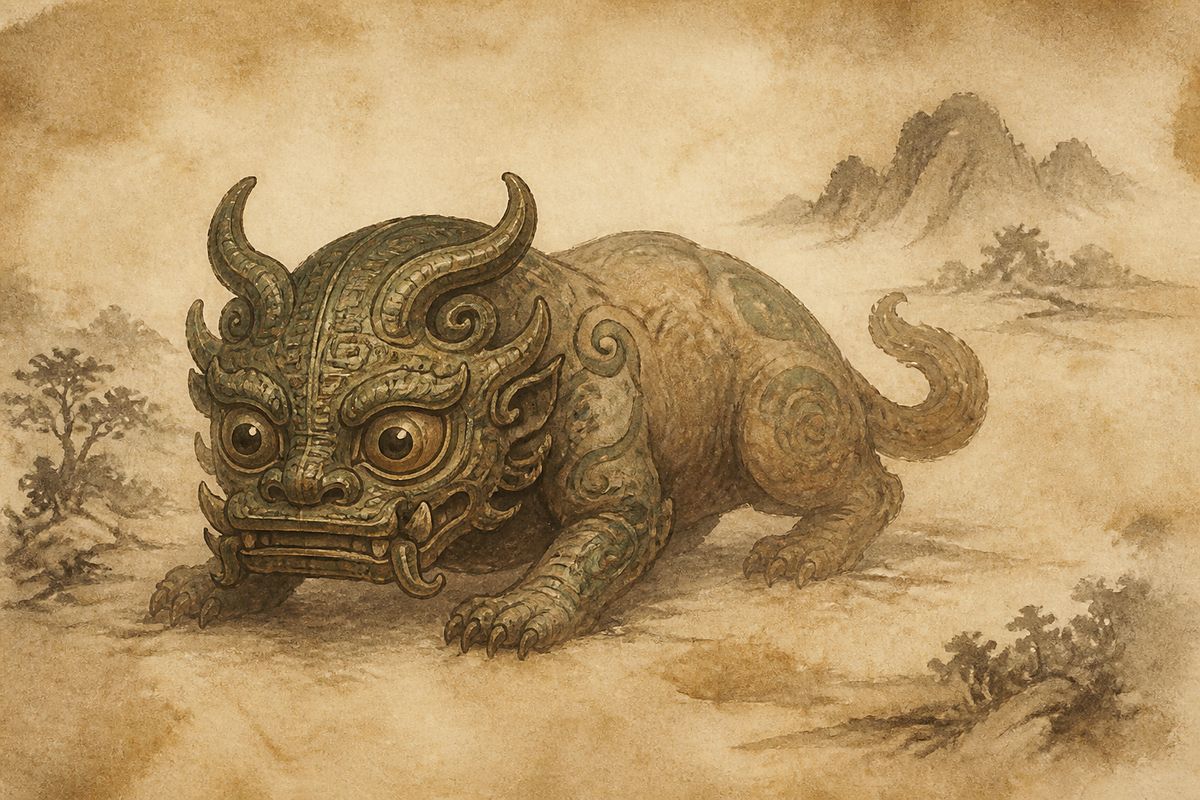
The name itself already carries appetite. In traditional explanation, “Tao” (饕) points toward greed for wealth, while “Tie” (餮) points toward greed for food. Together, Taotie becomes a compact image of craving without measure. The creature eats everything around it and finally eats its own body, leaving only the head. This is the famous “head without body” image: appetite becomes so absolute that it consumes the self.
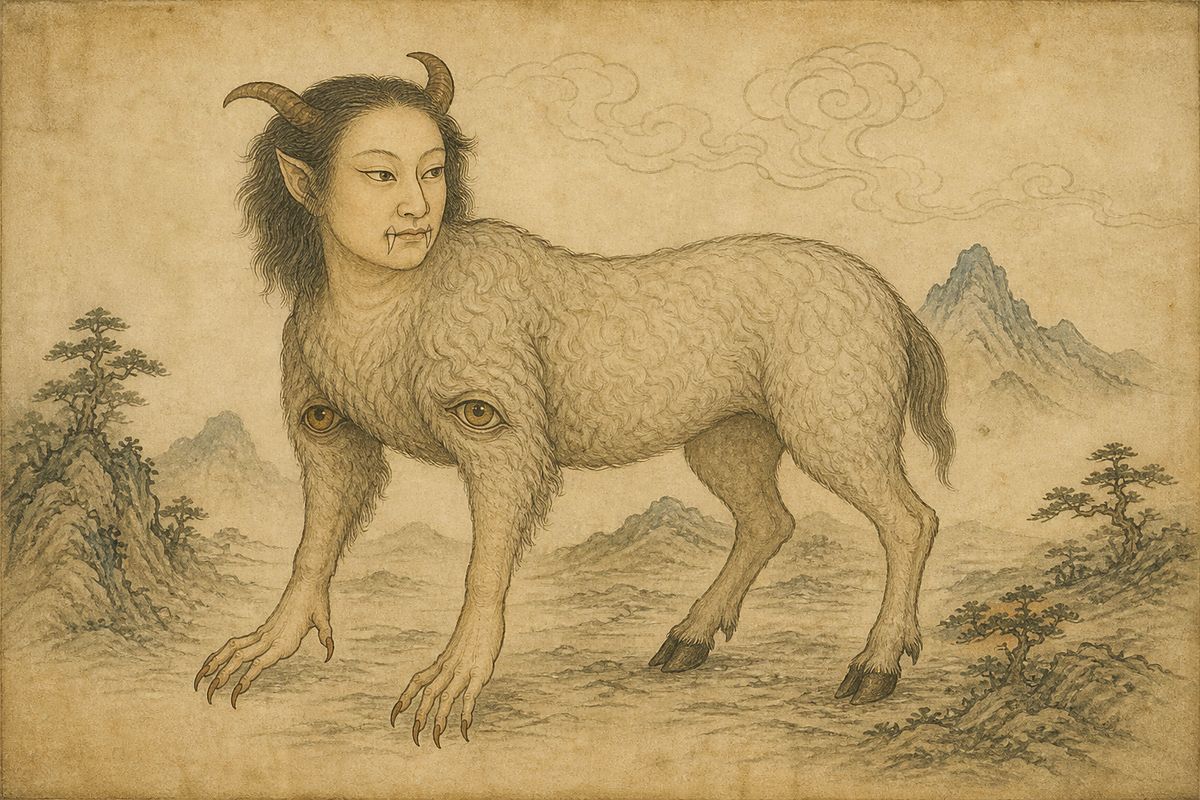
The Classic of Mountains and Seas / Shan Hai Jing (山海经) gives a related creature under the name Bao Xiao (狍鸮). It has a sheep body, human face, eyes under the armpits, tiger teeth, human claws, and a baby-like voice. That strange anatomy matters. The misplaced eyes suggest a distorted way of seeing; the tiger teeth and human claws combine animal violence with human grasping; the baby-like voice creates an unsettling contrast between need and danger. In later reading, these details make Taotie a beast of appetite, not merely a beast of strength.
There is also a later folk attachment that calls Taotie the Dragon’s fifth son. That version belongs more to popular imagination than to the earliest bronze history, but it explains why Taotie sometimes appears near dragon language in modern designs. For a clearer dragon comparison, readers can continue with Eastern Story’s guide to Pixiu (貔貅) and nearby auspicious beasts, or compare Taotie with the guardian lion and Xiezhi (獬豸) when studying protective animal motifs.
From Myth to Bronze: Taotie Pattern (饕餮纹) and Beast-Mask Motif (兽面纹)
The most important visual form of Taotie is the Taotie pattern (饕餮纹) on bronze ritual vessels. In modern scholarship, this is often called the beast-mask motif / Shou Mian Wen (兽面纹), because the design is usually a frontal animal face rather than a full-bodied monster. That academic term keeps the visual description precise, while the older name Taotie preserves the moral and mythic imagination attached to the mask.
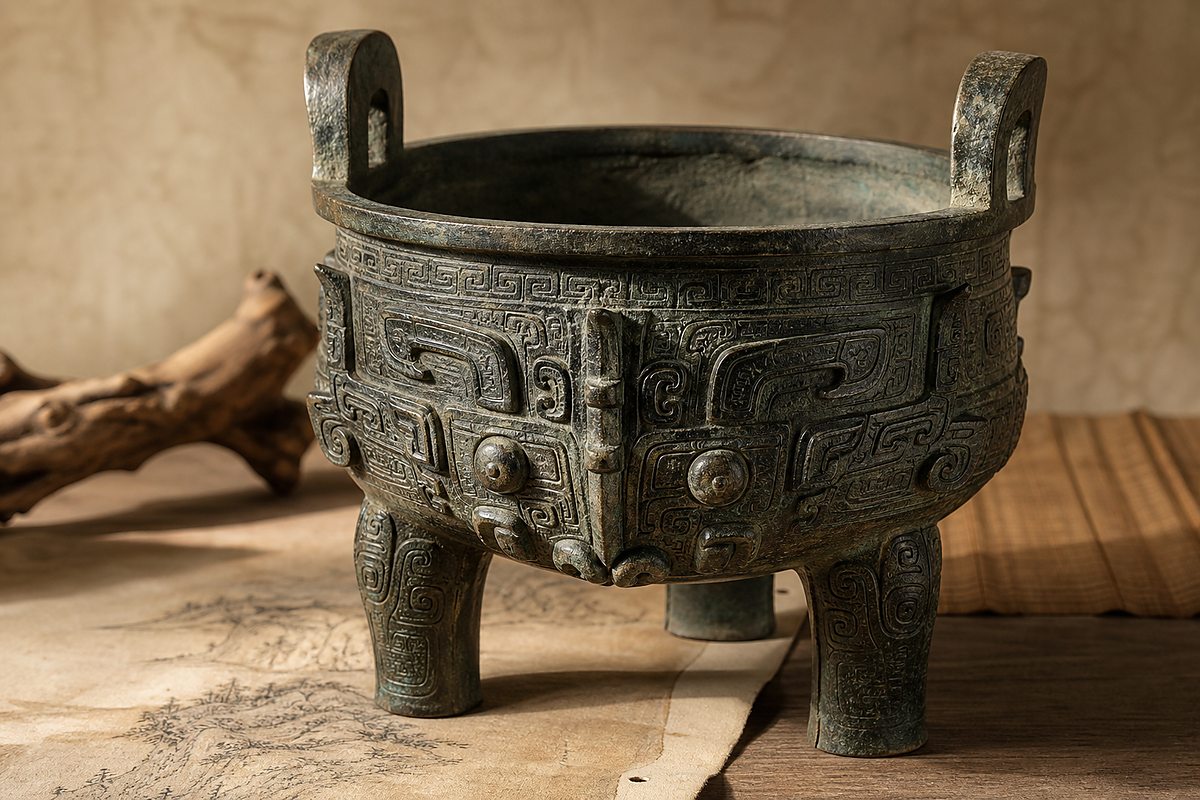
On Shang and Zhou bronze ritual vessels / Li Qi (礼器), the motif is not a casual surface decoration. Bronze vessels were used in offerings, ancestral rites, feasting, and elite display. Their weight, shine, casting difficulty, and ritual use made them political objects as much as art objects. To place a beast-mask motif / Shou Mian Wen (兽面纹) on such a vessel was to surround ritual food and wine with a face of sacred force.

This is why Taotie works on two levels at once. The myth warns against greed; the bronze mask commands awe. A vessel can hold food or wine, carry the image of a devouring beast, and stand in a ceremony where rulers, ancestors, spirits, and rank are all present. In that setting, appetite is not only a private weakness. It becomes a theme of order, restraint, and ritual control.
The Eyes, Mouth, Horns, and Symmetry of Taotie Design
A classic Taotie design begins with a central ridge or nose bridge. From that axis, the face unfolds in strict left-right symmetry. The eyes are enormous and often raised. The horns curl outward or upward. The mouth stretches wide, sometimes with fangs. The body is reduced, hidden, or absent, so the viewer faces a head without a body: direct, frontal, and difficult to ignore.
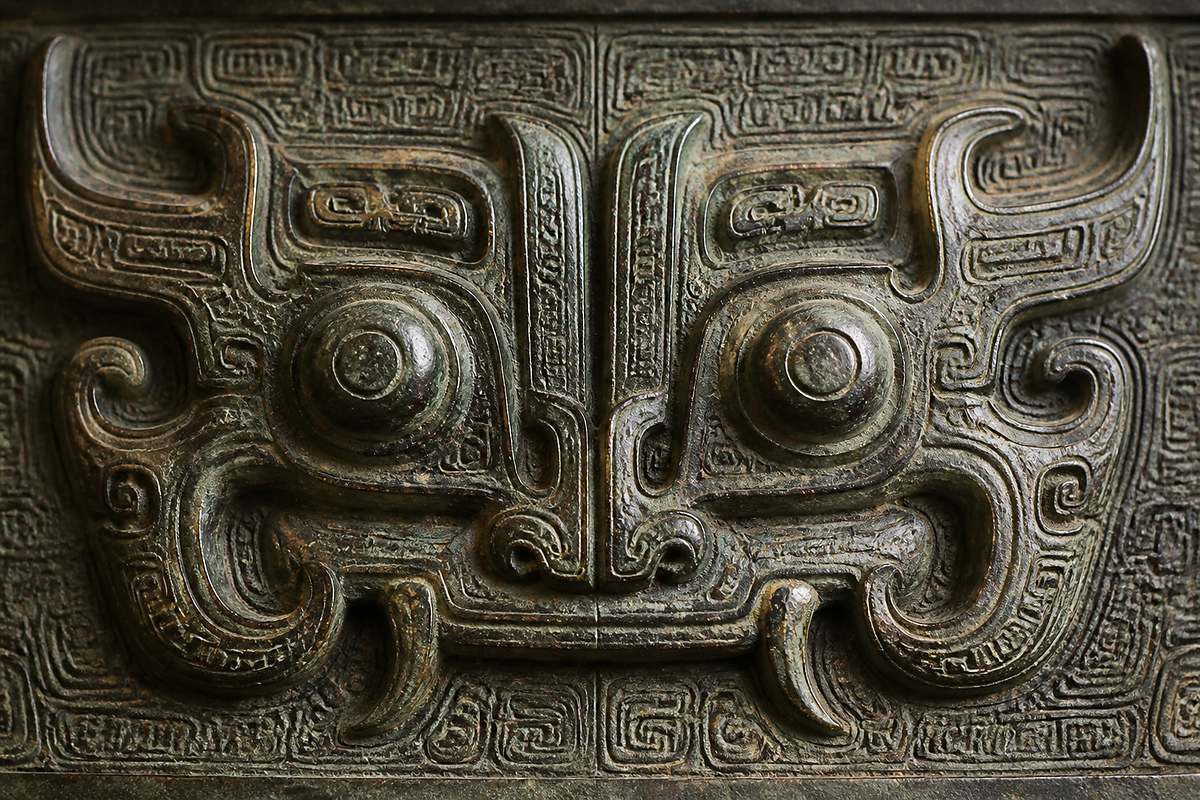
The eyes are the soul of the design. In the mythic Bao Xiao (狍鸮), the eyes sit under the armpits, an impossible placement that turns sight into a symbol of distortion. On bronze vessels, the eyes move to the front and become the strongest visual anchor. They stare outward from the surface, giving the vessel a watchful, intimidating presence. This direct gaze supports protection, exorcism, authority, and the sense that the object belongs to a sacred world.
Many bronze examples use a dense background of cloud-thunder pattern / Yun Lei Wen (云雷纹). This tight spiral-and-angle ground makes the raised mask feel more dimensional. In refined bronze casting, the main beast face can sit above the ground pattern in a three-layer decoration / San Ceng Hua (三层花): fine background, raised main design, and additional carved or cast details. The effect is busy but controlled, fierce but ordered.
For modern design, those same features are the usable vocabulary: central symmetry, large eyes, curled horns, a severe mouth, bronze texture, and cloud-thunder pattern / Yun Lei Wen (云雷纹). A jewelry designer may borrow only the eyes and horns. A packaging designer may use the symmetry as a subtle background. A game designer may exaggerate the mouth into a boss creature. The strongest designs keep the mask readable instead of turning it into generic ornament.
Ritual Power, Kingship, and Fierce Beauty (狞厉之美)
In Shang-Zhou bronze art, Taotie belongs to the world of sacrifice, ancestor worship, and rulership. The vessel itself was a medium between the living elite and the ancestral or spiritual realm. A fierce mask on that vessel announces that the object is not ordinary tableware. It belongs to a controlled ritual order where access, rank, and authority are visible.

K.C. Chang / Zhang Guangzhi (张光直) famously read ancient animal motifs through shamanic communication: animals were not merely decorative but could function as helpers or channels in communication between human, spirit, and cosmic realms. In this reading, the Taotie pattern (饕餮纹) is part of a ritual technology of power. It helps mark the vessel as an object connected with the unseen world and with the authority to approach it.
Li Zehou (李泽厚) described the bronze aesthetic as fierce beauty / Ning Li Zhi Mei (狞厉之美). This phrase is useful because Taotie is not simply beautiful in a gentle sense. Its beauty comes from pressure, awe, symmetry, mass, and danger. The mask looks severe because the ritual world it represents is severe. It is a beauty of command rather than a beauty of comfort.
Song antiquarian naming also shaped later understanding. Later scholars linked bronze masks with the tradition in Lüshi Chunqiu (吕氏春秋): Zhou vessels carried Taotie, a head without body, as a warning against consuming others and harming oneself. Whether every ancient bronze maker would have used the name Taotie is a separate historical question; the later name became culturally powerful because it joined visual ferocity with a moral lesson.
Warning Against Greed: Why Taotie Became a Moral Symbol
Taotie became a moral symbol because its myth is easy to remember: the beast wants too much, eats too much, and loses its body. That story turns greed into a picture. A person who cannot stop consuming eventually consumes the ground of their own life. In this sense, Taotie is not just a monster outside the human world. It is a warning about a human weakness.

The warning also fits bronze vessels. Many vessels held food or wine in elite ceremonies. Placing a devouring beast on an object connected with feasting makes the message sharper: appetite must be governed by ritual, hierarchy, and restraint. A feast without order becomes gluttony; wealth without measure becomes corruption; power without self-control becomes self-destruction.
This moral reading still matters today. When Taotie appears in modern branding or jewelry, it can signal bold taste and ancient force, but it also carries a reminder: desire should be shaped, not allowed to devour everything. That is why Taotie can work as a striking design for collectors, museum goods, dramatic accessories, or statement objects rather than a soft everyday blessing.
Historical Evolution: Liangzhu, Shang, Western Zhou, and Warring States
The visual roots of beast-face imagery reach back before the Shang bronzes. Liangzhu (良渚) jade objects from about 5,000 years ago already show powerful mask-like faces with large eyes and sacred authority. These early jade faces do not need to be forced into the later Taotie name, but they show that Eastern ritual art had already learned how to make the face into a compact symbol of spiritual force.

In the Shang (商), the bronze beast-mask motif reached its most commanding form. Vessels became heavy, complex, and technically refined. The mask could be deeply raised, surrounded by cloud-thunder pattern / Yun Lei Wen (云雷纹), and organized through strict symmetry. This is the period most people imagine when they think of the classic Taotie pattern (饕餮纹).
In the Western Zhou (西周), the mood gradually shifted. Early Western Zhou bronzes still carry some Shang severity, but over time the ritual system moved toward clearer social order and moral governance. Phoenix-bird patterns, ring-band patterns, and qu-style curved motifs became more visible, while the mysterious beast mask became less dominant. The vessel was still ritual, but the visual language moved from raw sacred awe toward formalized ritual reason.
By the Spring and Autumn / Warring States (春秋战国) period, bronze design became more secular and narrative. Hunting, feasting, music, warfare, and daily scenes appeared more often. The Taotie mask did not disappear from cultural memory, but its central ritual role weakened. In modern design, that long history lets creators choose which Taotie they want: prehistoric mask, Shang bronze authority, Zhou ritual order, or a contemporary remix.
Taotie in Modern Language: Taotie Feast (饕餮盛宴) and Lao Tao (老饕)
Modern language has softened part of Taotie’s old danger. Taotie Feast / Taotie Sheng Yan (饕餮盛宴) now often means a lavish feast, a rich cultural program, or an abundant experience. A “Taotie banquet” or “Taotie dinner” usually praises variety and indulgence rather than condemning greed. The word still remembers appetite, but the emotional color can become celebratory.

Old gourmet / Lao Tao (老饕) is another softened term. It can describe someone who loves food deeply and understands taste. Su Dongpo (苏东坡) used the self-style old gourmet / Lao Tao (老饕), giving the phrase a cultured, literary flavor. In this modern context, Taotie moves from monster appetite toward refined enjoyment, especially when used for food writing, culinary events, or creative branding.
The shift is important for English readers. Taotie can mean greed and warning in myth, sacred authority in bronze art, and gourmet abundance in modern language. The meaning depends on context. A bronze mask pendant, a restaurant campaign, and a game boss may all use Taotie, but they are not saying exactly the same thing.
Taotie in Modern Jewelry, Fashion, Branding, Games, and Cultural Products
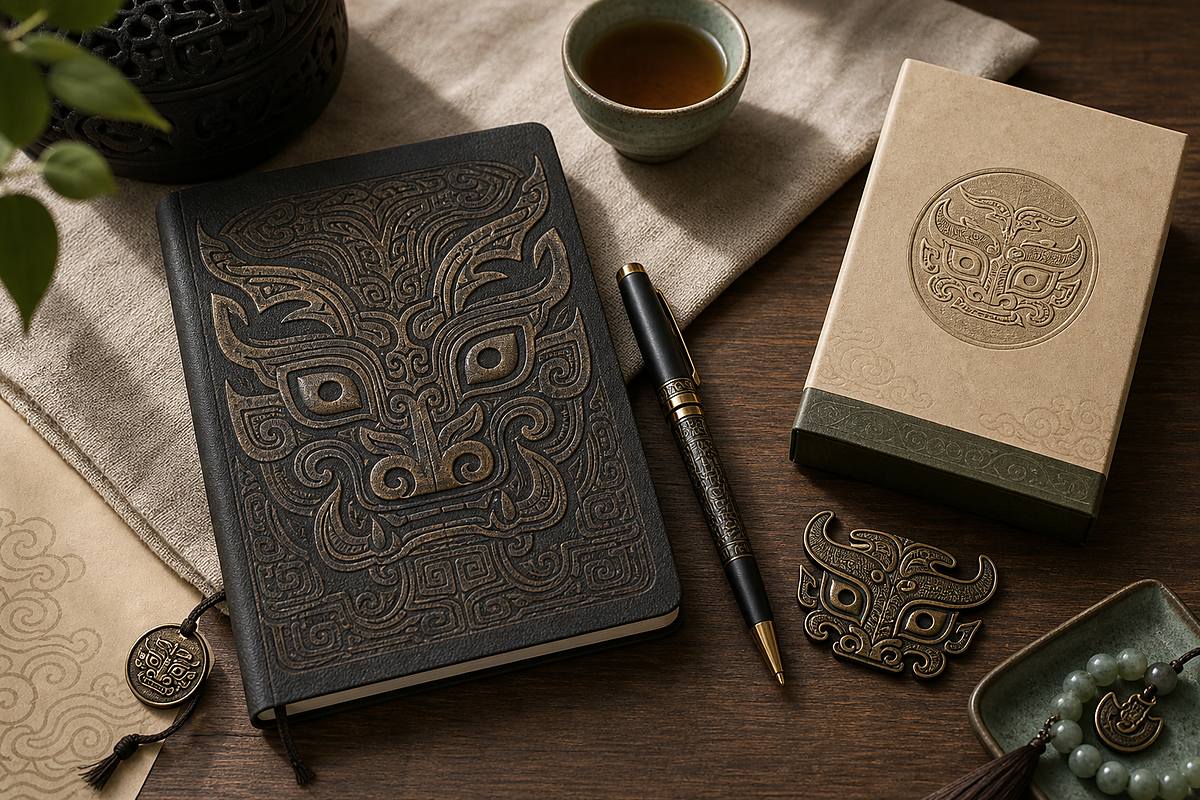
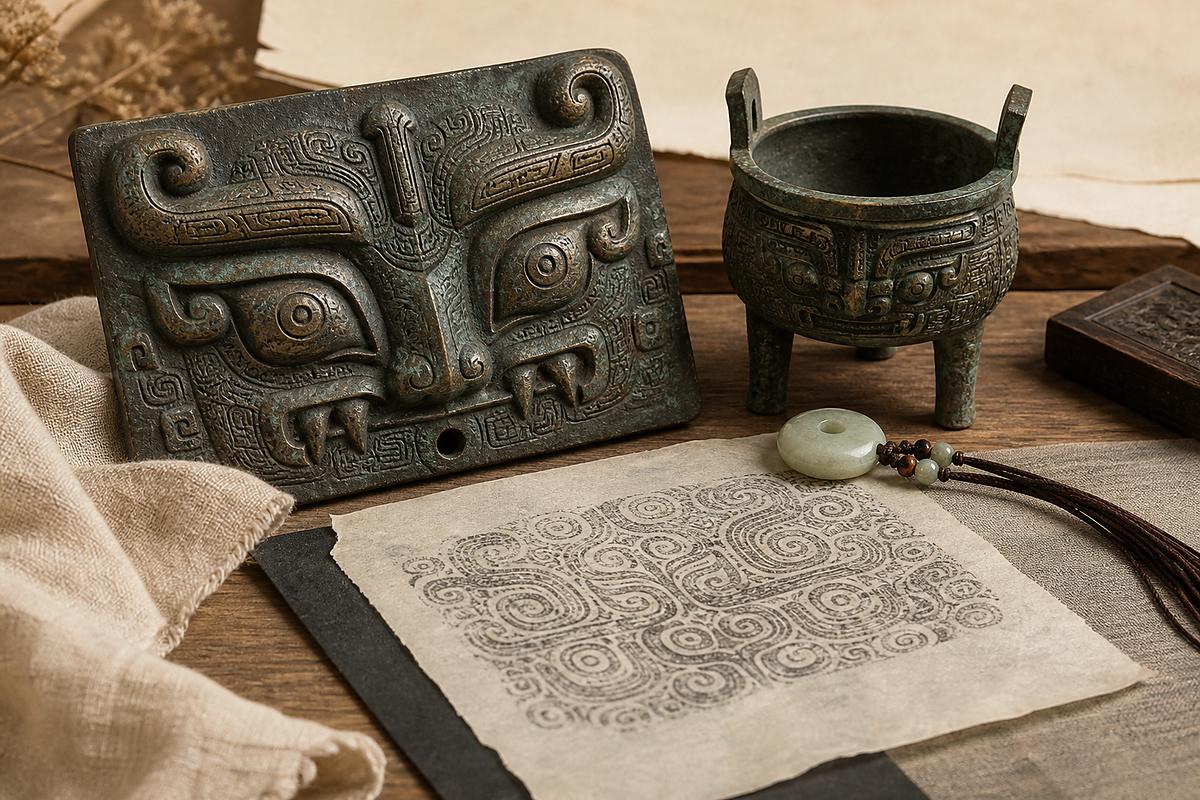
Taotie has become one of the strongest sources for modern Eastern design. Museum cultural products use bronze-pattern magnets, archaeology blind boxes, charms, stationery, and small display objects to turn bronze ritual art into everyday collecting. Henan Museum (河南博物院), for example, has used Taotie blessing language in products such as a cinnabar brass bell charm, while other museums and cultural brands adapt bronze masks into magnets, cases, notebooks, and desktop goods.
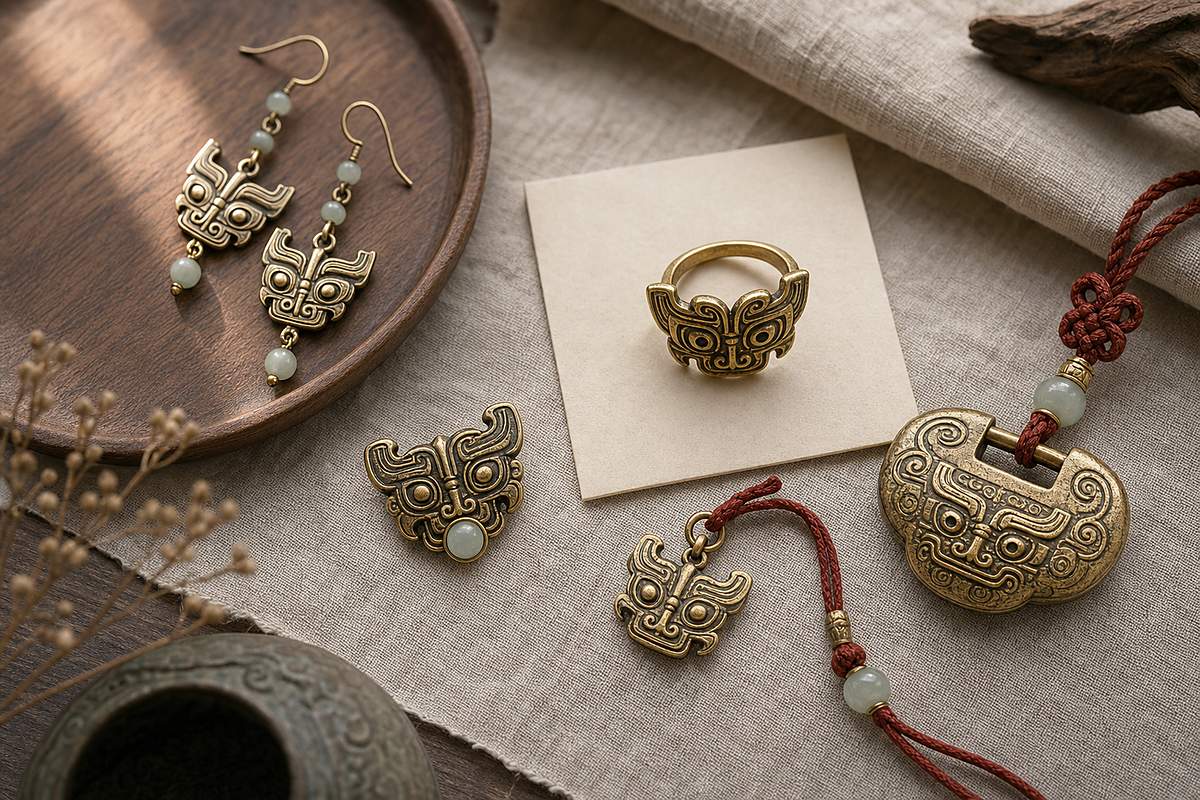
Technology and stationery brands often use Taotie for a restrained luxury mood: a matte Taotie bluetooth earbud case, a black-gold custom pen, or a leather-carved Taotie notebook can feel both ancient and modern. Designer toys and IP design push the motif further, turning the bronze beast-mask into cute figures, cyberpunk bronze creatures, AIGC-generated collectibles, or digital art pieces.
Jewelry and fashion usually extract the most readable parts: curled horns, staring eyes, cloud-thunder pattern / Yun Lei Wen (云雷纹), and the frontal mask. Gold, silver, jade, and enamel earrings, rings, brooches, and pendants can carry Taotie without reproducing a whole bronze vessel. An ancient-gold Taotie Ruyi lock can combine severe mask energy with gift language. For material background, readers can continue with jade meaning in Eastern culture, jade carving pattern meanings, or the Eastern Story material guide.
Fashion shows and Guofeng design have also borrowed Taotie structure. Gaia Legend, for example, has used bronze-style visual language in runway contexts, showing how a ritual mask can become garment silhouette, surface texture, beadwork, or armor-like layering. In branding and packaging, Taotie works especially well for high-end tea, liquor, Eastern dining, Guofeng cosmetics, and cultural gifts when the brand wants weight, mystery, and heritage.
In games and film, Taotie often becomes a large enemy, guardian, or ancient force. The Great Wall made Taotie a monster army, while games such as Honor of Kings (王者荣耀) and Genshin Impact (原神) draw from a wider pool of Eastern beast, mask, bronze, and mythic imagery. Digital art and NFT projects also use the symmetry and bronze texture because the mask reads immediately even after heavy stylization.
How to Use Taotie Symbolism in Gifts, Jewelry, Decor, and Design
Use Taotie when the intended mood is bold, protective, ancient, and dramatic. It suits statement jewelry, collector objects, cultural gifts, desk decor, museum-inspired goods, and design projects that need bronze-age authority. It is less natural for gentle romance gifts or soft family blessings unless the design clearly balances Taotie with a warmer material or message.

For jewelry, keep the mask readable. The eyes, horns, and central symmetry should remain clear at the actual size of the pendant, ring, or brooch. If the design is too small, use a simplified beast-mask line or cloud-thunder pattern / Yun Lei Wen (云雷纹) detail rather than crowding every feature into the piece. For care and wearing context, the Eastern Story care guide is a practical next step.
For gifts, explain the symbol in one sentence: Taotie is a bronze-age beast-mask symbol of fierce power, protection, ritual authority, and restraint against greed. That framing makes the object meaningful without turning it into a promise of real-world outcomes. For a gentler gift direction, the Eastern Story blessing collection can sit beside Taotie as a wider place to explore symbolic jewelry and meaningful objects.
For branding and interiors, use Taotie with restraint. A full mask on every surface can become heavy. A metal screen, light wall, floor pattern, tea box border, liquor label, or restaurant entrance panel can carry the motif with more dignity. The best modern Taotie design keeps one strong focal point and lets surrounding space create the sense of ritual.
Frequently Asked Questions
Conclusion: Taotie as a Fierce Eastern Symbol for Modern Design
Taotie (饕餮) endures because it is not a simple lucky sign. It is a myth of appetite, a bronze ritual mask, a warning against greed, a face of protection, and a design language of ancient authority. The Taotie pattern (饕餮纹) can feel severe, but that severity is exactly its value: it gives modern jewelry, fashion, interiors, packaging, and digital art a sense of weight that softer motifs cannot provide.

For a wider symbolic collection, continue with Eastern Story’s blessing collection, compare Taotie with Pixiu bracelet meaning and guardian lion meaning, or explore how motifs are carved and worn through jade carving pattern meanings. Taken this way, Taotie remains useful for readers who want a symbol that feels fierce, ancient, and morally charged rather than soft or purely decorative.
Related Posts


