
Protective jewelry is jewelry worn as a symbol of safety, blessing, courage, and watchful care. In Eastern folk tradition, this can include red string bracelets, jade pendants, silver bangles, cinnabar (朱砂) beads, peach wood (桃木), Pixiu (貔貅), five emperor coins (五帝钱), hulu (葫芦) charms, bodhi (菩提) beads, dark stones, and other amulet-style pieces. The best choice depends on the meaning you want to carry and the material you can wear comfortably every day.
This guide explains what protective jewelry means, how common Eastern symbols differ, how to choose by intention, and what to avoid when buying or gifting. It treats protection as cultural symbolism, folk blessing language, and a personal reminder, not as fear-based sales copy.
What Is Protective Jewelry?
Protective jewelry is a wearable object chosen for both appearance and meaning. A bracelet, pendant, bangle, ring, or charm can carry a wish for peace, protection, prosperity, courage, or family blessing. In modern jewelry, the same piece may also work as a style choice, a gift, a personal ritual object, or a quiet reminder of inner steadiness.
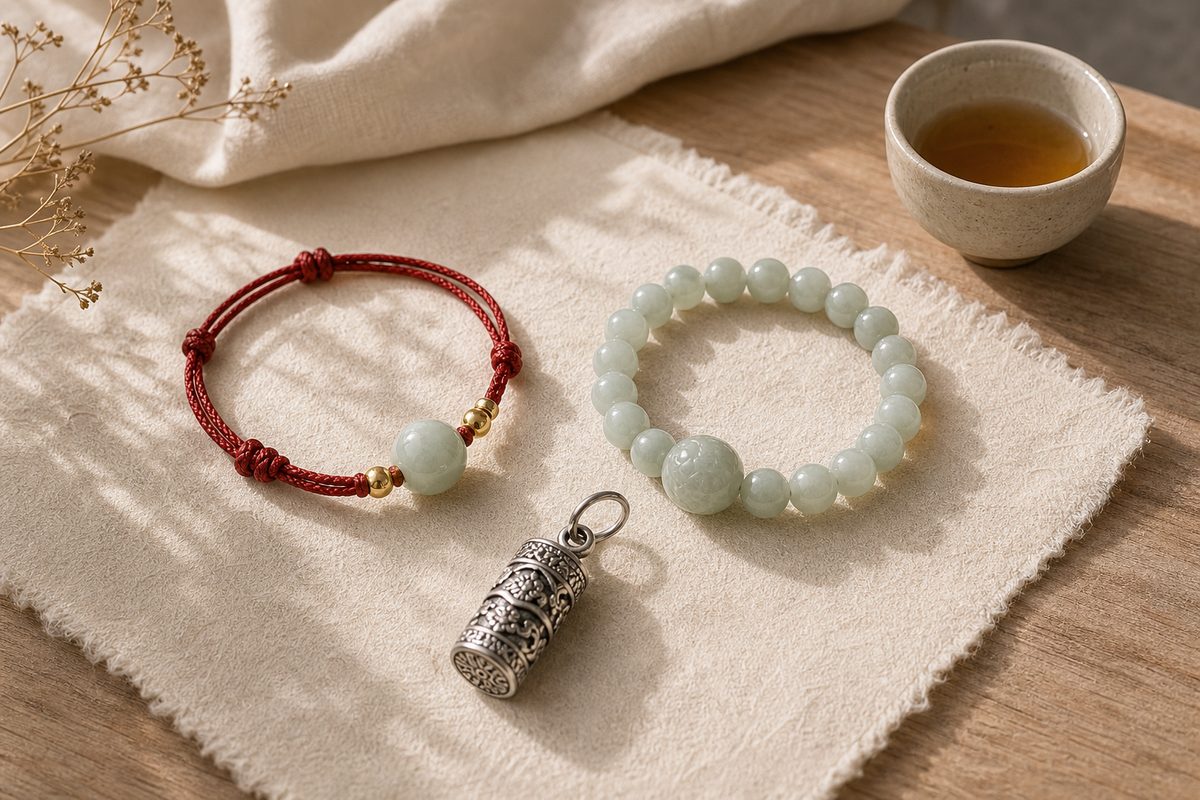
A broad protection guide should compare categories rather than turn every symbol into the same thing. Red string, jade, Pixiu, five emperor coins, hulu, cinnabar, peach wood, and dark stone bracelets each come from different symbolic worlds. Some are rooted in Eastern folk custom, some in Taoist or Buddhist-inspired practice, some in modern crystal culture, and some in global amulet traditions.
Why Protective Jewelry Matters in Eastern Folk Tradition
In Eastern folk tradition, protection is often expressed through color, sound, material, animal form, plant symbolism, seasonal customs, and auspicious objects. Red is associated with joy and blessing. Jade suggests virtue and quiet protection. Silver bangles are often used as family blessing jewelry for children. Wood, coins, gourds, and mythical creatures carry older folk meanings tied to thresholds, homes, wealth, health wishes, and safe movement.

This is why protective jewelry feels different from ordinary fashion jewelry. It can turn a family wish, a festival custom, or a cultural symbol into something wearable. A red string bracelet may be small, but it can carry a wish for safety. A jade safety buckle can feel calm and enduring. A Pixiu bracelet can express a prosperity blessing in Eastern jewelry symbolism. These meanings work best when they are explained with care and worn with intention.
Common Types of Protective Jewelry and Their Meanings
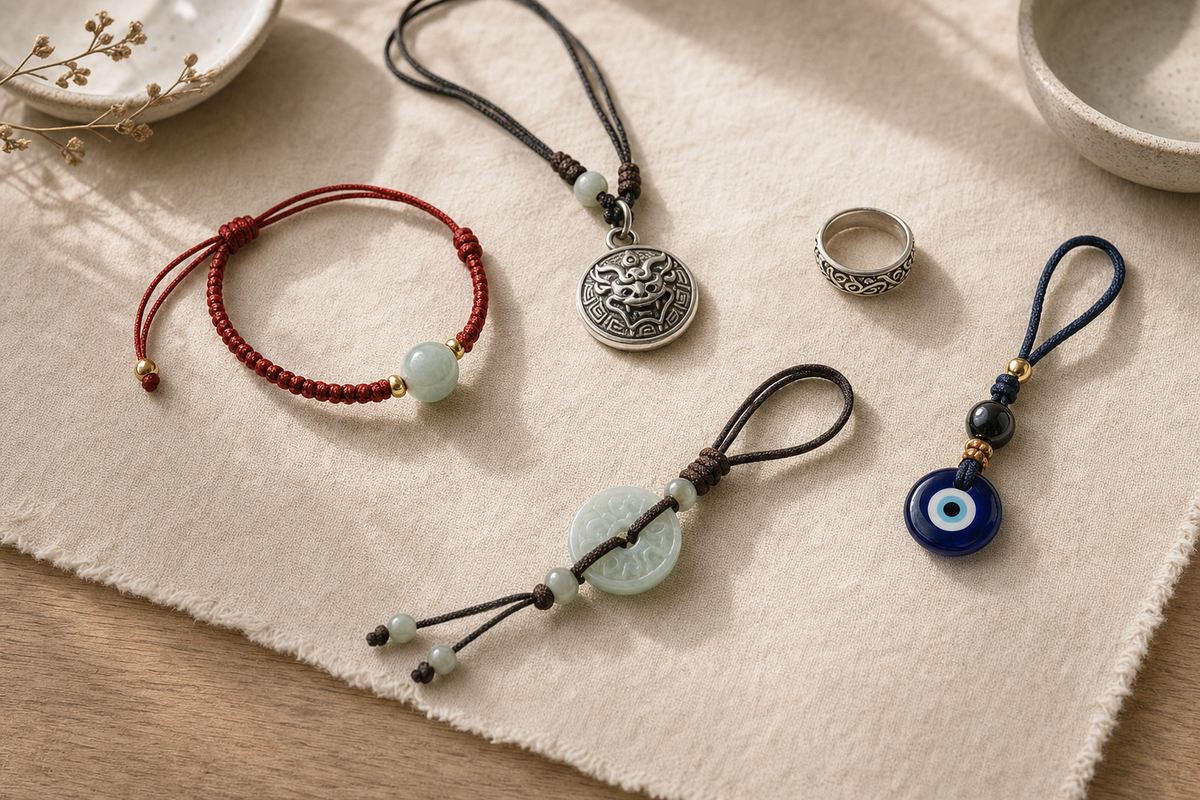
| Jewelry or object | Common meaning | Best use | Careful boundary |
|---|---|---|---|
| Red string bracelet | Blessing, protection, love, connection, Benmingnian (本命年) good wishes | Everyday bracelet, couple bracelet, gift for a new season | Keep the meaning warm and personal rather than absolute |
| Jade or jadeite | Protection, virtue, calm, endurance, gentle refinement | Pendants, bangles, safety buckles, daily jewelry | Separate cultural meaning from gemstone quality and price |
| Silver bangle | Family blessing, cleansing symbolism, safety wish for children | Baby gifts, family gifts, simple daily bangle | Use comfort, fit, and metal sensitivity checks |
| Cinnabar jewelry | Red mineral symbolism, Taoist talisman context, protective red color | Beads or sealed pendants for adult symbolic wear | Avoid broken powder, heat, mouthing by children, and sensitive contact |
| Peach wood or peach pit beads | Yang energy, folk protection, peace of mind | Light bracelets, pendants, seasonal gifts | Peach wood swords are related household objects, not jewelry |
| Five emperor coins | Authority, metal energy, wealth-guarding and threshold symbolism | Coin charms, wallet pieces, bracelet accents | Avoid fake antique claims and unstable historical promises |
| Hulu charm | Blessing, fortune, gathering good energy, holding peace | Pendant, charm, bag charm, home object nearby | Household gourds are related objects rather than jewelry |
| Pixiu bracelet | Wealth guarding, protection, auspicious creature symbolism | Bracelets and pendants for prosperity blessing language | Do not let this page replace a full Pixiu guide |
| Bodhi beads | Awakening, clarity, clean intention, spiritual calm | Mala (念珠/佛珠)-style bracelets and necklaces | Respect Buddhist-inspired meaning and avoid hard religious claims |
| Dark stone bracelet | Grounding, strength, boundaries, quiet protection | Obsidian, onyx, lava stone, black tourmaline style bracelets | Keep wellness-result and workplace-equipment claims out of a jewelry guide |
Materials: Red String, Jade, Silver, Cinnabar, Wood, Crystal, and Gold
Red String
Red string is one of the most accessible forms of Eastern blessing jewelry. Red carries festive, protective, and auspicious meaning, while the cord form feels humble and close to the body. Many people wear a red string bracelet as a sign of care, love, family blessing, or Benmingnian support.

Jade and Jadeite
Jade and jadeite are often connected with protection because of their long association with virtue, warmth, refinement, and endurance. Jade pendants, jade bangles, and safety-buckle forms can express calm protection and personal balance. If the focus is jade quality, material identity, or buying advice, readers should use a dedicated jade guide rather than treating all green stones as the same.
Silver
Silver bangles and small silver pieces are often given to children or family members as a wish for safety and clean fortune. In a modern guide, silver should be presented as family blessing jewelry and a classic metal choice. Fit, smooth edges, nickel sensitivity, and comfort matter as much as symbolic appeal.
Cinnabar
Cinnabar, or red cinnabar-associated jewelry, appears in Taoist talisman and folk-protection contexts because of its strong red color and ritual associations. For modern wear, it is best described as a red mineral symbol in protective jewelry. Choose sealed, well-finished pieces from responsible sellers, and keep broken powder, high heat, children's mouthing, and sensitive skin contact in mind.
Wood: Peach Wood, Thunderstruck Wood (雷击木), and Zitan
Peach wood is traditionally linked with yang energy and folk protection. Peach-pit bracelets are wearable; peach wood swords are better understood as related household protective objects. Thunderstruck wood, especially peach or jujube wood in folk stories, is associated with strong natural yang force and may appear as beads or pendants. Zitan and other dense aromatic woods can be chosen for their calm texture, fragrance, and dignified traditional feeling.
Crystal, Dark Stone, and Gold
Crystal jewelry is often used as a modern symbol of clarity, clean intention, and emotional balance; clear quartz is one of the clearest examples of that modern crystal-language doorway. Dark stones such as obsidian, onyx, lava stone, hematite-style beads, and black tourmaline-style jewelry visually suggest grounding, strength, and boundaries. Gold carries wealth, warmth, durability, and auspicious gift value. These materials can be meaningful without turning jewelry into medical equipment or technical work gear.
Creature and Symbol Jewelry: Pixiu, Hulu, Five Emperor Coins, and Evil Eye-Style Amulets
Creature and symbol jewelry gives protective meaning a visible form. Pixiu is one of the strongest Eastern examples. In Eastern jewelry symbolism, Pixiu is used as a wealth-guarding creature and a protection symbol, often in bracelets or pendants. For deeper history and wearing customs, use Eastern Story's guide to what Pixiu is.

Hulu, or gourd-shaped charms, carry the sound and meaning of blessing and good fortune. Their small mouth and rounded body make them a folk image of holding peace and gathering good things. Five emperor coins use coin form, metal symbolism, and imperial-era association as a wish for authority, stability, and prosperity. If real antique coins are claimed, authenticity and seller transparency matter.
Evil eye-style amulets can also belong in a protection jewelry comparison, especially for readers searching broadly for amulet jewelry. The eye motif is common in many cultures as a watchful symbol against harmful attention or envy. It should be introduced as a related protective jewelry family, not confused with Eastern folk symbols or video-game items that share the words “evil eye.”
How to Choose Protective Jewelry by Need
| Need or gift situation | Good jewelry direction | Why it fits |
|---|---|---|
| Daily protection reminder | Red string, silver bangle, jade pendant, dark stone bracelet | Simple enough to wear often and easy to explain as a personal blessing |
| Benmingnian or festival blessing | Red string, five-color cord (五彩绳), jade, gold-red combinations | Red and multi-color cords connect naturally with folk blessing language |
| Wealth symbolism | Pixiu, five emperor coins, gold accents, gold sheen dark stones | These symbols express prosperity wishes and guarded abundance |
| Calm and confidence | Jade, obsidian-style dark stones, amethyst, bodhi beads, zitan | Materials and colors feel steady, reflective, and composed |
| Children or family blessing | Smooth silver bangle, red cord, jade safety buckle | Soft edges, comfort, hygiene, and secure fit should guide the choice |
| Love and connection | Red string pair, jade bead bracelet, small gold charm | The gift message can focus on care, loyalty, and staying connected |
| Courage and resilience | Tiger eye, amethyst, lava stone, lion or strength motif | Better framed as inner strength than as fear of outside harm |
For broader shopping, the Blessing collection is the best product entry point because it groups meaningful pieces by blessing, intention, and symbolism. For related comparisons, the good-luck bracelet meaning guide and the strength bracelet meaning guide cover adjacent but different intentions.

How to Wear and Care for Protective Jewelry
- Wear it where it feels natural: bracelets, pendants, rings, and charms all work if they suit the wearer and the meaning.
- Keep the explanation simple: say the piece carries a blessing for protection, courage, peace, or steady prosperity.
- Clean gently: use a soft cloth and avoid harsh chemicals, especially with wood, cord, cinnabar-style pieces, silver, jade, and porous stones.
- Store separately: wrap delicate pieces in a pouch or cloth so harder beads, coins, or metal edges do not scratch softer materials.
- Respect comfort: children, elders, and sensitive wearers need smooth surfaces, safe closures, breathable cords, and suitable sizing.
- Replace damaged pieces thoughtfully: broken cords, cracked beads, loose coins, and chipped stones can be retired, repaired, or kept as a personal keepsake.
Some traditions include preferred wrists, morning wearing times, red cloth storage, or limiting who touches a personal amulet. These can be meaningful as personal practice. For a modern jewelry guide, the practical foundation is still comfort, durability, hygiene, and respectful use.

Related Protective Objects That Are Not Always Jewelry
Some protective objects are culturally important but belong more to home, festival, or ritual practice than to jewelry. A copper mirror or bagua mirror is usually a household object connected with reflected protection. A Zhong Kui image is traditionally a doorway or home image. Mugwort and calamus are tied to seasonal customs such as Dragon (龙) Boat Festival. Natural gourds, peach wood swords, and household coins may sit near entrances or living spaces rather than being worn.

These related objects help explain the wider folk-protection world behind jewelry, but they should not dominate a protective jewelry page. They are best mentioned briefly as context while the main article stays focused on wearable bracelets, pendants, bangles, charms, beads, and amulet jewelry.
What to Avoid When Buying Protective Jewelry
- Fear-based selling: avoid product copy that pressures the reader through anxiety, curse language, or dramatic results.
- Medical or technical claims: wellness-result promises, wearable-equipment language, and workplace safety claims belong outside a cultural jewelry guide.
- Unsafe cinnabar handling: avoid broken powder, heat exposure, children's mouthing, and unclear material descriptions.
- Questionable animal-source items: historic dog-tooth or tortoiseshell-style folk examples should be treated cautiously. Modern readers should choose legal, hygienic, cruelty-free, imitation, or alternative designs.
- Fake antique coins or gems: five emperor coins, jade, cinnabar, crystal, and dark stones need honest seller descriptions.
- Overloaded symbolism: a bracelet does not need every symbol at once. One clear meaning is usually stronger.
The cleanest protective jewelry is specific. It says what the symbol means, what the material is, how to wear it comfortably, and why it makes a thoughtful gift. That is enough to carry the cultural blessing without making the piece feel exaggerated.

Frequently Asked Questions
Conclusion
Protective jewelry is most meaningful when the symbol is clear and the wording is calm. Red string, jade, silver, cinnabar, peach wood, Pixiu, five emperor coins, hulu, bodhi beads, dark stones, crystal, gold, and five-color cords all carry different kinds of blessing language. They should not be flattened into one vague promise.
Choose the piece that matches the wearer's real intention: daily peace, Benmingnian blessing, family care, prosperity symbolism, courage, grounding, or love. When the material is safe, the symbolism is respectful, and the gift message is sincere, protective jewelry becomes a quiet companion that carries meaning close to the body.
Related Posts


2 Comments