
Burmese amber, also called Myanmar amber or burmite, is fossilized tree resin from Myanmar. Much of the best-known material comes from the Hukawng Valley in Kachin State and belongs to a forest world roughly 99 million years old. Other Myanmar deposits have different ages, so the country name alone does not tell the whole story.
Its appeal can be wonderfully immediate: a honey-colored bead warming against the wrist, a red pendant catching the evening light, or a pale swirl that resembles a landscape. Then a tiny leaf or wing comes into focus, and an ordinary moment opens onto deep time. For someone who loves nature, an amber piece can carry a personal wish for patience, lasting affection, or a new beginning.

Choosing one thoughtfully means enjoying that beauty while understanding its color, condition, treatment history, and documented journey. For bead styles and everyday wearing ideas, the broader amber bracelet guide offers a useful companion.
An ancient forest, with more than one age
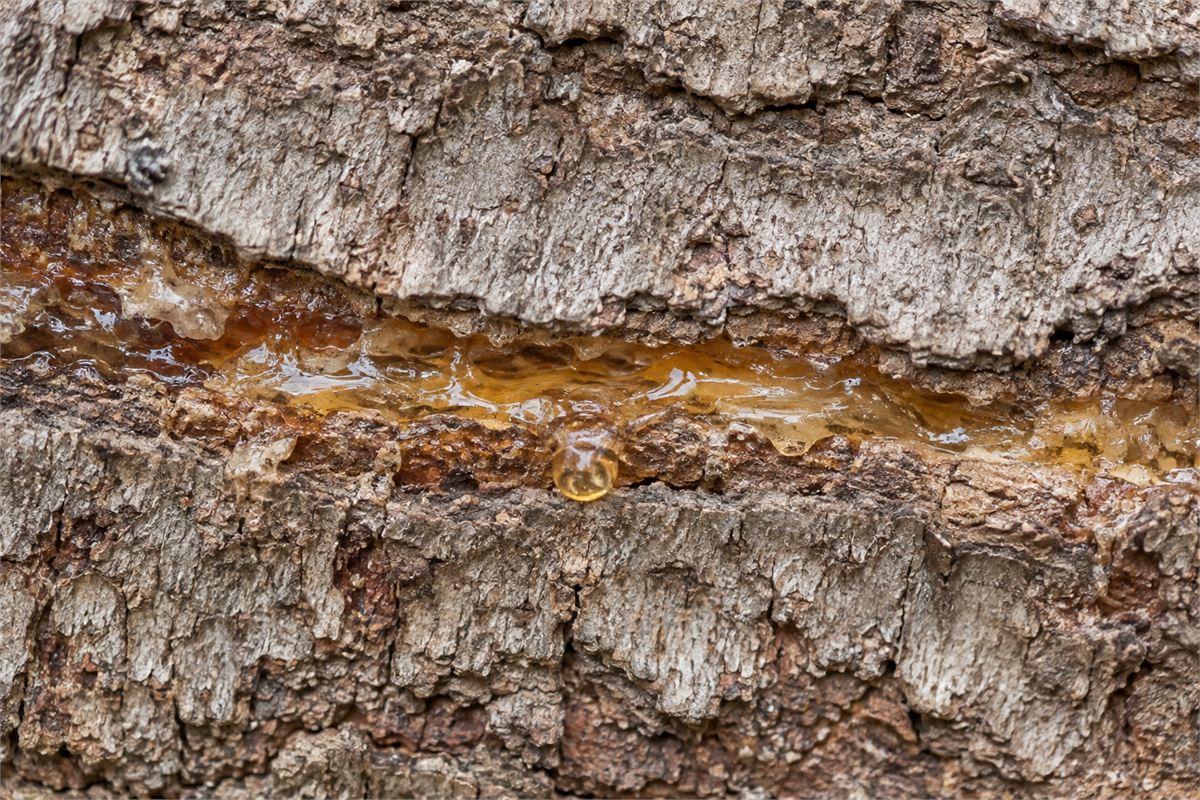
Amber began as resin released by trees. Before it hardened and underwent long burial and chemical change, sticky resin could gather bark, pollen, small animals, and fragments of forest life. Some flows enclosed visible inclusions; many others became beautiful, apparently empty pieces. Clarity does not make a piece less ancient, and a crowded interior does not by itself make it more valuable.
The familiar age of about 99 million years comes from research on the Hukawng amber-bearing deposits. Scientists dated zircons associated with the surrounding sedimentary material to 98.79 ± 0.62 million years and interpreted their relationship to the amber. This is geological evidence for a deposit, rather than a direct date measured from every bead sold as Burmese amber.
| Myanmar amber source | Approximate geological context | What the distinction means |
|---|---|---|
| Hukawng Valley, Kachin State | About 99 million years; near the beginning of the Late Cretaceous | The source behind many famous Burmese amber fossil discoveries. |
| Hkamti / Khamti, Sagaing Region | About 110 million years; Early Cretaceous | A separate occurrence with its own geological evidence. |
| Tilin, Magway Region | About 72 million years; Late Cretaceous | A much younger Cretaceous forest record, dated using associated volcanic material. |
These ages describe studied deposits and their geological setting. They should not be used to assign an exact birthday to an object with an uncertain locality. Myanmar amber is also not one uniform layer of resin beneath a fixed thickness of coal: the host rocks, depositional history, and workings differ between locations.
Researchers investigate the resin-producing trees through chemistry, wood, pollen, and other evidence. Conifer connections have been proposed for studied material, but a single modern tree name cannot confidently describe every Myanmar deposit. The surrounding forest included many organisms beyond the trees that produced the resin.

Burmese amber belongs to a different chapter of Earth history from the early Eocene amber of Fushun, China, and the younger amber widely associated with the Baltic region and the Dominican Republic. Greater geological age does not automatically mean greater hardness, better jewelry, or a higher price. Likewise, “old stock” describes a claimed commercial history, not a different geological age. If the distinction matters, the seller should explain what the phrase means for that particular piece.
Golden, red, tea-colored, and clouded: reading the appearance
Color names are a lovely way to describe amber, provided they remain descriptions. Lighting, background, thickness, surface oxidation, internal particles, and treatment can all affect what you see. A clear photograph in indirect daylight often tells more about everyday appearance than a dramatic image made under ultraviolet light.

| Name you may encounter | Appearance and useful context |
|---|---|
| Golden amber | Transparent yellow to warm gold; a broad color description rather than a fixed grade. |
| Blood amber / red amber | Reddish tones, sometimes influenced by an oxidized outer zone. Ask whether color has been modified. |
| Tea amber | A trade description for tea-like hues, with greenish, reddish, or brownish modifiers used inconsistently. |
| Brown amber | Warm brown material; depth of color alone does not establish rarity or quality. |
| Blue or blue-green appearance | May describe fluorescence seen under particular illumination and backgrounds, rather than a blue body color. |
| Root amber | Opaque cream-to-brown swirls, often associated with fine calcite particles; the name does not mean fossil tree roots. |
| Beeswax amber | An appearance term for cloudy or opaque amber, not amber made by bees. |
| Yi amber / dark amber | A market label for very dark material; usage and claimed boundaries vary. |
| Flower amber / patterned amber | An ambiguous label: ask whether it refers to natural patterns, inclusions, fractures, or treatment-related effects. |
Look at body color and light effects separately
A piece may look brown or yellow when light passes through it and show a blue-green surface glow against a dark background. Fluorescence occurs while the exciting light is present; phosphorescence is an afterglow that continues briefly after it is removed. Both have been studied in Myanmar amber, but neither is a reliable standalone test of origin or natural condition.
This matters especially when shopping from photographs. Ask to see the same object from several angles in ordinary light, including a pale background, and compare those images with any special-light photographs. A striking glow can be part of the pleasure of the piece without defining how it will look on a wrist every day.

Root patterns, cloudy amber, and flower-like effects
Root amber can resemble cream marbling, drifting clouds, or an ink landscape. Gemological studies have connected characteristic pale areas in examined specimens with fine calcite particles. Reconstructed and imitation materials can reproduce a similar look, including versions made with pressed amber and added mineral material. A pattern name or glow cannot establish how a piece was made.

Cloudiness in other amber can arise from tiny bubbles and other internal features. “Beeswax amber” therefore needs to be understood as a trade description, alongside the actual material and treatment disclosure. The distinction between mature amber and younger resin is explained in amber versus copal.

Flower-like sparkles also deserve a clear description. Some attractive disc-shaped internal fractures, often called sun spangles, are associated with heating; a “flower amber” label alone does not tell you whether the feature is a plant inclusion or an optical effect. Terms translated as cave, cavern, or landscape amber can be similarly local or seller-specific. Let the visible feature and its disclosed history lead the description.
What a tiny inclusion can reveal
An inclusion is something enclosed within the resin. In Burmese amber, published discoveries range from plant fragments and minute arthropods to unusual vertebrate remains. Their scientific value lies in preserved details and context, not simply in the size or drama of the animal. A modest fragment can answer a question that a spectacular but poorly documented object cannot.

Insects, plants, and traces of relationships
Antennae, hairs, wings, and mouthparts can retain extraordinary detail. Ticks found with feathers provide evidence of ancient relationships between parasites and feathered animals. Some insect forms have prompted hypotheses about mimicry, while unusual grasping limbs suggest specialized ways of handling food or moving through their surroundings. These interpretations need to be distinguished from behavior directly preserved in the specimen.
Not every apparent scene is an event caught exactly as it happened. Resin could flow more than once, bringing separate organisms and fragments together. A predator beside a smaller insect is not automatically a fossilized hunt. Tiny bubbles may be fascinating in their own right, but they are not a simple sample of air that reveals an entire ancient atmosphere.

Plant pieces, pollen, and fungal structures add another layer to the story. Published work has described fossil fungi associated with an ant pupa and a fly in Myanmar amber. These specimens help researchers explore ancient insect–fungus relationships; they do not preserve a complete record of how a fungus controlled an animal’s nervous system. The detail is compelling enough without turning it into a story about revived pathogens.
A feathered dinosaur tail
A specimen described in 2016 contains a feathered tail segment about 3.7 cm long, with at least eight complete vertebrae. Researchers attributed it to a small, probably juvenile non-avian coelurosaur. The connection between feathers and articulated tail bones made it especially informative. It was a partial tail, not an entire dinosaur trapped in resin.
The feathers preserved three-dimensional structural detail that can be difficult to study in flattened fossils. Chemical evidence in the specimen was interpreted in relation to degraded tissues and possible blood-related residues. That does not mean intact dinosaur blood survived, nor did this single discovery first establish that some dinosaurs had feathers.

An unusual bird, and small forest vertebrates
The bird Elektorornis chenguangi, described in 2019, is known from partial remains that include a hindlimb with a strikingly elongated third toe. Researchers proposed that it could have helped the bird probe for food. The shape is observable; the precise foraging behavior is an interpretation. Neither a complete body nor an exact living body weight can be read directly from that partial fossil.
An exceptionally small lizard described in 2018 measured about 19.1 mm from snout to vent, with a tail adding roughly another 18 mm. Those measurements should not be collapsed into a 19 mm total length. Its unusual proportions informed discussion of its relationships and possible miniaturization, while its maturity and exact position in the lizard family tree remained uncertain.
The young snake Xiaophis myanmarensis was described from a roughly 47.5 mm preserved postcranial segment, without a skull. A shed-skin fragment reported in the same study was a separate specimen. Fossil frogs, including Electrorana limoae, add evidence for small vertebrates in a humid tropical forest setting. Together, these discoveries expand the forest story without making every amber piece a miniature dinosaur collection.

Beautiful preservation is not a preserved genome
Amber can retain an organism’s outline and very fine structures while its original molecules decay or change. A lifelike appearance is not evidence of an intact genome, living ancient microbes, or recoverable dinosaur blood. Recent experimental research on resin and insect decay reinforces the distinction between visible preservation and DNA preservation.
For a personal collection, a careful description such as “small winged insect” can be more honest and satisfying than an unsupported rare-species claim. Scientific names require appropriate anatomical evidence and comparison. Keep a specimen’s locality and acquisition history with its images, and consider the research significance of an unusual inclusion before any cutting, drilling, or repolishing.
A long human story, and a personal meaning today
Amber connects natural history with the history of objects people have treasured. Research on selected Eastern Han dynasty amber artifacts excavated in Nanyang, China, has supported a Burmese source for the studied objects. Such work offers a glimpse of long-distance movement and exchange; it does not establish that every piece of ancient Chinese amber came from Myanmar or traveled along one proven route.
That sense of passage can make amber an especially thoughtful gift. A golden bead may bring to mind warmth and companionship; a red pendant may express affection; a cloudy, landscape-like piece may suit someone who notices quiet details in nature. These are personal ways to give meaning to color, rather than a compulsory code shared by every culture.

For a graduation or a new chapter, a small amber piece can accompany the wish, “May you carry curiosity into every place you go.” For an anniversary, “May the moments we treasure keep their warmth” connects the object to a shared life. A self-gift can be a reminder to slow down and notice what is close at hand.

Choose a form that fits the person as well as the story. Smooth beads can be easy to wear, a pendant offers a larger window into a pattern, and a small polished specimen invites close looking at a desk. Amber is lightweight, but bead diameter, bracelet length, clasp design, and the metal setting still determine comfort. There is no universal left-hand or right-hand rule: wear it where it feels comfortable and avoids knocks.

Origin and provenance: the journey matters
A geological origin answers where the amber formed. Provenance concerns the particular object’s later history: its collection, movement, ownership, and sale. These are related questions, but a color name, an inclusion, or a convincing forest story cannot supply missing records.
Myanmar amber has raised serious concerns about armed conflict, labor conditions, and the trade and export of fossil material. Scientific and museum communities have developed guidance on responsible acquisition. Rules and circumstances can change, so a seller’s broad statement that all Burmese amber is lawful, or that all old stock is automatically exempt, is not enough to settle the history of an individual piece.
Ask for a written account of the known locality, approximate acquisition date, supplier and ownership history, and relevant export or import records where applicable. Item-matched photographs, dimensions, and weight help keep that account attached to the actual object. If a date or locality is unknown, the description should say so plainly rather than filling the gap with a confident story.

An invoice can record a transaction; it does not independently establish every earlier step. Likewise, material identification cannot by itself demonstrate responsible sourcing or lawful export. When a seller cannot explain an important part of the journey, it is reasonable to leave the purchase open while that question is resolved.
For unusual fossils, the implications extend beyond a private collection. Preserving the specimen, its locality information, and access for appropriate research may matter more than turning it into jewelry. This is one reason to keep significant inclusions intact and their records together.

Choosing a piece you will enjoy keeping
Start with its intended place in your life: a daily bracelet, an occasional pendant, a meaningful gift, or a specimen for close observation. Then compare the actual object’s appearance, finish, condition, and disclosed treatment. Larger size, a fashionable name, or an impressive age claim should not replace those details.
For jewelry, look for a smooth finish, comfortable proportions, and sound construction. Notice cracks near drill holes, thin edges, repairs, and stress from tight settings. Amber is relatively soft and can chip or scratch; a design that protects vulnerable edges may suit frequent wear better than a delicate carving. Photographs should show the back and edges as well as the most flattering face.

Ask whether the piece has been heated, clarified, color-modified, pressed or reconstructed, repaired, coated, or assembled from different materials. Treatment disclosure helps you understand what you are choosing and how to care for it. A strand may also contain beads with differing appearance or histories, so a description of one bead should not silently stand for the whole bracelet.

There is no dependable universal price per gram for Burmese amber. Price can reflect size, color, transparency, inclusions, condition, craftsmanship, treatment, and documented history, as well as the seller and market. A rare-looking inclusion is not an automatic investment. Compare clearly described objects serving the same purpose, and choose within a budget you are comfortable spending for enjoyment.
Home burn, hot-needle, solvent, scratch, and saltwater tests can damage amber or fittings and do not provide a complete answer about identity, treatment, or source. Fluorescence and a resin-like scent are also insufficient on their own. Clear descriptions, careful observation, and a straightforward return policy are more useful starting points for a considered purchase.
Gentle care for a material that has traveled far
Clean amber gently with a soft cloth. When necessary, use a little mild soap and lukewarm water, remove residue carefully, and dry promptly; take the setting, string, and any other materials into account. Avoid prolonged soaking, steam, ultrasonic cleaners, solvents, and abrasive polishing.

Put jewelry on after perfume, hairspray, and cosmetics. Remove it for bathing, strenuous activity, and tasks that bring it into contact with chemicals or hard surfaces. Store pieces separately in a soft pouch or padded compartment, away from heaters and prolonged strong sunlight. There is no need to oil amber or keep it beside a bowl of water.

For an inclusion specimen, use a stable padded support so its edges are protected, and keep its images and history nearby. For mixed-material jewelry, the care guide helps you consider the whole piece.
Frequently asked questions about Burmese amber
The most memorable piece may be the one you return to in ordinary light: a warm bead, a quiet pattern, a small trace of forest life. Knowing its story and caring for it gently gives that pleasure room to last.
Related Posts


