Symbols of balance and harmony give shape to a hope many people share: to hold different parts of life in a relationship that feels whole. The Taijitu expresses harmony through complementary motion. Wuxing shows a changing system of support and restraint. The endless knot turns connection into one unbroken line. The lotus carries composure through difficult conditions. Each offers a different way to imagine a life in balance.

This guide compares a carefully chosen group of balance symbols across Eastern, Buddhist, South Asian, Japanese, Mediterranean, and modern design contexts. They are not interchangeable versions of one “universal energy” sign. Their beauty becomes richer when the culture, faith, or history behind each form remains visible.
Balance and harmony symbols at a glance
| Symbol | Context | What kind of harmony it carries |
|---|---|---|
| Taijitu (太极图) | Chinese philosophical and Daoist contexts | Complementary forces responding to one another |
| Wuxing (五行) | Chinese correlative thought | A changing system of support and regulation |
| Endless knot | Tibetan Buddhist auspicious art | Interdependence, continuity, wisdom, and compassion |
| Lotus | Buddhist, Hindu, and East Asian traditions | Purity, awakening, and composure within real conditions |
| Mandala | Specific Hindu and Buddhist traditions | Many parts ordered around a meaningful center |
| Dharma wheel | Buddhist tradition | Teaching and practice held together as a path |
| Balanced scales | Mediterranean and Western justice imagery | Fairness through measured judgment |
| Circle and ensō | Broad modern symbolism; Zen calligraphy for ensō | Wholeness, return, presence, and spaciousness |
| Tree of life | Many separate religious and cultural traditions | Roots, present life, and future growth in relationship |
Taijitu: harmony through responsive opposites
The black-and-white Taijitu (太极图), often called the yin-yang symbol in English, is among the best-known symbols of balance. Its curved fields do not divide the circle into enemies or into a simple good side and bad side. Yin and yang are relational tendencies whose meaning changes with context: rest and activity, shade and light, inward and outward, softness and firmness.

The dot within each field suggests mutual presence, while the flowing division makes balance feel alive. This is why the Taijitu can accompany a partnership, a life transition, or a personal wish to honor both effort and rest. It is not a fixed rule about men and women. Its deeper invitation is to notice how contrast can become cooperation.
Wuxing: balance as a changing system
Wuxing (五行) is commonly translated as the Five Elements, but “five phases” or “five processes” better captures its motion. Wood, fire, earth, metal, and water describe patterns of change rather than five static substances. The generating cycle shows how phases support one another; the regulating cycle shows how relationship keeps the system from becoming one-sided.

Our guide to the Five Phases explains these relationships in depth, while the Five Elements bracelet guide explores their color and material language in jewelry. Wuxing is especially meaningful when the wish is adaptability: many parts finding the right season, pace, and proportion together.
The endless knot: harmony through interdependence
The Buddhist endless knot is one of the Eight Auspicious Symbols associated especially with Tibetan Buddhist art. Its single interlaced path has no visible beginning or end. It can carry wishes for continuity and interdependence, and it is often understood through the relationship of wisdom and compassion or of causes and consequences.

That identity should remain distinct from the Chinese decorative knot known as the pan chang knot (盘长结), even though English product descriptions sometimes blur the two. Both can make beautiful gifts for a bond shaped over time, but their names and traditions deserve accuracy. In either form, a clear over-under rhythm lets the idea of connection remain visible.
The lotus: calm that grows through real conditions
The sacred lotus, Nelumbo nucifera, rises from water and opens above the surface. In Buddhist art it is closely connected with purity and awakening; in Hindu traditions it appears in the identities and iconography of particular deities. In Chinese literature and visual culture, the lotus lian (莲) also carries associations with integrity, continuity, and auspicious wordplay.

These traditions are related through centuries of exchange, yet they are not one undifferentiated meaning. The lotus meaning guide explores those layers more fully. As a harmony symbol, the lotus is chosen to welcome composure, renewal, and a clear heart while life remains beautifully imperfect.
Mandala: an ordered world around a center
A mandala is not simply any symmetrical circle. In different Hindu and Buddhist traditions, mandalas have specific religious identities, imagery, ritual functions, and systems of meaning. A Buddhist mandala may represent a sacred realm or ordered cosmos, with its center, directions, figures, and boundaries understood within a particular lineage.

Modern radial art and coloring designs can still use the phrase “mandala-inspired” when the connection is aesthetic rather than ritual. For a reader drawn to balance, the form offers a gentle image of integration: work, family, memory, change, and hope arranged around what matters most. Naming the difference between sacred mandala and modern geometric design allows both to be appreciated honestly.
The Dharma wheel: harmony held by a path
The Dharma wheel, or Dharmachakra, belongs to Buddhist tradition. “Turning the wheel” evokes the Buddha’s teaching. Eight-spoked examples are commonly associated with the Noble Eightfold Path, but Buddhist wheels do not all use one fixed number or serve an identical purpose.
Its balance is purposeful: hub, spokes, and rim work together as one form, just as an ethical and contemplative path is sustained by connected practices. A Dharma wheel may accompany Buddhist learning, a meaningful milestone, or a wish for wisdom and clear direction. Because it is a religious symbol, it deserves more care than a generic “wheel of luck” label.
Balanced scales: fairness through thoughtful measure
Scales express balance through weighing. In modern legal imagery they are closely associated with fairness, evidence, and impartial judgment, often as part of the figure known as Lady Justice. The Greek Themis and Roman Justitia contribute different strands to this visual history and should not be treated as one perfectly interchangeable figure.

Ancient Egyptian scenes of a heart weighed against the feather of Ma’at belong to their own religious context rather than to the later Lady Justice tradition. In contemporary gifts or jewelry, scales can honor a legal milestone, ethical leadership, or the hope to meet competing needs with clarity and care.
Circle and ensō: wholeness, return, and presence
A circle has no privileged corner and returns to itself, making it a natural modern symbol of wholeness, inclusion, continuity, and reunion. In Eastern family life, round moons, tables, and festive forms can carry a warm wish for togetherness and completion. A simple circle therefore works beautifully when the message is broad, intimate, and free of a specific religious claim.

The Japanese ensō is more specific: a circle brushed in Zen calligraphic practice, sometimes open and sometimes closed. Gesture, discipline, and context matter. An ordinary ring is not automatically an ensō, yet an accurately described ensō-inspired design may speak to presence, openness, and the beauty of a moment held in one continuous movement.
Tree of life: roots supporting future growth
Tree-of-life and world-tree images appear in many cultures, but they are not a single symbol with one universal history. The Kabbalistic Tree of Life, the Norse Yggdrasil, biblical trees, Chinese stories of Jianmu (建木) or Fusang (扶桑), and the Maya ceiba belong to distinct religious and cultural worlds.
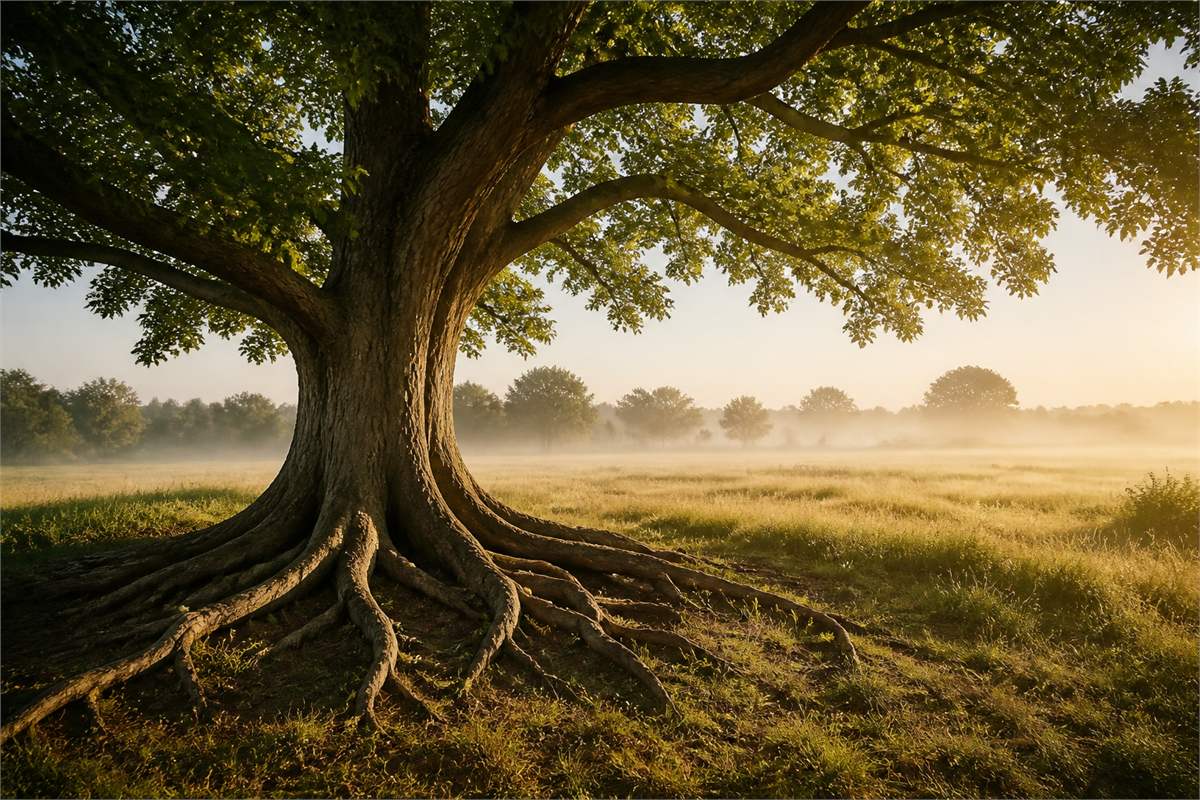
Modern tree jewelry often draws on a simpler visual story: roots remember where we come from, the trunk holds the present, and branches reach toward growth. It can carry a wish for family connection, resilience, belonging, or a new chapter. When a design copies a named sacred diagram or mythic tree, its specific identity should be preserved.
How to choose a symbol that feels personal
| If your wish is… | Consider… | Why it fits |
|---|---|---|
| To let difference become cooperation | Taijitu | Contrasting forces remain visible inside one whole |
| To adapt through a changing season | Wuxing | Balance emerges through relationships and cycles |
| To honor a lasting bond | Endless knot | One line holds every part in connection |
| To meet change with a clear heart | Lotus | Beauty and composure rise through real conditions |
| To gather many roles around one purpose | Mandala-inspired geometry | A center gives the wider pattern coherence |
| To follow a path with wisdom | Dharma wheel | Its parts hold an ordered Buddhist teaching |
| To make a fair or careful decision | Scales | Harmony is found through weighing |
| To welcome reunion or completion | Circle | The form returns to itself without division |
| To remember roots while growing | Tree of life | Foundation, present, and possibility remain connected |

Balance symbols in jewelry and gifts
A symbol becomes most meaningful when its visual logic matches the story you want to carry. A Taijitu pendant may mark a partnership that makes room for difference. An endless-knot gift may honor years of shared choices. A lotus can accompany renewal, while a tree can welcome a new home, a growing family, or the beginning of another chapter.

Start with the person and the moment rather than a gender rule. Then look closely at the design: is the knot structure legible, is the sacred symbol named correctly, and does the written meaning respect its tradition? A short gift note can make the intention beautifully specific. These objects express a wish—a medium through which people hope to bring about peace, harmony, wisdom, health, virtue, longevity, or a meaningful outcome in life.
If you are exploring a wider world of wearable wishes, the Eastern Story Blessing collection brings together jewelry chosen for protection, love, clarity, good fortune, and peaceful presence.
Harmony means finding the right relationship
The strongest balance symbol is not the one with the longest list of meanings. It is the one whose story feels true to your own. Taijitu holds contrast in motion. Wuxing honors change. The knot remembers connection. The lotus opens through difficulty. The circle welcomes return. Chosen with care, a symbol becomes a quiet companion for the life you hope to build: balanced, connected, and open to what comes next.
Frequently Asked Questions
Related Posts


