
Most obsidian is affordable: an 8 mm common black obsidian bracelet often sells for $20–$80, while rainbow, gold-sheen, silver-sheen, fire obsidian, larger beads, carving, and fine jewelry work can raise the price substantially. A beautiful finished piece is valued as more than raw volcanic glass. Its color and optical effect, polish, matching, carving, metalwork, condition, and the wish it carries all shape what a buyer is willing to pay.
Obsidian is often chosen as a companion for protection, courage, steadiness, clarity, and safe passage through change. A bracelet can mark a new beginning; a pendant can carry a private wish for peace; a carving can become a meaningful object for the home. This guide explains how much obsidian is worth by type, form, and finish, while keeping those human reasons for choosing it in view.
What is obsidian?
Obsidian is natural volcanic glass: an igneous material formed when suitable lava cools quickly enough that extensive crystal growth does not occur. It is commonly silica-rich, although composition, color, bubbles, inclusions, and flow structures vary from one volcanic source and specimen to another. Because its structure is glassy rather than crystalline, obsidian is a rock material, not a crystal or a crystalline mineral species.

Fresh surfaces often have a glassy luster and may break in smooth, curved conchoidal fractures. Those broken edges can be extremely sharp. This quality made obsidian important for tools in many ancient cultures, but a modern reader should never strike or break jewelry to inspect it. A chipped bracelet, pendant, or carving should be taken out of use and handled safely.
Black is the best-known color, yet obsidian can also appear brown, reddish, gray, or patterned. Fine internal structures, bubbles, inclusions, and flow layering can produce rainbow or gold- and silver-colored sheen. The underlying geology, visible beauty, condition, and workmanship carry more weight than an attractive trade name. For a fuller material introduction, visit our guide to what obsidian is.
How much is obsidian worth by type?
| Type and finished form | Typical price context | What usually raises the price |
|---|---|---|
| Common black obsidian bracelet, about 8 mm beads | $20–$80 | Even matching, round beads, clean drill holes, smooth polish, reliable stringing |
| Large common black obsidian bracelet, about 14 mm or above | $100–$200 | Well-matched large beads, sound condition, precise drilling and finishing |
| Small common black obsidian pendant or simple carving | $30–$150 | Clean shape, polished edges, balanced design, secure bail or cord |
| Rainbow obsidian bracelet | $50–$300 | Visible color, broad coverage, careful orientation, matching across beads |
| Gold-sheen or silver-sheen obsidian bracelet | $100–$300 | Strong moving sheen, consistent beads, fine polish and construction |
| Exceptional sheen bracelet or highly worked bangle | $500–$2,000 | Remarkable optical display, larger sound material, difficult cutting, excellent finish |
| Fire obsidian bracelet | $100–$300 | Clear warm-colored layers, good coverage and orientation |
| High-impact fire obsidian work | $500–$1,000 | Vivid layered color, difficult orientation, polished presentation and skilled work |
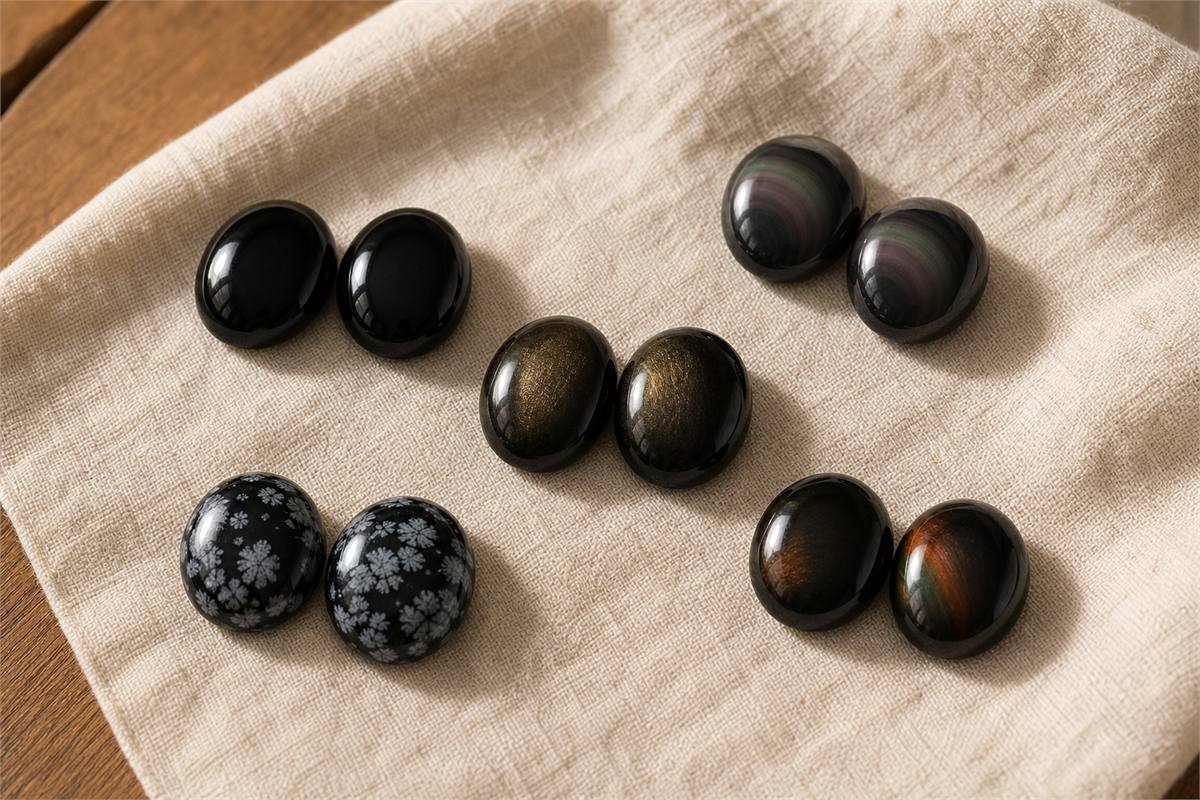
These ranges describe specific retail forms, not an official universal tariff. They should be used to compare similar finished objects. A strand of 8 mm beads, a large hand-finished bangle, a carved pendant, and a rough specimen carry different amounts of labor and usable material, even when all are called obsidian.
Common black obsidian
Common black obsidian is abundant enough to remain approachable. For an everyday bracelet made with beads around 8 mm, $20–$80 is a clear working range. Larger beads require more sound material and more careful matching; a well-finished strand using beads around 14 mm or larger commonly sits in the $100–$200 range. A small pendant or simple carved motif commonly falls between $30 and $150, depending on carving, polish, cord, bail, and metal details.
Pure black color is not a formal grade called “Wujin.” Wujin (乌金), like several other Chinese-market labels, is often a commercial description for a deep, glossy black appearance. Sellers do not use it under one universal grading standard, so judge the actual object: bead matching, surface finish, drill holes, edge condition, and construction.
Rainbow obsidian
Rainbow obsidian reveals bands or areas of color when it is turned under suitable light. The effect is associated with fine internal structure, inclusions or bubbles, and flow layering rather than loose “colored sand” inside the glass. A rainbow obsidian bracelet commonly falls in the $50–$300 range. Strong color, wide coverage, harmonious pattern, good viewing angles, and matching from bead to bead support the upper part of that range.
“Rainbow eye,” “dragon eye,” and similar names describe an appearance in commerce; they are not fixed geological grades. One vivid photograph can also exaggerate a narrow flash. When choosing a piece, turn it slowly in soft daylight and a directional indoor light. Look for a pleasing effect in the angles in which the jewelry will actually be worn. Country of origin cannot be established from color or sheen alone, and no country name automatically makes a piece superior.
Gold-sheen and silver-sheen obsidian
Gold-sheen obsidian and silver-sheen obsidian show warm gold or cool silvery reflection from fine structures within the volcanic glass. The display may form a cloud, band, field, or shifting glow. It should not be reduced to “gold sand,” “silver sand,” iron crystals, or a standard cat’s-eye effect in every specimen; the appearance depends on the sample’s microstructure, bubbles or inclusions, and flow layers.
A well-made gold- or silver-sheen bracelet commonly sells for $100–$300. Exceptional bangles or bracelets with a broad, dramatic effect, generous usable material, difficult orientation, and excellent polish can reach $500–$2,000. At that level, the premium should be visible in the whole object—material selection, cutting, finish, fit, and construction—not justified by a grand trade name alone.
Snowflake obsidian
Snowflake obsidian carries pale radiating spots or clusters against a darker glassy ground. These “snowflakes” are related to spherulitic crystallization and devitrification; cristobalite is commonly involved, but the safe description is not that every piece contains identical white feldspar crystals. Pattern balance, contrast, polish, usable size, and how well the design works with the markings matter more than the name by itself.
Snowflake obsidian is generally accessible in bead strands and small polished pieces. Larger sculptures and detailed carvings can cost far more because the artist must place the pattern thoughtfully, avoid weak areas, and finish a brittle glassy material without chips. The value then belongs as much to design and workmanship as to the rough material.
Fire obsidian and other patterned material
Fire obsidian can show vivid red, orange, gold, green, or multicolored layers when cut and lit well. A bracelet with a clear but moderate display may sell for $100–$300; high-impact work with vivid coverage, skilled orientation, and a fine finish may reach $500–$1,000. Mahogany obsidian, banded material, and other patterned forms are judged by the beauty and placement of their natural pattern, soundness, size, and craftsmanship.
Market names such as “ice obsidian” (冰种黑曜石), “gold obsidian” (金曜), “silver obsidian” (银曜), “rainbow eye” (彩虹眼), and “Wujin” (乌金) are not governed by one grading ladder. “Ice obsidian” is especially inconsistent: it may be used for translucent natural material, treated or remelted glass, reconstructed material, or simply a seller’s visual description. Transparency alone cannot determine origin, treatment, or value.
Five markets hidden inside the word “obsidian”
| Form | What buyers actually compare | Where the value is added |
|---|---|---|
| Rough and natural pieces | Usable size, fractures, pattern, sheen, shape | Selection and potential cutting yield |
| Beads and bracelets | Diameter, matching, roundness, drill holes, polish, stringing | Sorting, drilling, finishing and assembly |
| Cabochons and pendants | Centered effect, dome, outline, polish, setting | Cut orientation and jewelry construction |
| Carvings and sculpture | Design, detail, symbolism, finish, condition, maker | Artistic judgment and difficult material removal |
| Finished jewelry | Stone, metal, clasp, setting, design, brand, condition | Complete object design and retail presentation |
Weight alone misses most of this story. A cutter may remove fractured areas, orient a narrow sheen layer, match dozens of beads, drill each hole, and polish every surface. A small pendant can therefore cost more than a much heavier rough stone. In the same way, a carved guardian, animal, lotus, or abstract form may be valued for the artist’s understanding of shape and meaning.

What determines obsidian value?
- Type and visible effect: black, snowflake, rainbow, gold sheen, silver sheen, fire, mahogany, or another pattern.
- Effect coverage: how clearly the color or sheen appears and how gracefully it moves across useful viewing angles.
- Size and sound material: larger beads, cabochons, bangles, and carvings require enough material without unstable fractures.
- Matching: a bracelet gains coherence when bead size, color, sheen, polish, and drill placement work together.
- Cut and polish: symmetry, a smooth surface, crisp carving, comfortable edges, and thoughtful orientation.
- Condition: chips, cracks, scratches, loose settings, worn cord, and damaged holes reduce beauty and safe wear.
- Craftsmanship: carving skill, difficult openwork, design, metalwork, and a maker’s distinctive hand.
- Construction and brand: precious metal, plating, clasps, settings, packaging, service, and design identity affect the finished price.

How to choose obsidian without relying on one visual test
Because obsidian is natural glass, “it looks glassy” cannot separate it from manufactured glass. Natural volcanic glass may contain bubbles, flow bands, inclusions, color variation, or very uniform areas. Manufactured glass, coatings, resin, dyed products, remelted or reconstructed material, and layered assemblies can also imitate selected appearances. No single observation—warm edge color, the presence or absence of bubbles, weight, cool touch, perfect blackness, or a moving flash—confirms identity by itself.
- Start with the seller’s exact material description and the finished form you are buying.
- View the whole piece in diffuse daylight, then turn it slowly under one directional light to see how the effect moves.
- Check bead matching, holes, edges, clasp, cord, setting, polish, scratches, chips, and visible repairs.
- Compare pieces of the same type, size, form, workmanship, and retail setting—not rough stone against finished jewelry.
- Choose the piece whose color, pattern, comfort, and meaning stay appealing beyond a single dramatic photograph.

Do not use fire, alcohol, knives, scratching, striking, or deliberate breakage as tests. These methods can damage surfaces, coatings, settings, cords, and hands, while still failing to give a dependable answer. A careful visual and construction check is appropriate for everyday shopping; destructive experiments are not.
Obsidian bracelets, pendants, carvings, and rough pieces

Obsidian bracelets
An obsidian bracelet is valued through the complete rhythm of the strand. Beads should feel coherent in size and polish; holes should be clean; the cord or elastic should be sound; spacers and charms should suit the design. An 8 mm bracelet is light and easy to wear, while larger beads create a bolder presence and require more material. There is no required left or right wrist. Wear it where it feels comfortable and where its wish for protection, courage, steadiness, or clarity feels most personal.
Pendants and cabochons
A curved cabochon can reveal rainbow or sheen especially well when the cutter places the effect beneath the dome. For a pendant, also inspect the bail, drilled hole, prongs, bezel, backing, cord, and edge comfort. A small common black pendant at $30–$150 may carry more meaning than a larger object if its motif marks a promise, a journey, or a new phase of life.
Carvings and display pieces
Carvings add artistic value. A guardian figure may be chosen to welcome protection and peace; an animal can carry courage or loyalty; a lotus may accompany renewal; an abstract sculpture may celebrate clarity and transformation. Thin points, horns, fingers, openwork, and edges demand skill and are also the first areas to inspect for chips.
Rough obsidian
Rough pieces preserve a direct sense of volcanic origin, flow texture, glassy luster, and natural form. Their price depends on usable size, pattern, optical effect, fractures, shape, and whether they are intended for display or cutting. Never handle a fresh broken edge casually. Keep rough pieces stable, away from children and pets, and do not encourage anyone to use them for cutting.
Obsidian meaning: why people wear and give it
Across modern jewelry culture, obsidian is widely chosen to carry wishes for protection, courage, grounding, clear judgment, and a calm passage through change. Its dark glassy surface can feel like a quiet boundary: a reminder to release an old chapter, stand firmly in the present, and move forward with intention. It is worn to invite steadiness and safe companionship, and it can serve as a medium through which people hope to bring about peace, strength, clarity, and a specific good outcome in life.
That makes obsidian a thoughtful gift for a new job, a move, a journey, recovery from a difficult season, or any moment that calls for brave beginnings. Choose by the recipient’s story rather than gender. A simple black bracelet can speak of quiet protection; rainbow obsidian can honor hope after change; gold sheen can welcome confidence and abundance; snowflake obsidian can celebrate balance within complexity.

If you are choosing jewelry as a blessing rather than as a commodity, explore the Eastern Story Blessing collection for pieces that carry wishes for peace, protection, good fortune, and a beautiful next chapter.
Obsidian care and safe wear
Obsidian is commonly listed around 5–5.5 on the Mohs hardness scale, with some references giving a broader range around 5–6. Hardness describes resistance to scratching; it does not mean the material will survive a fall. Obsidian is brittle, and edges, points, bead holes, and carvings can chip under impact.
- Remove jewelry before impact-heavy activity, swimming, bathing, or household cleaning.
- Wipe with a soft damp cloth or use clean lukewarm water when appropriate for the setting.
- Dry the piece thoroughly, especially around drill holes, clasps, cord, and metal fittings.
- Avoid sudden temperature changes, harsh cleaners, ultrasonic cleaning, and long soaking.
- Store it separately in a soft pouch or lined compartment so it cannot strike harder jewelry.
- Check elastic, cord, knots, clasps, prongs, drilled holes, and thin carved areas regularly.
- Stop wearing a chipped or cracked piece; protect your hands and dispose of loose sharp fragments safely.

Clear water and a soft cloth are enough for ordinary physical care. Moonlight, salt water, prolonged bright light, and running-water rituals are not required maintenance. Mixed-material jewelry may need more specific treatment; our jewelry care guide offers a practical starting point.
The best obsidian value is a complete object
How much obsidian is worth depends first on what you are looking at. Common black bracelets around 8 mm often sit at $20–$80; larger 14 mm strands commonly reach $100–$200; simple pendants may be $30–$150; rainbow, gold-sheen, silver-sheen, and fire obsidian move upward when their effects are clear and the workmanship is strong. Exceptional sheen, difficult cutting, and sophisticated finish can take a piece into the $500–$2,000 range.

Price is only one part of the choice. Look for a piece whose material description is clear, whose construction is sound, whose surface rewards real-world viewing, and whose meaning belongs naturally in your life. The most satisfying obsidian object brings geology, craft, beauty, and a personal wish into one enduring form.
Frequently Asked Questions
Related Posts


