
“Men wear Guanyin, women wear Buddha” (男戴观音,女戴佛) is a widely shared blessing saying in Eastern jade culture. Guanyin carries wishes for compassion, peace, protection, and a steady path ahead. The smiling “Buddha” in the phrase usually refers to the familiar Budai or Maitreya-inspired jade figure, chosen to welcome joy, generosity, good fortune, and an open heart.
Today, anyone can choose either image. A Guanyin pendant may speak to a person who wants calm strength and compassionate guidance; a smiling Maitreya or Budai pendant may feel right for someone welcoming happiness, spaciousness, and blessing into a new chapter. The most meaningful choice grows from the wearer’s wish, personal connection, life moment, and the love carried by the gift.
“Men wear Guanyin, women wear Buddha” at a glance
| Traditional phrase | Figure commonly shown | Wish carried by the pendant |
|---|---|---|
| Men wear Guanyin (男戴观音) | Guanyin (观音), the bodhisattva of compassion | Peace, compassionate strength, safe journeys, steady work, and a smooth path |
| Women wear Buddha (女戴佛) | Usually a smiling Budai (布袋) or Maitreya-inspired figure | Joy, tolerance, good fortune, family harmony, and a generous heart |
| Modern choice | Either image, chosen by any wearer | A personal blessing shaped by meaning, connection, aesthetics, and the moment being honored |
The saying has remained beloved because it turns two warm qualities into an easy gift language: compassion beside openhearted joy. It is often heard when families choose jade pendants for a journey, a new job, a relationship milestone, a birthday, or a fresh beginning.

Why this folk saying carries such warm wishes
Guanyin carries compassion, peace, and a steady path
Guanyin is cherished as a compassionate presence who hears suffering and responds with mercy. In pendant culture, the image is worn to invite calm attention, kind action, safe travel, and peace through changing circumstances. The blessing is especially meaningful for someone carrying responsibility, working toward a goal, or beginning a road that calls for both courage and gentleness.

In modern jade-gifting circles, the similar sounds of Guanyin (观音) and “official seal,” guanyin (官印), are also enjoyed as auspicious wordplay. This association adds wishes for honorable achievement, career progress, recognition, and work that unfolds smoothly. It enriches the pendant’s gift meaning while Guanyin’s central identity remains compassion.
The smiling figure welcomes Fu, joy, and a generous heart
The “Buddha” side of the saying is closely linked with the blessing character Fu (福), meaning good fortune or blessing. The sound association between Fo (佛) and Fu (福) is often used as joyful jewelry wordplay: the pendant is chosen to welcome happiness, harmony, ease, and abundant good wishes into daily life.
The familiar smiling figure also embodies the beloved phrase “a generous heart can hold much.” Its open expression carries a wish to meet life with warmth, patience, and room for other people. For a gift, it can say: may laughter remain close, may relationships grow in harmony, and may your days be filled with Fu.

Who is Guanyin?
Guanyin (观音), short for Guanshiyin (观世音), is the East Asian name of Avalokiteshvara, the bodhisattva of compassion. The name is commonly understood through the idea of perceiving or hearing the sounds of the world. This makes listening one of the image’s most tender meanings: noticing another person’s hardship, responding with wisdom, and keeping a kind heart without losing inner steadiness.

Across regions, eras, and Buddhist traditions, Avalokiteshvara appears in many forms. In the Han Buddhist visual world, Guanyin gradually developed graceful expressions that many readers recognize today—gentle features, flowing robes, a lotus, a vase, a willow branch, or a serene seated or standing posture. Other images may look more masculine or carry different attributes. This visual diversity allows the same compassionate presence to meet people through many cultural forms.

A Guanyin pendant is therefore chosen for far more than appearance. It carries a wish for mercy with discernment, strength with tenderness, protection through difficult passages, and peace that can accompany ordinary life. Someone may wear it during travel, a demanding season at work, a family transition, or simply as a quiet daily reminder to listen before speaking and to move through the world with care.
What does “women wear Buddha” usually show?
In jade pendant culture, the phrase usually points to a smiling, round-bellied figure associated with Budai (布袋) and Maitreya (弥勒). Budai was a historical monk remembered for his cloth sack, laughter, and generous presence. In East Asian tradition he became closely identified with Maitreya, the future Buddha, and his approachable image grew into the “Laughing Buddha” familiar in modern carving.

This friendly jade figure carries wishes for contentment, tolerance, joyful abundance, and a heart with room for life’s changes. A rounded belly is part of the familiar artistic language of Budai, yet meaning comes from the whole expression—the smile, posture, carving, and the feeling of ease the image gives the wearer. No single feature needs to become a measure of how much fortune the pendant can carry.
Budai, Maitreya, Shakyamuni, Amitabha, and other Buddhist figures have distinct histories and visual identities. A seller or gift giver who names the image clearly helps the recipient understand the blessing being offered. For a deeper look at the colors and meanings used with this type of carving, visit the jade Buddha colors and meaning guide.
Can women wear Guanyin and men wear Maitreya?
Yes. A woman can wear Guanyin for compassion, protection, family blessing, inner calm, or a heartfelt devotional connection. A man can wear a smiling Maitreya or Budai figure to welcome joy, generosity, good fortune, and ease in relationships. Either pendant can become a meaningful companion when its virtues meet the wearer’s own hopes.

Modern choice adds new life to the old saying. One person may feel drawn to Guanyin’s attentive stillness; another may smile immediately when seeing Budai’s joyful face. A family heirloom may carry the wishes of several generations, while a newly chosen pendant may mark a first job, a move, recovery after a difficult season, or the beginning of a relationship. Meaning grows where image, wearer, giver, and moment meet.
| Wish or life moment | Image that may resonate | Gift message |
|---|---|---|
| Peace during change | Guanyin | May compassion and calm guide each step. |
| Career progress or new responsibility | Guanyin | May your work unfold with wisdom, steadiness, and smooth success. |
| Joy, family harmony, or a fresh beginning | Smiling Maitreya or Budai | May Fu, laughter, and openhearted fortune fill the road ahead. |
| A personal connection to either figure | The image the wearer feels close to | May this blessing stay near through every chapter. |
How to choose a Guanyin or smiling Maitreya pendant
Begin with the wish you want to carry
Start with meaning. Choose Guanyin when the central wish is compassion, peace, protection, thoughtful leadership, or safe passage through change. Choose a smiling Maitreya or Budai figure when the heart of the gift is joy, family harmony, good fortune, generosity, or a more spacious way of meeting life.
For someone who feels close to both images, let the life moment lead. Guanyin can accompany a demanding responsibility or long journey. A smiling figure can celebrate a birthday, housewarming, relationship milestone, or new beginning. The Blessing collection offers other meaningful symbols when the recipient prefers a less figurative design.

Look for an image that feels peaceful and alive
For Guanyin, look at the complete expression: balanced features, a calm gaze, flowing lines, and a seated or standing posture that feels composed. For Budai or a Maitreya-inspired carving, look for a natural smile, an open posture, and a sense of warmth. Small variations in jade can become part of the carving’s character; the face, hands, robe, and main attributes should remain clear enough for the figure to be recognized.
View the front, sides, and back. Smooth edges, a comfortable reverse, and transitions that feel intentional help the pendant sit well against clothing or skin. A carving can be delicate or bold, pale or deeply colored, compact or more detailed; harmony matters more than forcing every piece into one ideal.

Let jade add its own layer of meaning
Jade Yu (玉) is loved for warmth, refinement, endurance, harmony, and quiet virtue. Jadeite may bring luminous green, lavender, white, yellow, or darker tones; nephrite, including many Hetian jade pieces, is admired for a softer luster and calm tactile presence. The best material choice is the one that suits the wearer’s aesthetic and the emotion of the gift.
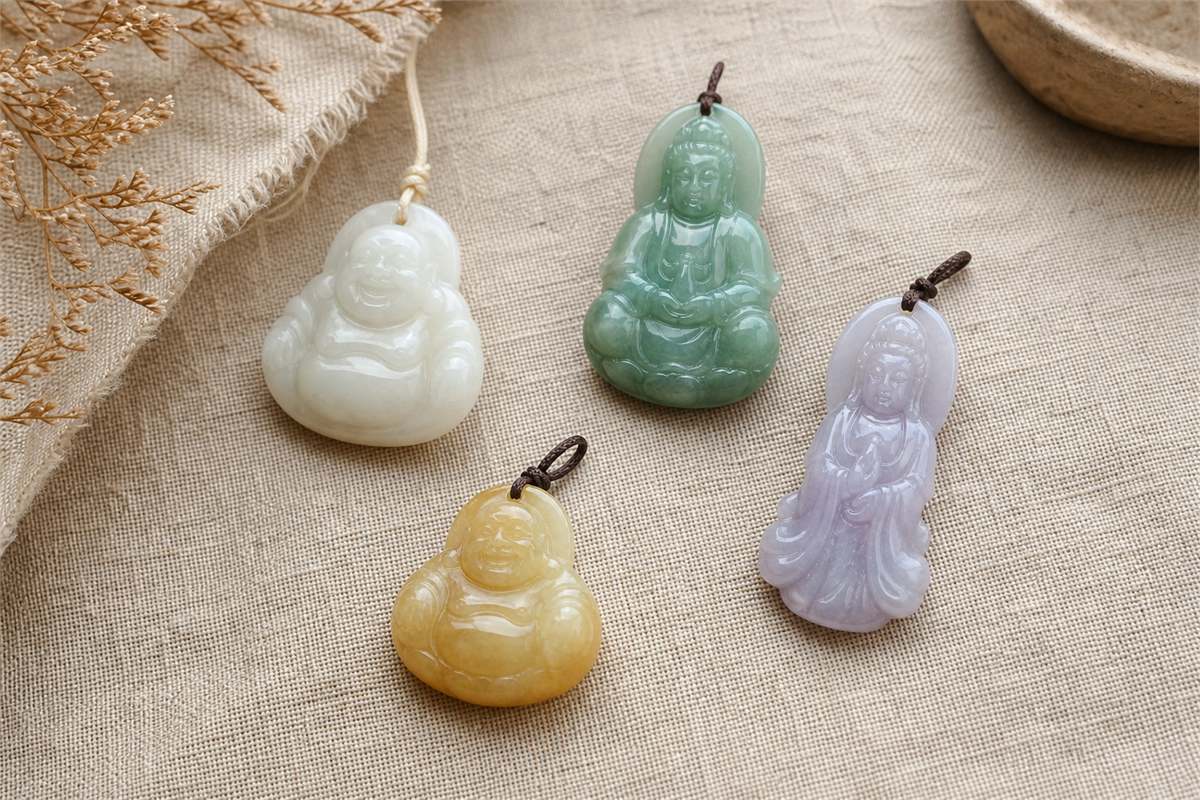
Color can gently shape the message: green may feel flourishing, white serene, yellow warm and abundant, black steady and protective, and lavender graceful. These associations support the figure rather than assigning the pendant to a gender or promising one fixed outcome. The meaning of jade in Eastern culture offers a wider view of jade as blessing, moral companion, and family memory.
Choose comfort and secure construction
A pendant meant for daily companionship should feel comfortable in motion. Check that the bail, drilled hole, cord, chain, prongs, and setting suit the pendant’s weight. Edges should feel smooth, metalwork should sit neatly, and the piece should hang without constantly flipping. For an active wearer, a simpler silhouette may stay close and protected more easily than a carving with fragile projecting details.

Clear measurements and views in ordinary light help a buyer understand scale, color, and carving depth. Material, proportion, polish, and thickness are useful supporting details, but the final choice should still feel like a meeting between a beautiful image and a meaningful wish.
Giving the pendant for a meaningful life moment
A Guanyin or smiling Maitreya pendant can say what ordinary gift language sometimes cannot. For a traveler, it can carry a wish for safe return. For someone beginning a career or taking on responsibility, it can welcome wisdom, recognition, and smooth progress. For a loved one entering a new home or relationship chapter, it can invite harmony, laughter, and Fu.
- For a new job: “May compassion, clear judgment, and steady success accompany your work.”
- For travel: “May peace stay close, and may every journey lead safely home.”
- For family: “May your home hold laughter, patience, harmony, and abundant blessing.”
- For a new chapter: “May this pendant carry Ping An Ruyi (平安如意)—peace and wishes fulfilled—wherever life leads.”
If the recipient already has a personal practice or a strong relationship with sacred imagery, honor that connection. A short card explaining why this particular figure was chosen can turn a beautiful pendant into a lasting story between giver and wearer.

Respectful wearing and gentle daily care
Wear the pendant in a way that feels comfortable, secure, and respectful. There is no universal height, side, or gender-based position. Some people keep the image near the heart; others choose a length that suits clothing and daily movement. What matters is that the piece sits safely and the wearer feels connected to its meaning.

Remove it when bathing, swimming, sleeping, or exercising if doing so protects the jade, cord, chain, setting, or the wearer’s comfort. After ordinary wear, use a clean soft cloth and follow care suited to the actual material and construction. Keep the pendant dry before storage, and place it separately from harder jewelry or pieces that may catch delicate carving. The Eastern Story care guide offers simple storage and cleaning guidance for meaningful jewelry.

Care is another form of blessing. A pendant chosen for compassion, peace, joy, or good fortune becomes more personal through the years it accompanies someone. Gentle handling protects the object, while remembering its message keeps the story alive.
Carry the blessing that feels meant for you
“Men wear Guanyin, women wear Buddha” remains a beautiful doorway into Eastern blessing culture. Guanyin invites compassion, attentive wisdom, peace, and protection. The smiling Maitreya or Budai image welcomes joy, tolerance, family harmony, and Fu. Today, either figure can accompany any person who feels close to that wish.
Choose the image that meets your heart, the jade that feels warm in your hand, and the message that belongs to this moment. Worn for oneself or given to someone important, the pendant can become a quiet companion through work, travel, relationships, and the hope for a beautiful life.

Frequently Asked Questions
Related Posts


