
Qikou (气口 / 氣口) means the “mouth of qi”: the opening through which a home or other place welcomes qi in feng shui tradition. The front door is the usual starting point, while balconies, windows, and frequently used side entrances also receive attention in different methods. A cared-for qikou carries a warm intention: welcome good fortune, greet loved ones generously, and make coming home feel peaceful.

The image is simple and memorable. Just as a mouth marks a meeting between inside and outside, a doorway marks the moment a visitor becomes a guest and a busy day becomes home life. In feng shui, qi belongs to a traditional understanding of vitality, relationships, and the character of a place. The doorway gives that cultural idea a visible setting: an approach, a threshold, and a first impression.

What do qi and kou mean?
| Term | Literal meaning | Meaning in the home |
|---|---|---|
| Qi (气 / 氣) | Breath; vitality | A traditional concept used to describe the qualities and influences of a place |
| Kou (口) | Mouth; opening | A threshold where inside and outside meet |
| Qikou (气口 / 氣口) | Mouth of qi | An opening associated with receiving qi and welcoming activity |
The “breathing home” is a cultural metaphor. It encourages attention to how a place welcomes people and how its entrance relates to the rooms beyond. Actual air movement follows the building’s openings, ventilation systems, pressure differences, wind, and surrounding conditions. Keeping these two ways of describing a home clear makes room for both a meaningful tradition and thoughtful everyday care.
A welcoming entrance can carry the spirit of ping an ru yi (平安如意): peace, safety, and life unfolding as you hope. It is an especially fitting wish for a new home, a family reunion, or a fresh beginning in a familiar space.
Is the front door always the main qikou?
Many residential feng shui approaches begin with the main entrance because it represents the home’s relationship with the outside world. It is where people arrive, greetings happen, and daily life crosses the threshold. The intended front door therefore keeps a special cultural importance even in a house whose occupants often use a garage entrance.
Other approaches give more weight to the opening that receives the most activity or to a dwelling’s relationship with its open surroundings. In a modern apartment, a balcony or large window may receive particular attention because it connects the rooms with daylight, views, and the exterior. These interpretations depend on the method and the dwelling; window size alone does not settle which opening is primary.

| Opening | How it is considered | What to notice |
|---|---|---|
| Main entrance | The usual primary qikou in doorway-based interpretations | Arrival, door condition, the approach, and the first interior view |
| Balcony or large window | An important outward opening; emphasized by some apartment interpretations | Actual opening area, daylight, privacy, exposure, and ventilation |
| Other windows | Additional openings considered in relation to the whole layout | Usability, unobstructed vents, light, and the conditions outside |
| Side or back door | A secondary entrance, or a significant daily entrance in some methods | Frequency of use, safe access, and its relationship with the front door |
For an apartment, look at the building entrance, shared landing, and your own unit door as distinct thresholds. The balcony adds another relationship with the outdoors. A corridor door and a sunlit window can both matter without having the same role. For a shop, identify the entrance customers actually use as well as the building’s formal facade.

Qikou, facing direction, and the space before the door
Qikou identifies an opening and its role. Facing direction describes an orientation within a particular compass method. Door position, door direction, and the facing of the building are separate observations. A balcony may face south while the unit door opens into a north-facing corridor; describing both is clearer than giving the whole home one doorway label.
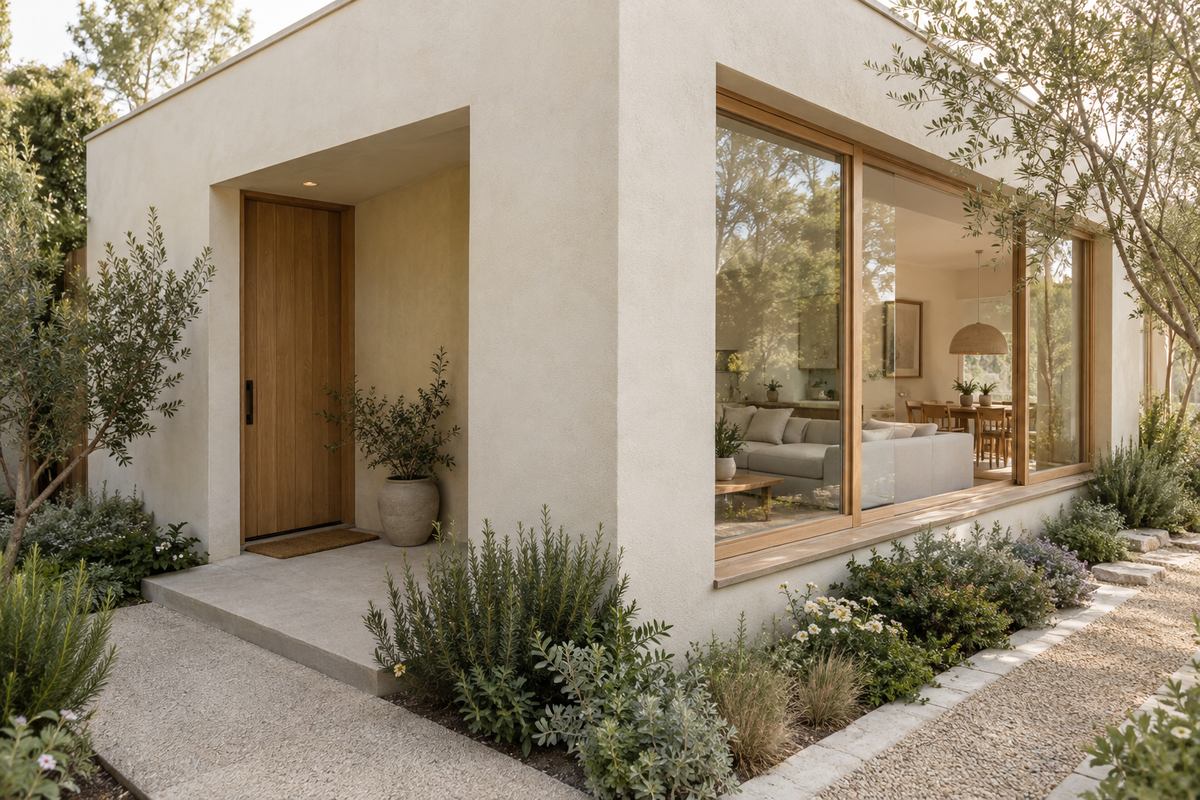
Likewise, a lucky color or a decorative object supplies one layer of meaning. The doorway itself still deserves care: can a visitor find it, can the door open fully, and is the threshold pleasant to cross? The entrance door feng shui guide explores those everyday arrangements in more detail.
The open area before an entrance is often discussed through ming tang (明堂), the “bright hall.” Depending on the setting and tradition, this may refer to a forecourt or a broader open area associated with gathering qi. At the scale of daily arrival, the image invites a little breathing room: a place to pause, greet someone, and step inside comfortably.

In a shared building, that welcome belongs within the space you may use. Keep landings, stairs, and emergency routes clear. A readable door number, working bell, and tidy threshold are considerate ways to make an entrance recognizable without filling a common corridor with furniture or plants.
What happens after qi enters?
The traditional phrase zang feng ju qi (藏风聚气), often translated as “shelter from wind and gather qi,” evokes a home where welcome settles into a sense of belonging. The related expression qu ze you qing (曲则有情) appreciates a gentle, inviting transition. These images help explain why a small entrance hall, a composed first view, or a thoughtfully placed screen can feel appropriate to the mouth of qi.
Gathering: a place to arrive and settle
In the language of tradition, gathering qi expresses the wish that good things find a home and remain part of family life. A threshold that leads into a comfortable living area offers a fitting setting for that wish. There is a place for shoes and coats, guests can understand where to go, and the family has a moment to leave the outside world behind.
A living-room seat with a reassuring backdrop can contribute to that settled feeling. Choose its position for comfort, conversation, views, and room access. Keep seating away from an uncomfortable draft where practical, and leave the path between rooms easy to use. A calm layout comes from the relationship between these details rather than from a single compulsory furniture position.

Passing straight through: the front-to-back alignment
A front door aligned with a rear door, balcony, or large window is often called chuan tang sha (穿堂煞) in feng shui discussions. The concern is expressed as qi passing through before it gathers. A home can respond to this traditional image by giving arrival a gentler transition and preserving a little privacy between the doorway and the rooms beyond.
A screen, slim console, change in lighting, or stable plant may soften the sightline where there is space. Each serves a different purpose: a console offers somewhere to put keys, a screen offers visual separation, and a plant lends greenery. An aligned floor plan does not by itself establish the strength of a draft; airflow changes with which openings are open and the conditions outside.

Obstruction: when the entrance feels crowded
Clutter at the threshold is described traditionally as obstructing reception. Shoes, parcels, bins, and unused boxes also make arrival less pleasant and can create trip hazards. Giving each item a home restores the welcome of the doorway. The aim is a lived-in entrance with room for people, rather than an empty entrance stripped of personality.

Distinguish a crowded view from inadequate ventilation. Clearing a cabinet helps access; persistent stale air, dampness, or odors call for attention to their source and to how the building is ventilated. A beautiful entrance works best alongside the care the whole home needs.
A welcoming qikou: six areas to care for
1. The approach and the working door
Begin outside. Check the route from the street, gate, lift, or corridor. Guests should be able to identify the entrance and pause safely before entering. Repair sticking hinges, a scraping door, or a loose handle. Let the door complete its intended opening without hitting a shoe cabinet, planter, or screen.

Door size belongs to the building’s design and access needs. A small entrance can be welcoming with appropriate light and clear storage; a generous entrance can feel composed with thoughtful furnishings. Changes to door or window openings require professional assessment of the structure, approvals, security, and building requirements.
2. A gentle entrance-hall transition
An entrance hall, or xuan guan (玄关), gives arrival its own small moment. In a spacious home, a console or partially open partition can establish that transition. In a narrow home, a picture, a secure wall light, or shallow storage may serve it more comfortably. Choose a treatment that suits the space instead of adding an obstacle simply because a diagram shows one.

A traditional folding screen, ping feng (屏风), brings together privacy, spatial division, and decorative expression. Place it where it stands securely and leaves a clear route. Its position can change a view and may affect local air movement, but the building’s conditions determine the resulting airflow. Let door operation, accessibility, ventilation, and emergency escape guide the final arrangement.

3. Doors facing kitchens or bathrooms
When the entrance looks directly toward a bathroom, a closed bathroom door can provide privacy between uses. Keep the room dry and its ventilation working. Where a kitchen is visible, clean surfaces and effective cooking extraction make the first view and the shared air more pleasant.

Use a curtain or screen only where it is suitable for the room, securely fitted, and clear of cooking heat and walking routes. Privacy measures should work with the ventilation system. Opening or closing a door needs to account for how air enters and leaves that room, rather than following one rule for every home.
4. Light and a cared-for threshold
Light helps the entrance say welcome. Make the doorbell, lock, and changes in floor level easy to see. Where daylight is limited, a well-placed light or suitable motion sensor can make arrival easier. Use it when needed; the wish for a bright entrance can be expressed without leaving a lamp on continuously.

Clean the landing and threshold, keep a rug flat and secure, and address dampness at its source. Let brightness mean clarity and warmth. Ordinary entrance lighting serves visibility and atmosphere; moisture control, cleaning, and ventilation have their own jobs.
5. Balconies, curtains, and comfortable fresh air
A balcony or window can make the home feel open to a new day. Keep its handle usable and its opening free of stored objects. Sheer curtains offer soft light and privacy where appropriate. Secure their fittings and keep loose fabric away from heaters and door mechanisms.

When a breeze feels too strong at a seat, consider the seating position, adjustable openings, or the ventilation controls available in the building. Choose fresh-air provision with weather, outdoor pollution, noise, security, and the home’s ventilation system in mind. On a noisy or polluted side, another suitable opening or a properly designed mechanical system may offer a better solution. Preserve adequate ventilation while improving comfort.
6. Plants and meaningful objects
Greenery gives a threshold a sense of growth and care. A money tree (发财树) is chosen to welcome prosperity and flourishing beginnings. A ZZ plant, pothos, rubber plant, or monstera may also suit the space when its light and care needs are met. Choose the actual plant for the household, including any children or pets, and use a stable pot with drainage that protects the floor.

Let plants enrich the welcome while ventilation and pollutant control take care of the air. A few indoor pots are decorative companions rather than a whole-room air-cleaning system. Keep leaves and containers clear of vents, the door’s swing, and walking routes. Thorny plants call for thoughtful positioning where people will not brush against them; artificial flowers can be kept clean and chosen for their beauty.
The hulu gourd (葫芦) carries wishes for blessing, protection, and long life. Five Emperor coins (五帝钱) are another traditional doorway object associated with protection and prosperity. Display a chosen object securely within your own space, with an appropriate fixing and a position that welcomes the household. Keep neighboring homes and shared entrances in mind when selecting any outward-facing decoration.

Qikou in shops: welcome people into the story
For a shop, the entrance links the street with the experience inside. Traditional language connects a welcoming mouth of qi with the wish for flourishing business. A clean, recognizable doorway gives that wish a visible expression: customers can find the handle, read the hours, and enter without squeezing past advertising boards or stock.
The area before the door should feel inviting within the premises’ boundaries. Keep access level or provide the required accessible route. Signs, trees, street furniture, and neighboring buildings deserve consideration for visibility, maintenance, noise, and safe access. Read the actual surroundings with care: the important question is how visitors reach and experience the entrance.
Inside, displays can guide browsing with a clear and comfortable route. An end display or low partition may reveal the shop gradually, provided customers can still navigate and leave easily. Avoid making people thread through a maze or putting tall furnishings across the entrance. The welcome should extend to visitors with different mobility and access needs.

A checkout area marks the exchange between the business and its guests. Some traditions favor a position set back from the entrance or in a diagonal corner associated with gathering wealth. In practice, position it for clear service, security, staff access, and comfortable queuing. A reassuring backdrop and discreet cash handling can suit those needs while carrying a wish for a prosperous, well-run shop.
Qikou in workplaces: a calm arrival and a place to belong
An office entrance brings colleagues, visitors, and daily activity into a shared setting. Reception, wayfinding, waiting space, and security arrangements shape that arrival. A tidy, well-lit entrance with a clear destination helps a visitor feel expected. A low partition may give work areas privacy where the floor plan allows it.

Where the door faces a lift, stair, or long corridor, consider the actual experience: noise, opening doors, unexpected views into desks, and pedestrian traffic. A stable screen or adjusted reception layout can offer privacy and orientation. Leave shared corridors and escape routes clear, and keep necessary security sightlines visible.
For a manager’s room or employee workstation, a quieter location and a comfortable view of the room can support concentration. The traditional image of “a backing” expresses reassurance and support; a wall or suitable partition may provide that feeling when it fits the task. Match the arrangement to daylight, glare, communication, accessibility, and desk ergonomics.
Treat overhead beams and sharp furniture corners according to their actual position. Maintain head clearance, move circulation away from a projecting edge, and use an appropriate rounded corner protector where needed. A plant may soften the appearance of a room while leaving these physical issues to suitable repairs or rearrangement.
Finance and records areas benefit from privacy, secure storage, and a dry, well-maintained environment. Keep a safe positioned according to security and installation requirements. For the wider relationship between seating, light, and shared space, explore the office feng shui layout guide.
Why qikou has other meanings in Chinese
Context changes the meaning of qikou. In traditional medicine it can refer to cun kou (寸口), a wrist-pulse location. In opera, spoken performance, and narration it describes breathing or pauses within a phrase. Video editors use it for pauses in recorded speech; dance uses it for breath and the transition between movements; writing borrows the image for the rhythm of sentences and paragraphs.
In home feng shui, the subject is the threshold and the reception of qi. The shared image of breathing makes the word memorable, while each field gives it a different purpose.
Welcoming good things home
A thoughtful qikou begins with a generous greeting: a clear way in, a cared-for door, and a first view that feels like home. A family photograph, a plant you enjoy tending, or one meaningful object can make that threshold personal. For a new home or a fresh chapter, it is a place to express the wish that peace and good fortune accompany everyone who enters.
Choose an object for the story you want to keep close. The Eastern Story Blessing collection brings together meaningful pieces for wishes of protection, harmony, and a beautiful life—an invitation to carry that welcome into everyday moments.
Frequently Asked Questions
Related Posts


