
Jade can be worth less than $100 for common small pieces, $200-$800 for entry-level jadeite bangles or pendants, $50-$300/g for ordinary white or green-white Hetian jade mountain material, and more than $10,000,000 for collector-grade glassy imperial-green jadeite. The useful answer is a price range by jade type, quality, object form, workmanship, and selling channel, because jade (玉) is a natural non-standard material rather than a fixed commodity.
This guide is built for buying, comparison, appraisal conversations, and resale expectations. It uses clear USD ranges so you can compare jadeite (翡翠), Hetian jade (和田玉), mutton-fat white jade (羊脂白玉), Xiuyan jade (岫玉), chalcedony (玉髓), turquoise (绿松石), Nanhong (南红), bangles, beads, carvings, rough stones, and value-friendly everyday pieces without turning every green stone into the same market.
Quick Answer: How Much Is Jade Worth?
| Jade category or object | Practical USD range | What usually drives the price |
|---|---|---|
| Entry jadeite, waxy to semi-translucent | $200-$800 | Coarser crystal, daily-wear bangle or pendant size, ordinary color |
| Mid-range jadeite, waxy-icy to near-icy | $2,000-$80,000 | Better translucency, cleaner body, stronger color, usable bangle or plaque material |
| High-end jadeite, icy to high-icy | $200,000-$8,000,000 | Clear body, fine texture, strong green, few fractures, collector demand |
| Glass jadeite with imperial or vivid green | More than $10,000,000 | Glassy body, pure saturated color, clean large material, top market channel |
| Ordinary Hetian jade mountain material | $50-$300/g | White or green-white body, commercial quality, daily-wear objects |
| Qing jade | $30-$100/g | Green to blue-green nephrite, stable everyday material |
| Sugar jade | $100-$500/g | Warm brown-sugar color, attractive contrast, clean structure |
| Qiemo sugar-white jade or Russian green nephrite | $1,000-$5,000/g | Stable quality, fine grain, pleasing color, stronger market recognition |
| Mutton-fat white jade | $500-$1,500/g | Warm white color, oily luster, fine texture, strong cultural demand |
| Premium Xinjiang seed material with natural skin | Tens of thousands of dollars per gram | Natural skin, fine dense body, oiliness, rarity, collector demand |
| Xiuyan jade or chalcedony small pieces | Often under $100; icy chalcedony can reach $1,000+ | Accessible jade-like look, color, polish, and honest material naming |
| Turquoise and Nanhong premium material | Thousands of dollars per gram | High porcelain blue turquoise without iron lines; fine Baoshan or Liangshan Nanhong |

Why Jade Has No Single Fixed Price
Jade has no single price because every piece combines natural variation, human judgment, and market negotiation. A jade boulder, a bead strand, a carved pendant, a Ping An Kou (平安扣), a bangle, and an antique carving are different price objects. The mineral identity matters first: true jade usually means jadeite or nephrite, while many attractive jade-like materials belong to other mineral families and should be priced under their own names.

The old saying “gold has a price, jade is priceless” describes this non-standard nature. Gold can be quoted by purity and weight. Jade depends on structure, density, oiliness, grain, color distribution, translucency, cracks, skin, origin story, carving, size, and the buyer's eye. Experts evaluate internal texture and workmanship; beginners often start with surface beauty. A seller may also price in selection cost, capital tied up in inventory, risk, and future scarcity expectations.
Channel changes the number as much as quality does. Mall counters commonly carry a $3-$5 retail multiple over closer-to-cost channels. Online sellers and wholesale markets usually sit nearer market cost when the seller is reputable and disclosures are clear. Secondhand resale often lands around 30%-70% of the original purchase price when there is no strong brand, artist, auction, or provenance premium.
Jadeite Price Ranges by Grade and Translucency
Jadeite (翡翠) is the jade category most associated with the phrase “one grade higher in translucency, ten times higher in price.” In practice, color, cracks, thickness, and usable object form also matter, but translucency and texture are powerful price signals. Fine jadeite evaluation puts heavy emphasis on color, transparency, and texture; size, cut, polish, treatment, and market channel complete the picture.
| Jadeite grade language | Typical visual quality | Common USD range | Best fit |
|---|---|---|---|
| Waxy jadeite | Coarser crystal, semi-translucent, soft body | $200-$800 | Daily pendants, entry bangles, simple wearable gifts |
| Waxy-transformed jadeite | Smoother body, slightly transparent | $2,000-$8,000 | Better pendants, clean small pieces, gift-grade jewelry |
| Waxy-icy jadeite | Near-icy look, brighter water, finer texture | $20,000-$80,000 | Fine pendants, plaques, cleaner bangle material |
| True icy jadeite | Fully transparent icy body | $200,000-$800,000 | High-end bangles, cabochons, plaques, collector gifts |
| High-icy jadeite | Clear as ice, strong light return, very fine body | $2,000,000-$8,000,000 | Collector-grade jewelry and major auction-level pieces |
| Glass jadeite | Glassy body, top translucency, pure high color | More than $10,000,000 | Collection-level imperial-green or vivid yang-green pieces |

Within the same “water” level, usable bangle material is usually more valuable than plaque material, and plaque material is usually more valuable than small pendant material, because a bangle needs a large continuous area with few fractures. Color then adjusts the price sharply: imperial green, vivid yang green, clean even green, and strong saturated tones outperform gray, muddy, patchy, or weak color. For cultural background rather than price, see Jade Meaning in Chinese Culture.
Hetian Jade and Nephrite Price Ranges
Hetian jade (和田玉) belongs to the nephrite tradition and follows a different value language from jadeite. Jadeite buyers often talk about “water” and transparency; Hetian jade buyers talk more about fine structure, oiliness, density, warm luster, whiteness or distinctive color, origin, natural skin, and object form. Shape also matters: seed material ranks above river-washed material, and river-washed material ranks above mountain material when quality is comparable.
| Hetian / nephrite category | Common USD range | Value logic |
|---|---|---|
| Ordinary mountain white jade or green-white jade | $50-$300/g | Entry to daily-wear level; look for even body and clean polish |
| Qing jade | $30-$100/g | Useful everyday nephrite, usually more accessible than fine white material |
| Sugar jade | $100-$500/g | Brown-sugar color zones, warm contrast, good daily jewelry potential |
| Qiemo sugar-white jade | $1,000-$5,000/g | Stable quality, fine grain, stronger color contrast, recognized origin appeal |
| Russian green nephrite | $1,000-$5,000/g | Good color consistency and market supply for higher-quality green nephrite |
| Mutton-fat white jade (羊脂白玉) | $500-$1,500/g | Warm white, oily luster, fine dense texture, classic high-end appeal |
| Premium Xinjiang seed material with natural skin | Tens of thousands of dollars per gram | Natural skin, dense oily body, small supply, collector-grade demand |

Good Hetian jade is not simply “the whitest piece.” Very white but dry, chalky, loose, or stiff-looking material can feel lower than warmer jade with finer texture. New buyers should focus on jade quality first: fine structure, moist luster, clean body, pleasing color, and honest material disclosure. For deeper material context, read What Is Hetian Jade? and White Jade Meaning.
Other Jade and Jade-Like Stones: Value Ranges
Many buyers use “jade” broadly for smooth, symbolic, East Asian-style jewelry stones. That is why material naming matters. Xiuyan jade (岫玉), chalcedony (玉髓), turquoise (绿松石), Nanhong (南红), Dulong jade, and water foam jade can all be attractive, but each has its own pricing logic.
| Material | Common USD range | How to read the price |
|---|---|---|
| Xiuyan jade | Often under $100 for common small pieces | Accessible green to pale material; polish, color, and translucency drive better examples |
| Chalcedony | Often under $100; icy chalcedony can reach $1,000+ | Smooth translucent quartz-family material; price rises with clarity, color, size, and clean polish |
| Turquoise | Ordinary material under $100/g; high-porcelain blue without iron lines reaches thousands of dollars per gram | Porcelain density, blue color, matrix pattern, stability, and origin language shape value |
| Nanhong | Ordinary material in the hundreds; fine Baoshan or Liangshan material reaches thousands of dollars per gram | Rich red tone, waxy body, cracks, completeness, origin, and carving quality matter |
| Dulong jade | Accessible to mid-range depending on color, translucency, and size | Often a green quartzite material; value comes from beauty and disclosure, not jadeite status |
| Water foam jade / shuimo jade | Usually far below comparable icy jadeite | Often confused with icy jadeite; treat it as its own material and price accordingly |
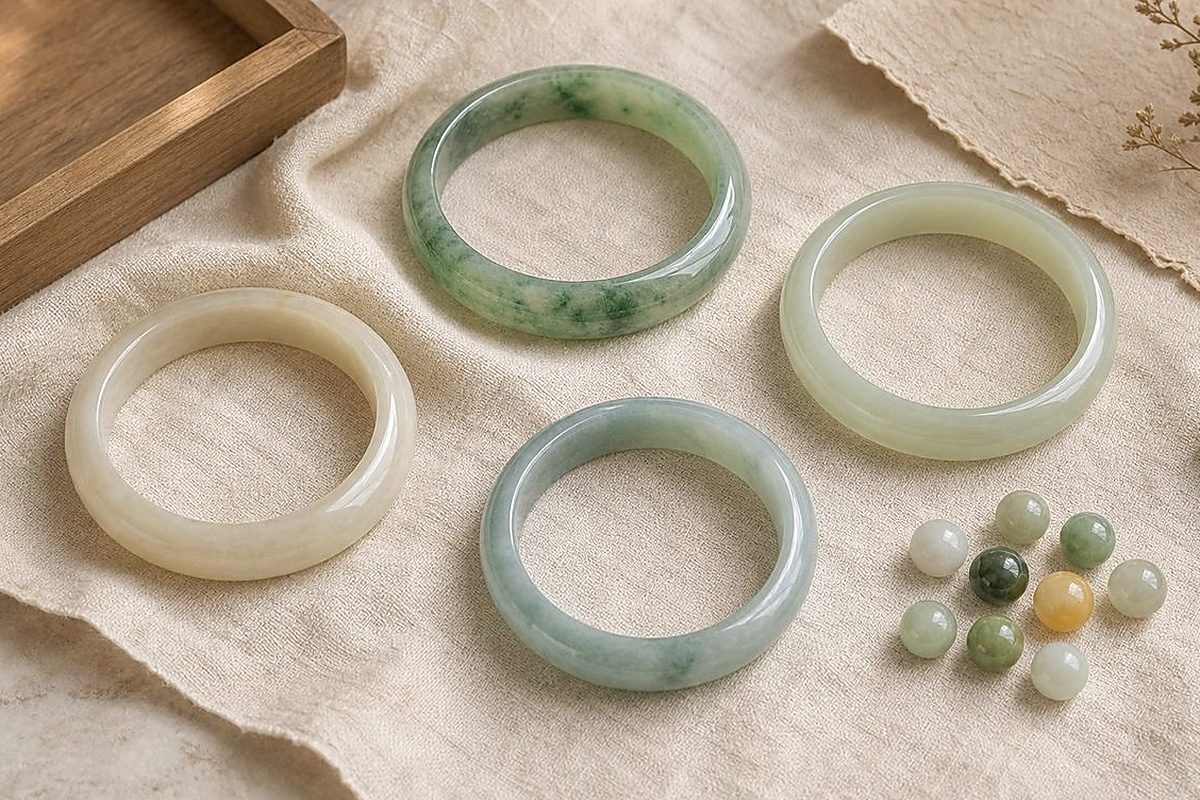
These categories are useful for value buyers. They can deliver attractive color, smooth polish, and symbolic styling at lower prices than top jadeite or rare Hetian seed material. The key is honest naming. A chalcedony bracelet can be a beautiful chalcedony bracelet; it should not be priced as fine jadeite. For broader gemstone comparison, Six Gemstones Believed to Bring Good Luck explains several popular symbolic stones.
What Makes Jade More Valuable?
Jade value comes from four dimensions: natural quality, workmanship, rarity, and market evidence. Different jade types weight those factors differently. Jadeite often rewards transparency, vivid color, and fine texture. Hetian jade rewards density, oiliness, warm luster, fine grain, attractive skin, and trusted origin language. Carvings add artistic design; antiques add age, form, provenance, and condition.
| Value factor | What raises value | What reduces value |
|---|---|---|
| Material identity | Clear jadeite or nephrite identification; named material for jade-like stones | Vague “natural jade” claims without material naming |
| Color | Correct hue, strong saturation, bright tone, even distribution | Grayness, muddy color, patchy dye-like concentration, dull tone |
| Transparency and texture | Fine mineral grains, dense body, good water, moist or glassy luster | Coarse crystal, dry texture, loose structure, chalky appearance |
| Clarity and condition | Clean body, few black spots, no dangerous cracks, stable polish | Open fractures, impact lines, large black dirt, repairs, weak drill holes |
| Size and usable block | Large complete clean material, especially for bangles | Large but cracked, thin, patched, or poorly proportioned material |
| Workmanship | Master carving, Suzhou-style or Shanghai-style fine carving, clever color use, excellent polish | Machine carving with basic labor value, rough polish, design that wastes the material |
| Rarity and origin | Mosisha jadeite, fine seed Hetian jade, scarce colors such as lavender jadeite or Shazaoqing nephrite | Origin name used as marketing without quality or traceable support |
| Evidence | Recognized lab report, auction record, artist record, provenance, clean invoice | Only a shop tag, tourist label, or mall list price |

Named artists can double the value of a carving when the material, composition, and market recognition are strong. Machine carving usually adds only basic labor value. Poor carving can reduce value because it wastes good material, hides flaws clumsily, or leaves a heavy, lifeless object. For ancient jade, form, period style, patina, burial alteration, provenance, and scholarly comparison matter. For modern jade, buyers focus more on material quality, design, polish, and evidence.
Color, Transparency, and Texture in Jade Pricing
Color is a price engine, especially in jadeite. Imperial green is the highest and rarest green category, with a vivid emerald tone. Yang green is bright and lively. Spicy green is saturated and bold. Apple green, bean green, pale green, blue-water, white, lavender, yellow, red, black, and mixed colors each have their own audience. Chromium and other mineral chemistry influence green color, while light, thickness, and background affect how the buyer sees it.

Transparency is often called “water” in jadeite buying. Old-mine glass jadeite has a clear, glass-like body and commands premium pricing when color and texture support it. Ice jadeite sits below glass but can still be highly valuable. Old-mine icy-waxy blue-water jadeite may be less transparent than full ice, yet strong water, clean color, and fine body can keep it desirable.
Texture is the internal grain and structural feel. Natural jade texture looks integrated, not painted on. Natural grain and color zones can help identification, while artificial dye, acid washing, polymer filling, or surface coating may create unnatural color concentrations or a too-perfect look. Color and texture alone are not a complete authenticity test, because skilled treatment can imitate natural signals. A valuable piece deserves a proper lab report and careful comparison.
How Bangles, Beads, Carvings, Rough, and Blanks Are Priced
Jade price changes with object form because each form demands a different part of the stone. A bangle uses a large continuous ring of material, so cracks and usable diameter matter strongly. Beads need matching color, roundness, polish, and drill quality. Carvings add design and execution. Rough and blanks carry hidden risk because the final quality is only partly visible.

| Object form | Practical USD range or rule | Pricing notes |
|---|---|---|
| Jadeite bangles | From a few hundred dollars to $1,000,000+ | Entry pieces near $1,000 are often bean or ordinary waxy material; high-end green or icy pieces rise sharply |
| Light-luxury jadeite bangles | $10,000-$30,000 | Can reach waxy-icy quality, better water, cleaner body, and more pleasing color |
| Ice white-moonlight jadeite bangle | About $160,000 | Clean icy feel, pale elegant body, strong demand among modern jadeite buyers |
| Spring-color jadeite bangle | About $280,000 | Often valued for lavender-green or mixed spring tones when quality is strong |
| White-base green jadeite bangle | About $980,000 | Price rises when green is strong, clean, and well placed on a desirable white body |
| Imperial-green jadeite bangle | $1,000,000+ | Top color, clean body, full usable bangle material, and high-end channels drive the number |
| Hetian jade beads | $50-$200/g for ordinary beads | Exceptional seed-material beads can be far higher when matching and quality are strong |
| Fine jadeite bead strands | $100,000-$200,000 for strong quality | Matching color, size, translucency, and polish can make bead strands expensive |
| General jadeite bead strands | About $10,000 for ordinary quality | Quality difference is large; bead matching matters more than a single bead's beauty |
| Master-carved mutton-fat seed jade works | $1,000,000+ | Material, artist, composition, theme, and provenance combine |
| Large mountain carvings | Collection potential when material, size, theme, and master workmanship align | Block size alone is not enough; carving logic and material quality decide the ceiling |
| Hetian jade blanks in 2024 | Average rose from $150/g to $200/g | Skin, texture, water, and local sourcing can change the final number |

Jadeite rough is often priced by kilogram or by lot when the material is ordinary, while exceptional imperial jadeite rough may be discussed by carat, gram, or piece. Finished jadeite objects should not be priced by weight alone. Two bangles of the same weight can differ by $200,000 if one has better translucency, color, crack condition, and polish. Hetian jade seed material may be discussed by gram at the top end, but most finished Hetian jade still needs object-by-object evaluation.
Current Jade Market Context
The jadeite market is especially sensitive to Myanmar rough supply, public tender results, high-end Chinese demand, and collector preference for rare color and transparency. Fine jadeite has continued to hold strong demand at the upper end, while ordinary jadeite can soften when commercial supply exceeds buyer demand. Ice jadeite, old-mine glass jadeite, imperial green, yang green, and clean high-translucency pieces remain the categories buyers watch most closely.

Nephrite and soft-jade markets are shaped by culture, origin language, mining cost, limited high-quality reserves, and younger buyers returning to traditional materials in modern jewelry. Industry market reporting placed the global soft-jade market around $15 billion in 2022, with China accounting for about 60%, and projected more than $25 billion by 2028 at a 7.5% compound annual growth rate. Online platforms have expanded access, while personalized carving and custom jewelry have created new demand pockets.
For consumers, the practical lesson is simple: high-end jadeite and fine nephrite reward evidence and expertise. Common material rewards comparison shopping. Names such as mutton-fat white jade, seed material, old-mine glass, imperial green, and Xinjiang origin can raise attention, but the stone still needs to show the quality that the name implies.
How to Buy Better Value Jade
Good value does not mean buying the cheapest jade. It means paying a sensible price for a clearly named material, a wearable form, honest flaws, and a channel that matches the object. For daily pieces, Qinghai mountain material can be a strong value choice: green-white, qing-shui, smoky gray, and pale tones often look refined, feel smooth, and stay stable in price because supply is broader. Light Russian white material can also work when the body is first-grade white and not dry.
New buyers should avoid seed-material claims, red-skin pieces, and autumn-pear skin pieces at very low prices. At the hundred-dollar level, many “skin” stories are dyed or rolled commercial material. A practical daily jade purchase should show even body, no large visible cotton clumps, no big stone flowers, no eye-visible through cracks, no large black dirt, and no dry gray lifeless texture. Small scattered cotton spots can be acceptable when the piece still looks warm and wearable.
| Best-value everyday choice | Realistic USD range | Why it works |
|---|---|---|
| Small Qinghai-material pendant, Ping An Kou, or smooth small charm | $260-$750 | Simple shape saves carving labor and makes flaws easier to see; over $900 often reflects retail markup |
| Thin round bangle, 54-58 mm inner diameter | $1,300-$3,200 | Good daily range for fine-enough mountain material with no visible cracks |
| Full-width bangle with good daily quality | $3,000-$5,500 | Better body and presence; above this moves toward collector or premium retail territory |
| Single-strand mountain-material bead bracelet | $400-$900 | Accessible, easy to wear, easier to size, and good for gift use |
| Plain small forms such as smooth gourd, small round plaque, or simple pendant | $260-$900 | No complex carving to hide cracks, cotton, or dirty patches |
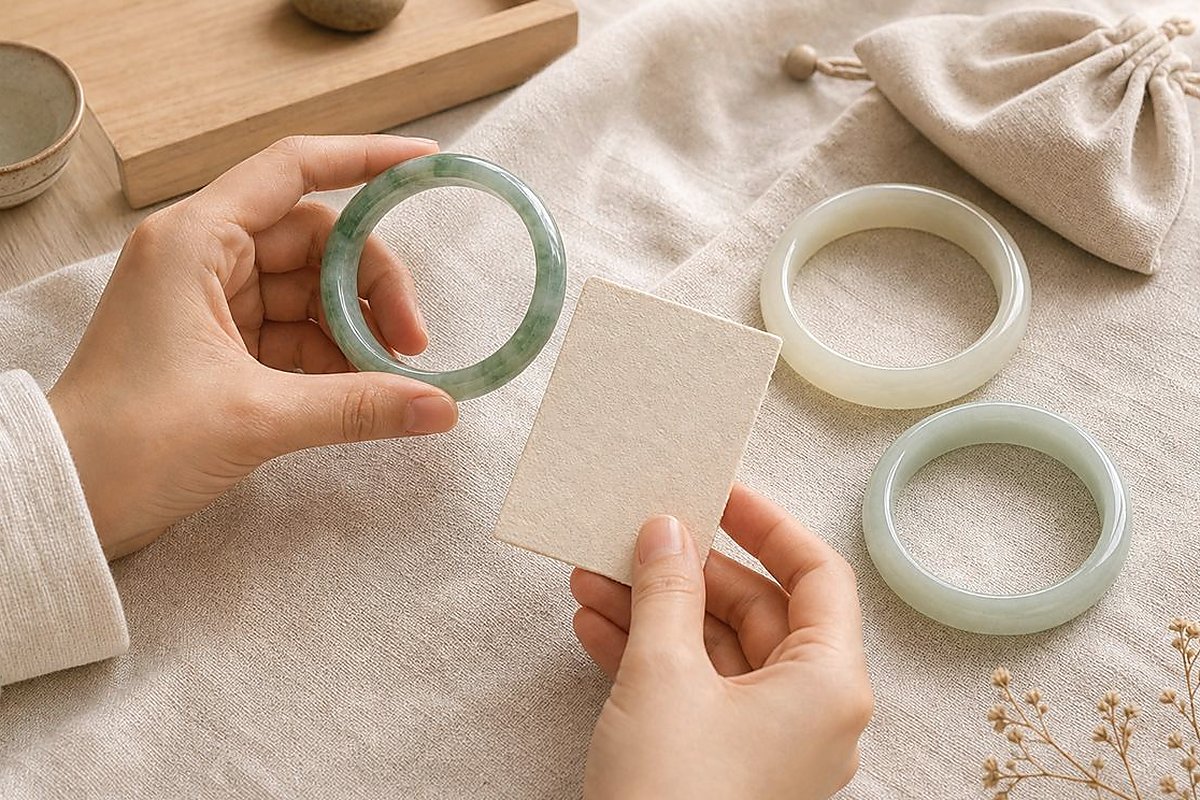
Plain surfaces are a value buyer's friend. A smooth Ping An Kou (平安扣), small round plaque, thin round bangle, or simple smooth gourd shows the material directly and avoids expensive carving labor. Complex openwork, layered landscape carving, and crowded figure scenes often hide cotton, cracks, or mixed color while charging more labor. If you want symbolism and daily wear rather than appraisal-level jade, start with clean material and a simple form.
A Simple Jade Appraisal Checklist
When you want a practical estimate, start with comparable sales in the same object category. A bangle should be compared with bangles of the same inner diameter, thickness, material, treatment, color, texture, and crack condition. A bead strand should be compared by bead size, matching, polish, drill quality, and color. A carving should be compared by material, theme, composition, artist, and scale.
- Identify the material: jadeite, nephrite, Hetian jade, Xiuyan jade, chalcedony, turquoise, Nanhong, or another stone.
- Record the form: bangle, bead strand, pendant, cabochon, plaque, carving, rough stone, blank, or antique object.
- Check treatment and condition: dye, impregnation, cracks, repairs, chips, black spots, or weak drill holes.
- Compare quality: color, transparency, texture, oiliness, density, polish, and completeness.
- Match the channel: mall retail, online retail, wholesale market, auction, professional platform, dealer buyback, or secondhand resale.
- Use evidence for valuable pieces: NGTC-style or recognized lab identification, professional appraisal, auction records, and traceable invoices.
- For daily wear, compare actual online completed sales; for collection-level pieces, compare specialist platforms and auction results.

Certificates and appraisals answer different questions. A gemological certificate usually identifies the material and detectable treatment. It normally does not decide market value. A professional appraisal estimates value for a defined purpose, such as insurance, estate handling, resale planning, or collection documentation. For high-value jade, the best answer combines both.
How This Jade Value Guide Fits the Jade Cluster
This page owns jade value, jade price ranges, jade appraisal basics, and value-by-form questions. The broader jade culture guide explains jade's place in Eastern symbolism; the Hetian jade guide explains nephrite history and material identity; the jade bangle guide focuses on meaning, wearing, gifting, and care; and the Blessing collection connects readers to symbolic jewelry choices. Keeping those boundaries clear helps each page answer a different search intent.

If you are choosing a symbolic wearable piece rather than appraising a collector stone, start with the meaning and the daily-use form. The Blessing collection gathers pieces around protection, harmony, love, clarity, and good wishes, while the Eastern Story Material Guide helps compare jade, crystals, cord, metal, and other materials in practical language.
Frequently Asked Questions
Related Posts


0 Comments