
Bai Suzhen (白素贞), the White Snake Lady, is a beloved heroine of the Legend of the White Snake. In familiar romantic tellings, she represents devoted love, gratitude, the courage to choose a life of her own, and hope for reunion. A white snake who gains human form, she longs for something wonderfully ordinary: a home, someone to love, and a place among other people.

That wish gives her story its warmth. Beneath the magic are recognizable moments: a kindness remembered, two strangers sheltering from rain, a shared livelihood, a frightening misunderstanding, and the determination to find one another again. Bai Suzhen’s gentleness has strength within it. She acts, protects, makes difficult choices, and asks to be understood through the love and care she gives.
Who is Bai Suzhen, and what does her name mean?
Bai Suzhen is the white-snake heroine of the Legend of the White Snake (白蛇传). She is also known as Bai Niangzi (白娘子), Lady Bai, Madame White Snake, or the White Snake Lady. These names usually refer to the same beloved figure, although her personal name and personality vary across the tradition.
Bai (白) means white. Su (素) suggests plainness, purity, or unadorned beauty, while zhen (贞) carries associations of steadfastness and integrity. Together, the characters suit the graceful, faithful heroine familiar to many audiences. The name Bai Suzhen belongs to later tellings; Feng Menglong’s earlier story calls her Bai Niangzi.
She is usually a snake spirit who has cultivated herself over many years. “Demon” can sound too narrowly evil in English, while “goddess” can make her seem distant from the struggles that define her. Her appeal lies in the journey between a supernatural origin and a deeply human wish to love and belong.

A thousand years of cultivation and a kindness remembered
Mount Emei and Mount Qingcheng both appear in the wider White Snake tradition. Fang Chengpei’s Leifeng Pagoda places the white snake at Emei; the 1992 television series New Legend of Madame White Snake is closely associated with Qingcheng. These are settings within different tellings, rather than a single itinerary that every version shares.
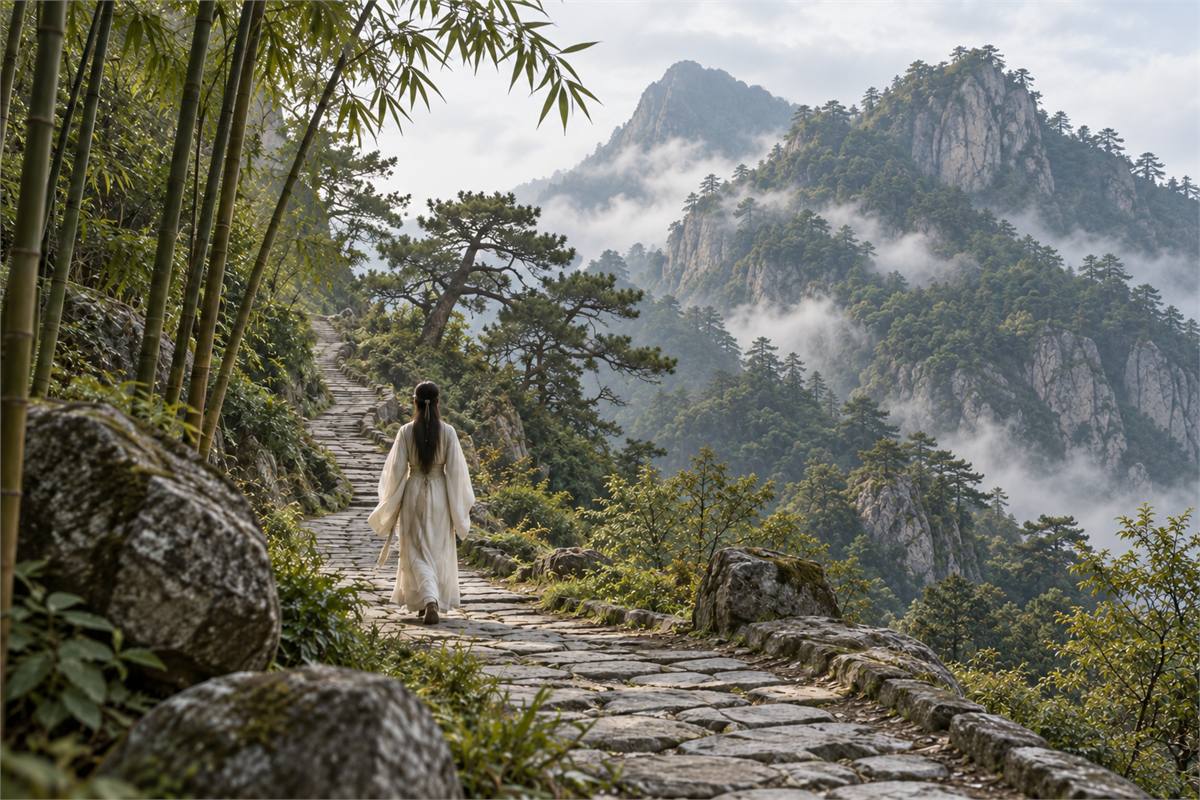
The 1992 series gives her 1,700 years of cultivation and a moving reason to seek Xu Xian: in a previous life, he was a little herdboy who saved the white snake from a snake catcher. Guided toward the human world, she hopes to repay that kindness. The emotional heart is gratitude carried across a long separation. A small act of mercy becomes the beginning of a life-changing connection.

Other tellings bring her down from the mountains because she yearns for the human world, or give the lovers another shared past. In the Cantonese opera White Snake: Love, they were once a pair of lotuses before the Buddha. Each beginning makes their meeting feel meaningful in a different way.

The umbrella at West Lake: kindness becoming love
Rain gathers over West Lake in Hangzhou. Bai Suzhen and her companion Xiaoqing meet Xu Xian, and an umbrella gives them a reason to speak, part, and meet again. Boat journeys, the Broken Bridge, Qingming outings, borrowed shelter, and the return of the umbrella appear in different arrangements. Together they create one of the most recognizable scenes in Eastern love storytelling.

The oil-paper umbrella (油纸伞) holds a small world within a larger storm. Lending it is an act of care; returning it opens the door to another conversation. An everyday object becomes a promise of attention: I have noticed you, and your comfort matters to me.

Bai Suzhen participates in making that connection. In the 1992 series, she finds opportunities to meet Xu Xian, with Xiaoqing helping their courtship. Her love is a choice she pursues. The rain and umbrella make that choice tender rather than grandiose.
For a couple, the scene can carry a wish to shelter one another through changing seasons. For a gift, an umbrella motif can recall the first kindness that brought two people together. For someone beginning again, it offers a quieter hope: an unexpected encounter may become a welcome part of life.
A shared home, a medicine shop, and imperfect people
Marriage gives Bai Suzhen’s wish a daily shape. In many familiar versions, she and Xu Xian build a life around a medicine shop. Her knowledge, resourcefulness, and concern for others turn the household into a place where people seek help. The image of her caring for neighbors gives her gentleness a practical, human presence.

The shops change with the adaptation. In the 1992 series, the couple establish Bao’an Tang (保安堂) in Suzhou and later Baohe Tang (保和堂) after returning to Hangzhou. Feng Menglong’s tale has Xu Xuan open a medicine shop in Zhenjiang. These details belong to their own stories; they are not interchangeable names for one historic business.
Her efforts also bring trouble. Stolen official silver and stolen valuables are part of both earlier storytelling and the 1992 drama. Love does not make every decision wise, and these episodes give the heroine more depth than a flawless portrait would. She can be generous, determined, inventive, and dangerously confident in her powers.
Xu Xian, too, changes across versions. Sometimes he is loving but easily frightened; sometimes more resolute; sometimes quick to believe another person’s warning. His most moving moments come when he recognizes what Bai Suzhen has done for him and chooses to stand beside her. Their relationship invites a wish for mutual understanding, especially when fear makes trust difficult.

The revealed snake and the journey to save Xu Xian
Why does she drink realgar wine?
The revelation often takes place at the Dragon Boat Festival, or Duanwu (端午). After drinking realgar wine, Bai Suzhen loses her human appearance. Xu Xian sees the great white snake and dies or collapses from terror, depending on the telling. The scene turns an intimate household moment into a terrible rupture.
Who brings about the revelation matters. Some stage versions have Xu Xian act on Fahai’s warning; others emphasize his ordinary festival invitation and Bai Suzhen’s reluctance to disappoint him. In the Liu Tao television adaptation, she mistakenly drinks Xu Xian’s wine within a larger scheme devised by Fahai. His involvement should therefore be understood within each adaptation.

Stealing the immortal herb
Bai Suzhen’s response reveals the devotion for which she is loved. She sets out to recover a supernatural remedy and bring Xu Xian back. In familiar opera scenes, the quest takes her to Kunlun, where the immortal herb is guarded. It is often pictured as Lingzhi (灵芝), the auspicious fungus associated with longevity. The 1992 television telling instead sends her to the Queen Mother of the West’s celestial realm to seek an elixir. The enchanted mountain, guardians, and remedy vary, but the emotional movement is clear: fear has exposed her, and love sends her into danger.

Her pregnancy also belongs to a particular sequence of events. It is explicit during the rescue quest in the Liu Tao version, while the 1992 series places her pregnancy later in the story. Treating every herb-stealing scene as the same moment in her pregnancy would blur the stories.
Wine that reveals a spirit and an herb that restores life are elements of the legend’s magical world. What stays with the reader is Bai Suzhen’s refusal to abandon someone in need, and the courage to act even when she is vulnerable herself.
Bai Suzhen and Fahai: love, authority, and the flood
Fahai (法海), the monk associated with Jinshan Temple, challenges the union between a human and a snake spirit. In many romantic adaptations, his insistence on separating them makes him the obstacle to a home they have built together. The audience sees the pain caused when a person’s origin is allowed to outweigh their care for others.
His role has not always been that of a villain. Feng Menglong’s tale presents him as a monk rescuing Xu Xuan from danger. Later works may portray him as stern, controlling, compassionate in a different way, or driven by personal feeling. The conflict grows richer when each version is allowed its own moral world.

At Jinshan, Bai Suzhen and Xiaoqing demand Xu Xian’s return. When pleading fails, water becomes the expression of her desperation. In spectacular stage and screen versions, waves rise against the temple while Fahai counters her power. Jinshan Temple is in Zhenjiang, beside the Yangtze River; this scene belongs to a different place from the lakeside romance in Hangzhou.
The flood displays both her strength and its terrible cost. In tellings where other people suffer, her determination has consequences beyond the marriage. In familiar opera versions, pregnancy weakens her during the struggle and she retreats. Xu Xian then meets her again at the Broken Bridge, where Xiaoqing’s anger and Bai Suzhen’s continuing affection turn the aftermath into an intensely personal scene.

There is courage in asking for the person she loves to come home, and sorrow in what the struggle unleashes. Her story can honor fierce devotion while leaving room for restraint, responsibility, forgiveness, and a love shared by both partners.
Under Leifeng Pagoda: separation and the hope of reunion
Leifeng Pagoda (雷峰塔) gives Bai Suzhen’s separation a visible form. The woman who crossed from mountain solitude into human companionship is enclosed again, apart from her husband and child. That image makes the longing for reunion especially powerful: a family remembers her even when it cannot reach her.

In the 1992 series and many familiar stage versions, she gives birth before Fahai confines her. Her son Xu Shilin (许仕林) grows up, succeeds in the imperial examinations, and appeals for his mother’s release. The 1992 television ending brings her out of the pagoda and eventually has Bai Suzhen, Xu Xian, Xiaoqing, and Fahai ascend to heaven. It combines reunion with spiritual completion, rather than simply returning everyone to the old household.
Feng Menglong’s story ends differently: both the white snake and the blue-green fish spirit Qingqing are sealed away, and Xu Xuan becomes a monk. It has no son rescuing his mother. Other tellings give Xiaoqing a larger rescuing role, or use the name Xu Mengjiao for the son. A falling tower, a son’s plea, reunion, and heavenly ascent are several possible endings, not one fixed sequence.
What the hopeful endings offer is deeply human: time and distance need not erase a bond. Remembering a parent, staying loyal to a friend, and welcoming someone home become ways to imagine a more compassionate world.

Xiaoqing: the companionship beside the romance
Xiaoqing (小青), often called Little Green, gives Bai Suzhen a relationship beyond marriage. In familiar later versions, she is the green-snake companion who becomes as close as a sister. She helps the lovers meet, speaks fiercely when Xu Xian disappoints them, and stands beside Bai Suzhen when the struggle grows dangerous.
Her quick temper and Bai Suzhen’s tenderness make a memorable pair. At the Broken Bridge, Xiaoqing may want to punish Xu Xian while Bai Suzhen protects him. Their difference gives the scene its feeling: loyalty can be protective, outspoken, and willing to challenge the choices of someone loved.
The earlier Qingqing of Feng Menglong’s tale is a fish spirit, and her fate is confinement alongside the white snake. Later green-snake versions give Xiaoqing other paths, including continued resistance or spiritual fulfillment. Through these changes, the companionship remains one of the legend’s richest sources of warmth.
Paired white-and-green imagery can therefore speak to friendship as well as romance. It can carry a wish to have someone beside you who knows your story, tells you the truth, and stays close through difficult days.

How a feared snake became a beloved heroine
Bai Suzhen grew through generations of storytelling. Tang-era snake-woman tales, including the story of Li Huang, belong to the earlier background of supernatural encounters. The West Lake tale Xihu Santa Ji (西湖三塔记), set in the Song period and preserved in the Ming collection Qingping Shantang Huaben, presents a more threatening white-clad woman. A story’s setting and the date of its surviving printed text are different things.
Feng Menglong’s Bai Niangzi Forever Confined beneath Leifeng Pagoda, published in Jingshi Tongyan in 1624, brings familiar elements together: the lakeside meeting, borrowing an umbrella, marriage, trouble over stolen property, a medicine shop, Fahai, and the pagoda. Its ending remains a warning against dangerous desire, even as the woman’s wish for companionship gives her a recognizable voice.
Later drama lets that voice grow. Fang Chengpei’s 1771 Leifeng Pagoda, shaped within an existing performance tradition, includes the herb quest, water battle, Broken Bridge, childbirth, and the son’s visit to the tower. These scenes invite audiences to feel her courage, fear, tenderness, and grief from within. They helped sustain the sympathetic heroine loved today.
Oral tales, regional opera, novels, and screen adaptations continue that work. In 2006, Baishezhuan Chuanshuo (白蛇传传说), the White Snake legend tradition, entered the first national list of intangible cultural heritage under folk literature, project I-6. The recognition honors a living storytelling tradition carried by communities and performers.

Meeting Bai Suzhen on screen and stage
Each performance gives the heroine a different emotional presence. A glance under an umbrella, a long sleeve moving through an opera scene, or a quiet exchange between the sisters can reveal something that a plot summary misses.
Angie Chiu in the 1992 New Legend of Madame White Snake (新白娘子传奇) brings together grace, determination, remembered kindness, and family affection. Music and sung passages give everyday exchanges a lyrical quality. Her portrayal remains closely associated with the character for many viewers; its place in their memory is part of the affection surrounding Bai Suzhen.
Liu Tao in the television series White Snake, first broadcast on CCTV in 2006, follows a heroine who seeks human tears on her path toward immortality and discovers love through lived experience. Late in the story, she exchanges seven gathered tears for the herb needed to save Xu Xian. Her eighth tear falls as she enters the pagoda. Xu Xian remains nearby, and she opens an umbrella to shelter him. The ending lingers on their bond across separation rather than showing an ordinary married life restored.
Zeng Xiaomin in the Cantonese opera White Snake: Love (白蛇传·情) gives Bai Suzhen expressive power through singing, movement, and physical performance. The Guangdong Cantonese Opera Theatre created the stage work in 2014. Its film adaptation, released in mainland cinemas in 2021, combines that performance language with a cinematic world of rain, mountains, and water. The stage production and the film are related works, with their own ways of carrying the story.
The 1939 film Huangta Chenyuan (荒塔沉冤), also titled The White Snake, directed by Yang Xiaozhong and starring Chen Yanyan, takes a strikingly different approach: its heroine is human, and the drama turns toward injustice and the cruelty of treating her as a monster. It is one early screen reworking among many, rather than the origin of the legend.
When choosing an adaptation, follow the feeling that draws you: the lovers’ first meeting, Xiaoqing’s loyalty, a mother’s longing, the beauty of opera, or the hope of reconciliation. The many Bai Suzhens let the same story accompany different moments in a reader’s life.

West Lake and the real pagoda that holds the story
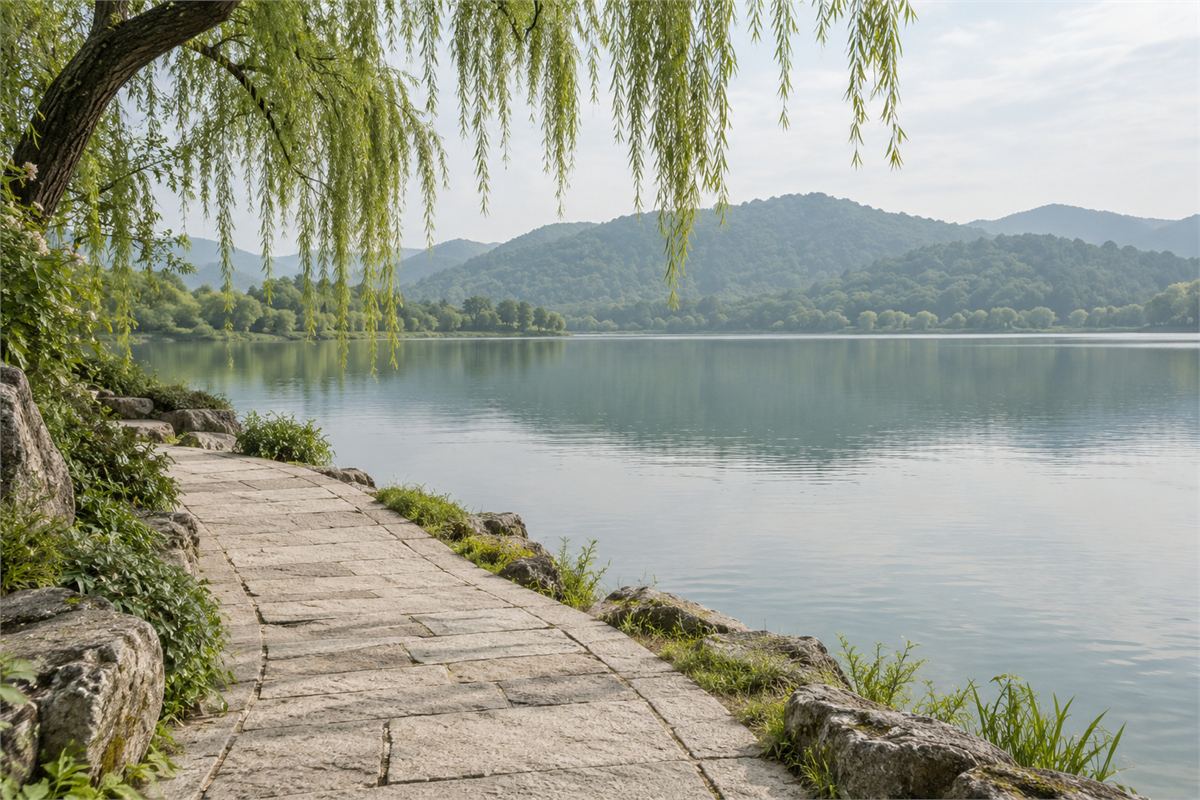
At Hangzhou’s West Lake, the Broken Bridge recalls meeting and parting, while Leifeng Pagoda on the southern shore recalls separation and return. The places give the legend a landscape: rain on water, a distant tower, and a path along which someone might be coming home.
The historic Leifeng Pagoda was completed in 977 under Qian Chu, ruler of Wuyue, to enshrine Buddhist relics. It was also known as Huangfei Ta (皇妃塔), the Imperial Consort Pagoda. Its religious history and the love story have together shaped the tower’s place in cultural memory.
The old tower collapsed on September 25, 1924, after centuries of damage and deterioration, compounded by the removal of bricks. Archaeological work opened its underground chamber in 2001 and recovered treasures including a gilded silver Ashoka pagoda. The new tower, completed in 2002, uses a steel structure with copper architectural elements and shelters the ancient remains below.
For someone drawn to Bai Suzhen, seeing these places can be a way to linger with the story. The bridge invites thoughts of beginnings; the tower invites thoughts of those we keep in our hearts. The experience can be as simple as watching the lake and remembering a kindness.
What Bai Suzhen can mean in a keepsake or gift
Bai Suzhen’s story offers several wishes to carry into everyday life: the courage to live truthfully, gratitude for a kindness received, tenderness that survives misunderstanding, companionship through change, and the joy of reunion. A meaningful object can keep one of those wishes close.
Different motifs bring different moments to mind. An umbrella recalls care and the beginning of love. Paired white and green forms can evoke Bai Suzhen and Xiaoqing’s companionship. Lingzhi recalls the daring rescue, while a bridge suggests meeting again. A white snake can speak to transformation and the strength to grow into a chosen life.

The connection is most personal when the recipient knows which part of the story you have chosen. For a partner, a note might say, “May we keep finding shelter in each other.” For a friend: “For standing beside me through every season.” For someone starting a new chapter: “For the courage to become who you wish to be.” These are wishes for care shared freely and for a life in which both love and one’s own voice have room.

If snake imagery itself draws you, explore the broader meaning of snake bracelets. A Bai Suzhen keepsake carries the added intimacy of a particular character, relationship, and remembered scene.
Her story leaves us with a generous hope: to be known, welcomed, and loved through change. Explore the Blessing collection for a meaningful piece to carry that wish, or to offer someone dear a little shelter of their own.
Frequently asked questions
Related Posts


