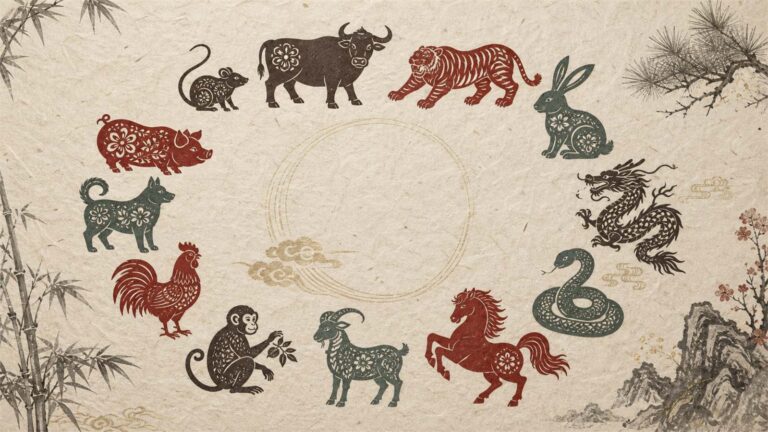
A Song brocade charm is a contemporary pendant, bag charm, sachet, or small keepsake made with Song brocade (宋锦), the figured weaving tradition closely associated with Suzhou. It carries two intertwined meanings: the brocade brings the dignity and beauty of a living textile heritage, while the chosen motif expresses a particular blessing—peace, progress, harmony, wisdom, flourishing, or loving companionship.
These small objects are often called “charms” or “amulets” in modern English, but they are not one fixed category inherited unchanged from antiquity. They are present-day cultural objects that bring historic woven patterns, older traditions of sachets and personal ornaments, and modern gift design together. Their meaning becomes most personal when the motif, shape, color, and giver’s words all tell the same story.

What Song brocade is
Song brocade, or Song jin, developed as a distinctive brocade tradition in Suzhou and takes its name from styles established during the Song period. Official heritage records describe Suzhou Song brocade as a patterned textile in which warp and colored weft yarns work together to reveal the design. It drew on earlier warp- and weft-patterned weaving while developing an elegant local language of geometric frameworks, flowers, birds, clouds, and auspicious emblems.

The weaving tradition entered China’s first national list of intangible cultural heritage in 2006. In 2009, it was recognized within UNESCO’s “Sericulture and silk craftsmanship of China,” a wider living system that includes mulberry cultivation, silkworm raising, reeling, thread making, design, and weaving. Those listings recognize knowledge and practice carried by communities; they do not make every modern charm an antique or identify every component in a finished accessory.
Song brocade also has a long relationship with clothing, furnishings, presentation boxes, and the mounting of paintings and calligraphy. Palace collections preserve imposing Suzhou woven works, while contemporary designers use brocade in bags, clothing, fans, ornaments, and small gifts. A Song brocade charm belongs to this modern continuation: traditional textile language made intimate enough to carry.

Why brocade becomes a meaningful personal charm
Brocade naturally lends itself to blessing objects because the meaning is woven into the visible surface. Repeating lines suggest continuity; a flower can carry hopes for flourishing; an animal can evoke character and companionship; a cloud can give movement to a wish. When the textile is folded into a gourd, horse, sachet, round pendant, or Ruyi-shaped ornament, the silhouette adds another layer of feeling.

This is why the most moving charm is rarely the one with the longest list of promised benefits. It is the one that makes a clear wish tangible. It may accompany a new job, an examination, a journey, a marriage, a birthday, or a quiet personal turning point. They express a wish—a medium through which people hope to bring about wealth, health, virtue, longevity, or a specific outcome in life.
How to read common Song brocade motifs
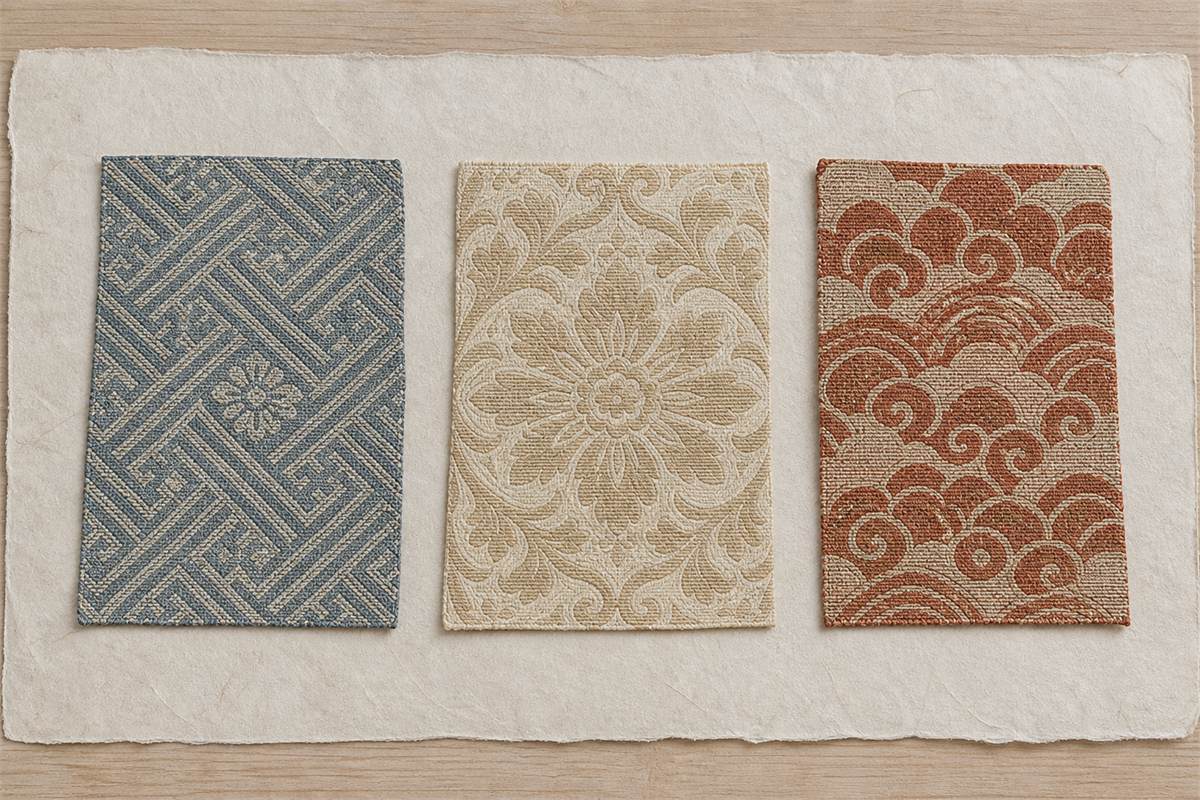
Pattern names deserve care. A shape cut from brocade is not automatically the same thing as a documented historic textile pattern, and a tiny charm may show only part of a large repeat. When a motif matters to your choice, look at the complete design and ask for its name. Do not use the pattern alone to decide age, origin, authenticity, palace use, or value.
| Motif | Cultural reading | A wish it can carry |
|---|---|---|
| Eight-direction roundel, Bada yun (八达晕) | A geometric framework connected in eight directions; historic Song-style brocades include four-, six-, and eight-direction forms | Open paths, connection, clarity, and progress |
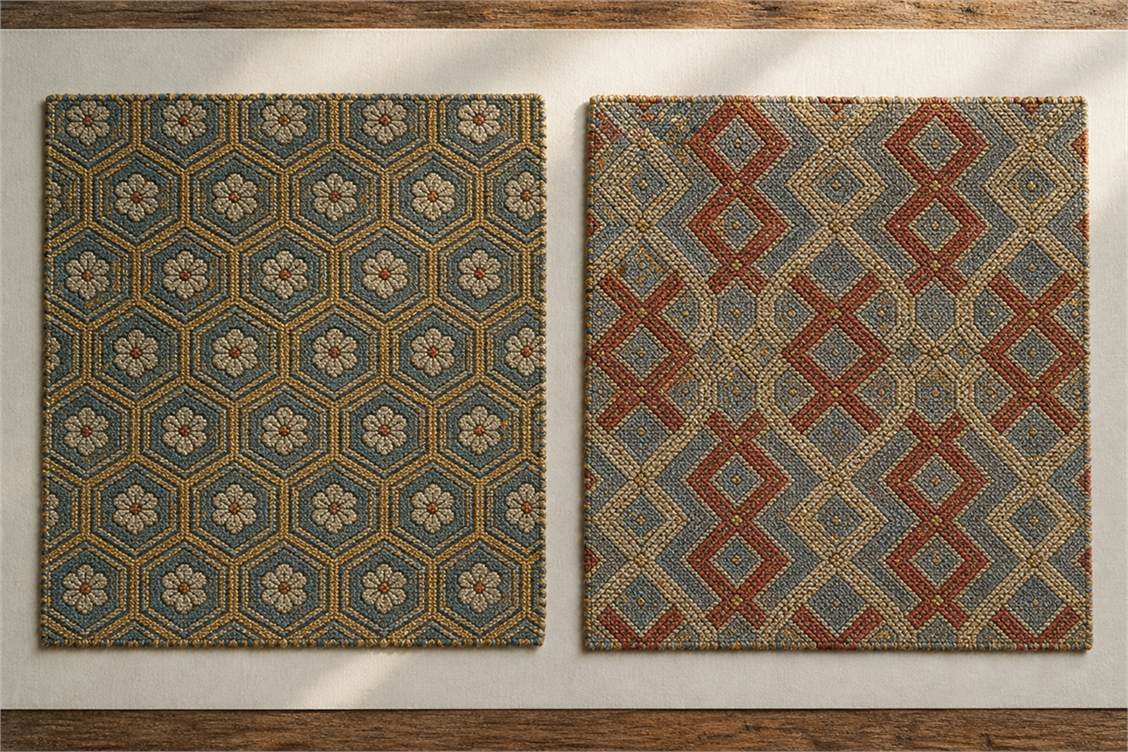
| Tortoise-shell pattern, Guibei wen (龟背纹) | A hexagonal lattice recalling a tortoise shell, often combined with flowers or Ruyi forms | Steadiness, enduring care, and longevity |
| Dingsheng (定胜) and Fangsheng (方胜) | Dingsheng is a diamond-like ornamental form whose name invites a “certain success” reading; Fangsheng is the interlocked double-lozenge associated with unity and joined hearts | Success for a new challenge, or harmony and togetherness |
| Baoxiang flower (宝相花) | An idealized, symmetrical floral form shaped through Buddhist and decorative art rather than one literal botanical species | Dignity, fullness, beauty, and harmony |
| Ruyi cloud head (如意云头) | A rounded cloud-like head associated with the Ruyi form and wishes unfolding as hoped | Everything going smoothly and wishes fulfilled |
| Bat (蝙蝠) and gourd hulu (葫芦) | The bat’s name fu echoes “blessing”; hulu is commonly heard alongside “fortune and status” language | Happiness, good fortune, care, and longevity |
| Fish (鱼) or paired fish | The word for fish echoes “abundance”; paired fish can add companionship and harmony | Plenty, ease, and a life with something to spare |
| Eastern phoenix (凤凰) and peony (牡丹) | The phoenix carries auspiciousness, harmony, and cultivated virtue; the peony evokes flourishing beauty and honor | A graceful new beginning, celebration, or shared flourishing |
| Cash-coin pattern (钱纹) | Round coins with square openings can appear as decorative units or linked repeats | Prosperity, circulation, and an abundant household |
Modern makers may also create horse, butterfly, qipao, zodiac, or miniature pouch shapes. A horse can warmly convey “success upon arrival” through the familiar phrase ma dao cheng gong (马到成功). A qipao-shaped charm, however, should be appreciated as a modern silhouette; its resemblance to the word for “banner” does not turn “victory at the outset” into an ancient qipao tradition. In the same way, playful phrases about wealth arriving “on horseback” are contemporary wordplay, not proof of an old fixed meaning.
Choose a charm by the wish and the life moment
Begin with what you genuinely want to say. For graduation, a new role, or a demanding project, Bada yun, Dingsheng, a horse, or an upward-moving cloud can speak of clear roads and confident progress. For a wedding, anniversary, or shared home, Fangsheng, paired birds or fish, phoenix-and-peony compositions, and round floral medallions carry harmony and fullness.
For a parent, mentor, or someone entering a gentler season of life, tortoise-shell, Ruyi, gourd, bat, peach, or continuous vine patterns can express enduring care and a wish for peace and longevity. For a friend who loves textiles, the most thoughtful choice may be a clearly named pattern with a visible complete repeat and a story about the weaving rather than a prescribed “lucky” color.

- For a bag: choose a light, detachable charm with smooth edges and a secure loop.
- For a key pouch or protected pocket: choose a compact form without loose beads or long tassels.
- For clothing: use a brooch, press ornament, or pendant designed for that attachment point.
- For a desk or home: a softer sachet or display ornament can favor textile detail over abrasion resistance.
- For a scented sachet: check every filling ingredient and keep it away from anyone sensitive to fragrance.
If the design includes a woven character, the guide to auspicious Chinese characters can help you read the words alongside the motif. For an occasion-led path through related objects, explore the Eastern Story blessing collection.

Look beyond the textile name when choosing quality
A finished charm is a mixed-material object. Contemporary Song brocade may use silk, silk with viscose or rayon, metallic yarns, or other disclosed fibers; the lining, backing, stuffing, adhesive, cord, tassel, beads, and metal findings may all be different again. “Song brocade” therefore describes a textile tradition and design language, while the complete material list explains the individual object.

| What to check | What a useful description tells you |
|---|---|
| Textile | Fiber composition, whether the motif is woven, and the pattern name when known |
| Construction | Lining or backing, seam finish, filling, adhesive use, and reinforcement at the hanging point |
| Added parts | Bead, stone, glass, resin, shell, wood, cord, plating, and other hardware materials |
| Intended use | Display, clothing ornament, occasional bag charm, or repeated daily carry |
| Care | Instructions for the complete object, including dyes, textile, fragrance, adhesive, metal, and tassel |
Look for even seams, protected raw edges, balanced filling, secure hardware, and a motif that remains legible at the charm’s scale. A woven design is formed through interlacing yarns and often shows structural color changes on the reverse, while a surface print behaves differently. For fiber content, age, and origin, rely on specific product information and documented provenance rather than touch, shine, rubbing, water drops, flame, or a claimed “raised height.” The Eastern Story material guide offers a useful vocabulary for separating the textile from its added findings.

Daily use, safe making, and thoughtful care
Let the product label and maker’s instructions lead. In everyday use, reduce rubbing, pulling, crushing, moisture, and prolonged strong light. Keep perfume, sanitizer, cosmetics, and metal polish away from the textile unless the maker confirms compatibility. Check loops, clasps, seams, beads, and tassels regularly; retire the charm from daily carry if an attachment loosens.
Cleaning depends on the exact fibers, dyes, filling, adhesive, and hardware. Loose surface dust may be lifted gently with a clean soft brush when appropriate. Follow the label first instead of applying one cleaning or storage rule to every object, and consult an experienced textile professional for a valuable or unfamiliar piece. The broader care guide explains how to think about mixed-material accessories.

A simple DIY charm can be made from pre-cut textile pieces, a suitable backing or filling, cord, and securely attached findings. Keep the process modest: use scissors, needles, and adhesives according to their instructions, work with ventilation where required, and provide adult supervision for children. Avoid flame for sealing edges or identifying fibers. If adding herbs or fragrance, list the contents clearly and consider allergies, pets, and close skin contact.

A woven blessing made personal
A Song brocade charm is most meaningful when its story is specific. Choose one motif you can name, one wish you sincerely want to give, and a form suited to the recipient’s life. The result can be small enough to hold in the hand yet rich with woven memory: a quiet companion for 平安如意—peace, safety, and life unfolding as hoped.
Frequently Asked Questions
Related Posts